2026-10-17
Low MOQ in AI Plush Toys: How 300 Units Actually Works, and Where the 5,000-Unit Price Gap Comes From
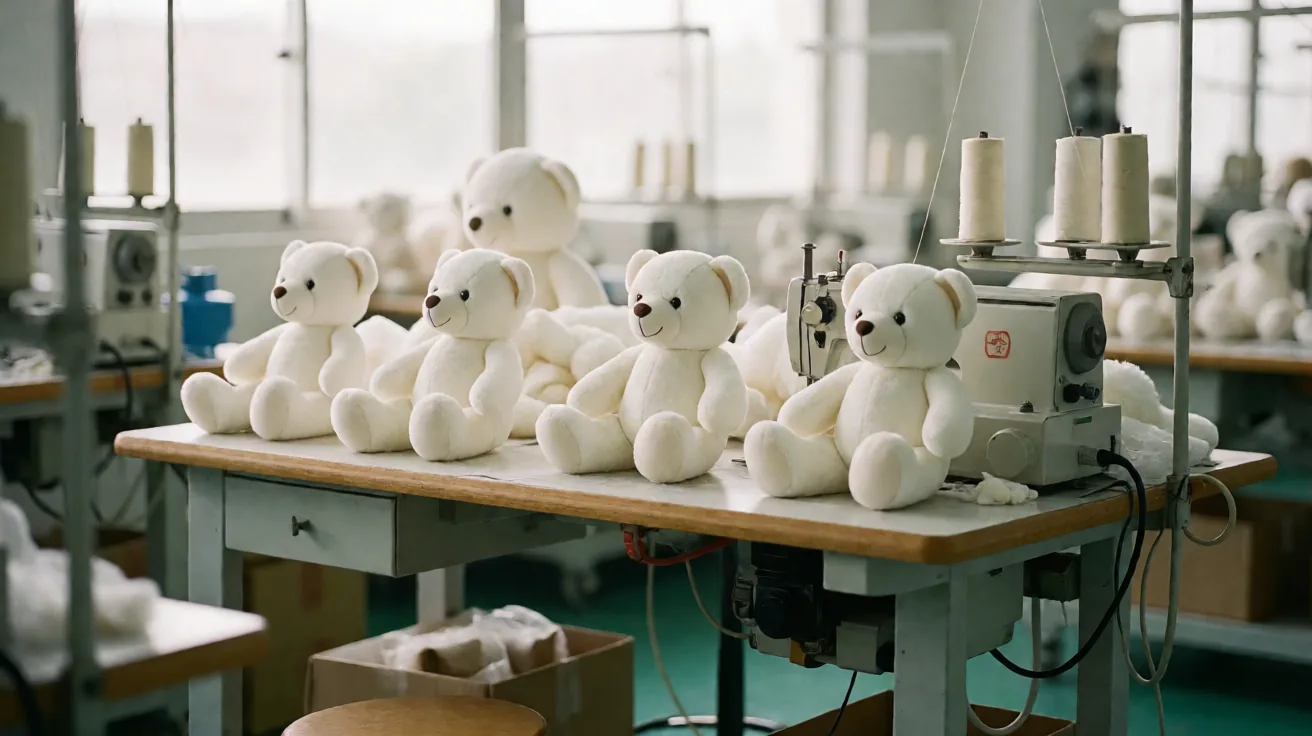
Almost every AI plush toy buyer arrives with the same assumption: a lower minimum order quantity means a higher unit price, and there is nothing to be done about it.
Half true. The unit price on a 300-unit order really is higher than on a 5,000-unit order - often by 40% to 120%. But the gap is not a rule of nature and it is not a penalty the factory invents. It is the arithmetic of fixed cost divided by units, plus a second cost almost nobody puts on the table: the cost of coordinating several suppliers who never talk to each other.
This guide breaks down both. If you are sourcing a first production run of an AI talking plush toy - a market entry order, a test batch for a retailer, a licensed character trial - this is the number that decides whether your launch happens at all.
The Four Costs That Do Not Care How Many Units You Order
A plush toy is preponderantly labour and soft goods, which is why the industry can run small batches at all. What kills small orders is not the sewing. It is the four cost buckets that stay nearly flat whether you make 300 pieces or 5,000.
1. Fabric and trims
Most plush fabric is dyed to order and carries a colour-and-roll minimum - commonly several hundred metres per colour. For a toy that uses 0.4 to 0.8 m² per unit, a 300-piece run needs only 150 to 250 m², which lands uncomfortably close to that minimum. Every colour you add multiplies the problem.
2. Tooling and pattern-making
Paper patterns, digitised embroidery files, print screens and any injection-moulded electronic housings are one-time inputs. On a 5,000-unit run they vanish into the unit cost. On a 300-unit run they can account for 25% to 40% of the quoted price.
3. Embroidery, printing and screening
This is the swing factor buyers underestimate most. Cost is driven by area, stitch count, thread colour changes and set-up, not by piece count. A 12-colour chest embroidery that is trivial on a 5,000-unit order requires the same machine set-up on 300.
4. Labour and changeover
Voice-box wiring, stuffing density, safety stitching, voice testing - this is handwork. The productive portion scales with units. The changeover portion does not: thread changes, machine calibration, pilot runs, first-article inspection. Small batches and frequent style switching raise the changeover share of your unit cost.
The Fifth Cost: Supply Chain Coordination
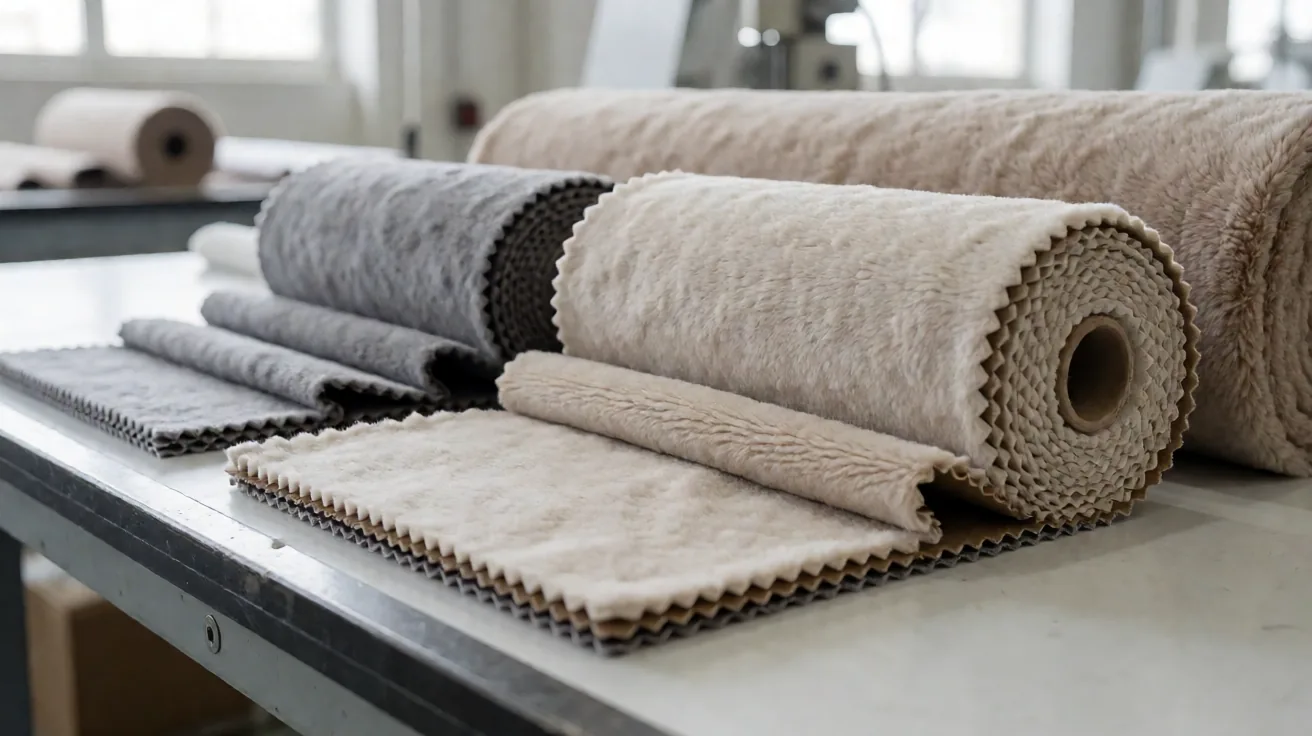
Here is the cost that separates a fair low-MOQ quote from an inflated one - and the one that decides whether your order ships on time.
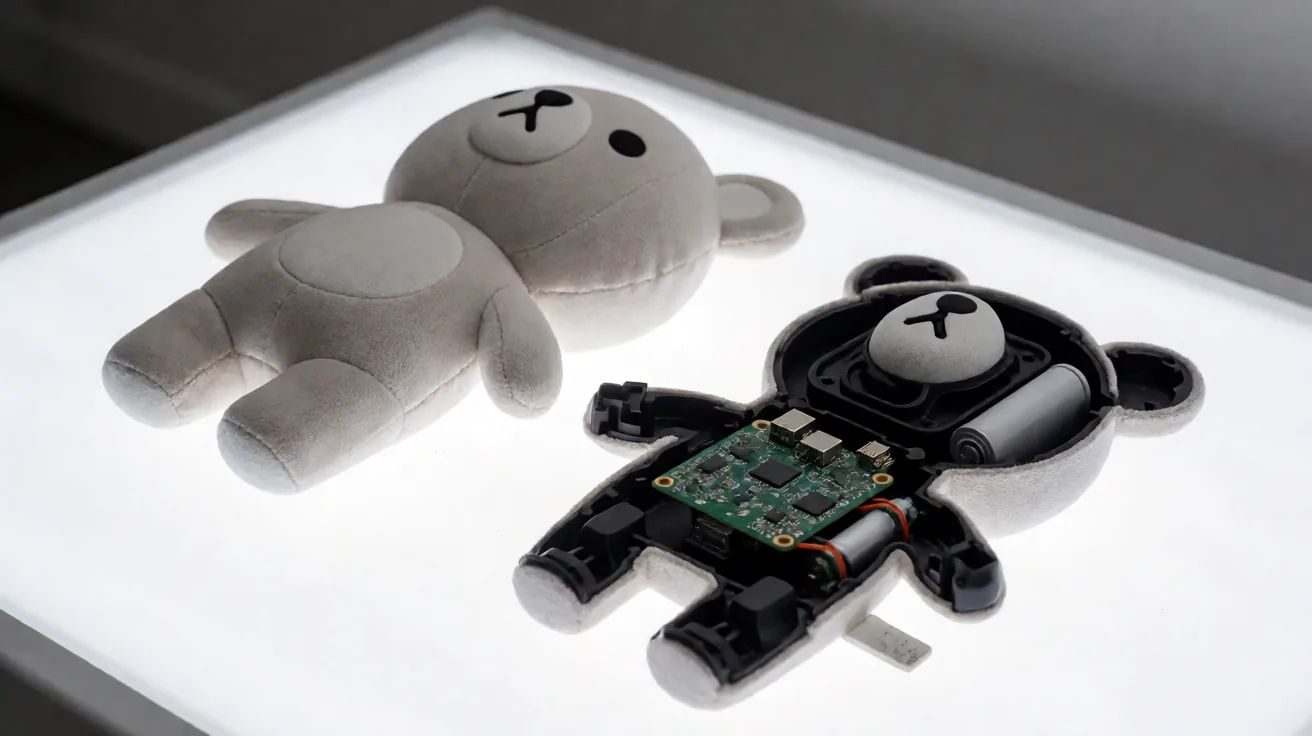
An AI plush toy is not one product. It is a bundle of components that normally live in different buildings: plush fabric from a textile mill, plush assembly at a sewing house, the voice module from an electronics supplier, embroidery from a specialist shop, packaging from a carton printer, and the safety test sent out to a third-party lab. Each handoff between those parties carries a cost that never appears on any invoice:
- Coordination cost - every supplier is a new spec sheet, a new Alibaba thread, a new time zone.
- Waiting cost - one missing trim holds the whole line, and the sewing house charges for idle capacity or simply re-slots your order behind someone else's.
- Fit and interface cost - the speaker cavity is 0.8 mm too small for the module, the fabric behind the microphone muffles the voice, the battery compartment does not match the seam allowance. These are discovered at pilot run, which is the most expensive possible moment.
- Accountability cost - when the unit fails, three suppliers point at each other. You pay for the rework, and you pay for the delay.
- Sampling cost - the lab sample has to travel back and forth between assembly and the mill, and every round trip is a week.
On a 5,000-unit run, all of that is diluted across enough pieces to hide. On a 300-unit run, coordination cost alone can add 10% to 20% to the landed unit price. This is the real reason small orders from fragmented supply chains feel punitive.
A single-source (one-stop) supply chain changes the arithmetic. Responsibility sits with one party, so nobody disputes whose fault a defect is. Components are kitted internally to the factory's own schedule, so the line does not wait for a carton supplier. Fit problems are caught by the same team that cuts the pattern. You make one call instead of five. On small batches this is not a convenience - it is often the difference between a viable order and one that quietly dies in the second sample round.
Why the 5,000-Unit Price Looks So Much Better
| Cost line | 5,000 units | 300 units | What happens | |---|---|---|---| | Fabric and trims | Metered at scale, colour minimum absorbed | Colour minimum spread over few units | +15-30% | | Tooling and patterns | Amortised to near zero per unit | Concentrated on a short run | +20-40% | | Embroidery / print set-up | Set-up amortised over the run | Set-up repeated per small style batch | +15-35% | | Labour and changeover | Changeover diluted | Changeover share rises sharply | +10-25% | | Supply chain coordination | Fragmentation absorbed by volume | Fragmentation exposed | +10-20% |
The composure on a large order is not generosity; it is the fixed side of the equation being divided by sixteen times as many units.
Five Ways to Make 300 Units Work
1. Modular design. Share the pattern, change the colourway, the face detail and the costume - not the silhouette. A new character built on an existing body pattern skips pattern-making, grading and most of the pilot-run risk. This is the single biggest lever for an IP holder testing several characters.
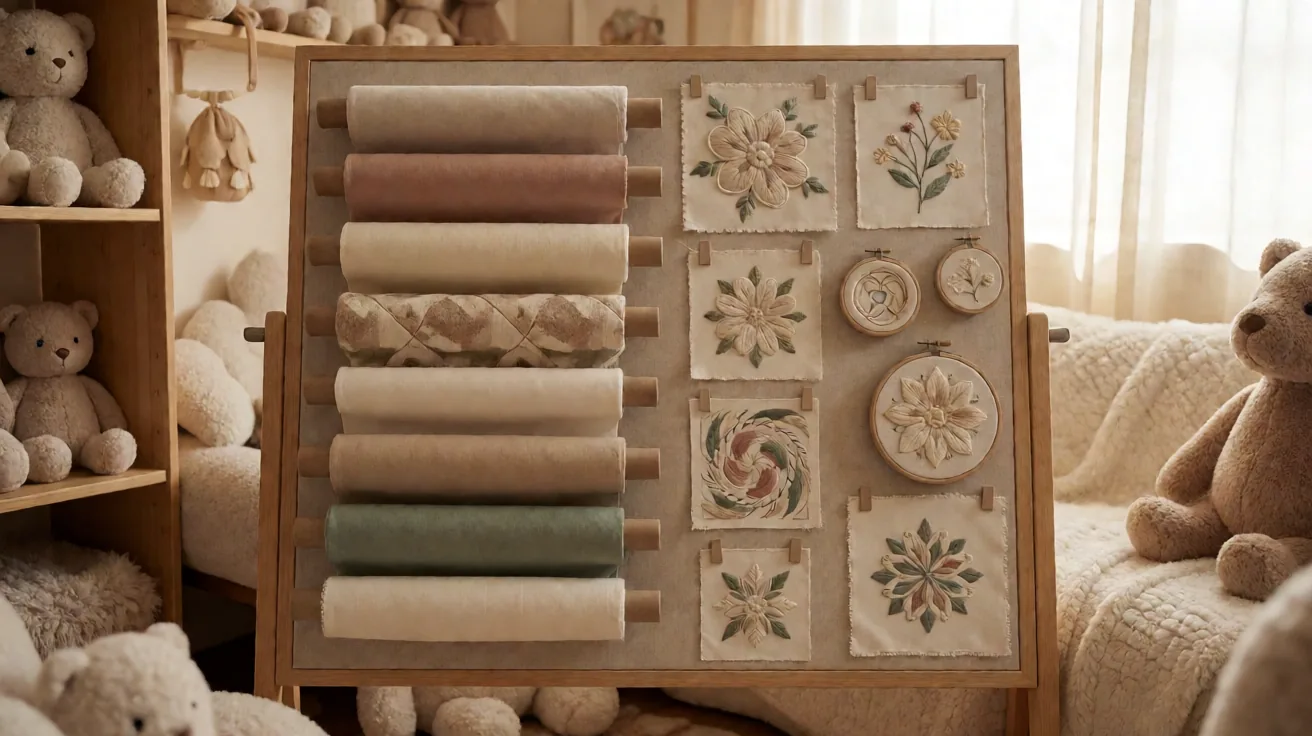
2. Standardise on the factory's fabric library. Choosing from fabrics the factory already stocks and dyes in volume removes the colour minimum entirely. Custom-dyed fabric is a 1,500-unit decision dressed up as a design decision.
3. Separate tooling fees from the goods price. A transparent factory will quote pattern and embroidery-digitising fees as a line item, keep them reusable for future orders, and usually let you take them with you. A factory that folds tooling into the unit price is spreading it across a small run - and charging you for it every time you reorder.
4. Pool the run. Combine same-fabric, same-process styles into one production slot - three colourways, one batch. Pooling is how an order of 300 pieces per style becomes a schedule the line can actually run efficiently.
5. Keep the supply chain in one house. Fabric, cutting, embroidery, sewing, electronics assembly, voice testing and packing in one coordinated flow. No waiting on a third-party kitting sequence, one responsible party when something goes wrong, and internal fit checks before the pilot run instead of after.
What You Can Cut - and What You Cannot
Cheap to cut: the number of fabric colourways, complex multi-layer appliqué, branded gift-box packaging, additional characters, decorative embroidery density.
Never cut: safety testing (EN 71 for the EU and UK, CPSIA and ASTM F963 for the US, plus EMC and battery testing for any voice-equipped toy), material safety grade of the fabric and filling, seam and small-parts durability, and outgoing QC. Also never cut the accountability line: collapsing the supplier count saves friction, not quality. Cutting a testing step to shave a few cents a unit is how a factory recall starts.
Read the quote like a buyer
Red flag: a 300-unit quote identical to the 5,000-unit price with no tooling line. Either the tooling is hidden in the per-unit price - and you will pay for it again on every reorder - or the goods spec has quietly shrunk.
Red flag: an unusually low per-unit price that omits certification or uses an unlisted filling material.
Green flag: tooling quoted separately and reusable; fabric chosen from a stated in-stock library; a documented in-house process list; the same team handling sampling, production and testing.
The Honest Limits of a 300-Unit Run
Small-batch production is real, but it has boundaries. It works when the design is not structurally complex, the fabric sits inside the factory's standard range, and you can accept a schedule in the region of 45 days rather than 25. The more customised the product - bespoke shell, unusual materials, bespoke voice module - the larger the gap to a 5,000-unit price becomes.
And a rule worth remembering: the smaller the order, the more you need a single-source supply chain. A 5,000-unit run can absorb a supplier's mistake. A 300-unit run cannot absorb a two-week wait on the wrong trim.
Summary
Low MOQ is not a pricing trick and it is not free. It is the result of moving fixed cost off the unit - through modular design, standard fabrics and separated tooling - and moving coordination cost inside the walls of one factory.
If you are planning a first run, start with the launch timeline from idea to shelf, then read how AI toy mould cost is really structured, and how a real USD 29.99 AI plush BOM leaks margin. If you are still screening factories, work through how to choose an AI plush toy manufacturer and the China AI toy sourcing guide.
Niokyar runs 300-piece MOQ orders in-house - fabric, embroidery, sewing, AI voice module assembly and testing under one roof, with tooling quoted separately and reusable. Book a factory visit or request a sample quote, or browse the AI plush toy range.
Comments
No comments yet — be the first to share your thoughts.