2026-09-14
How to Choose an AI Plush Toy Manufacturer in 2026: A 9-Point Buyer Checklist
An AI plush toy is not one product. It is a plush shell, an electronics module, a voice engine, a firmware stack, a battery assembly and a certification dossier — and the factory you choose decides whether that stack launches on time, passes certification on the first submission, and holds its margin at scale.
The stakes are higher than they look. AI toy sales grew 283% year over year heading into 2026, but the category also carries a brutal statistic: 30–40% of AI toy returns trace back to features that did not work as promised. Most of those failures are not design mistakes. They are supplier mistakes — interfaces that do not match, firmware that does not ship, compliance files that do not line up. Choosing the wrong factory is the single biggest driver of the return rate you will inherit.
So forget the "compare five quotes and pick the cheapest" playbook. The real question is not "how low is your price?" It is "who is accountable for the final product?" This checklist gives you the nine points that separate a partner from a problem.

Start With Your Price Point and Age Band
Before you contact a single factory, decide two things, because they silently determine every other answer.
Your retail price target. Work backwards from what your channel can charge. As a rule of thumb, wholesale price lands at roughly 1.5–2.2 times the landed factory cost, and retail at 3–4 times wholesale. If your target retail is $49, your factory conversation starts in a very different place than if it is $19. A factory that quotes the same platform for both is not being honest about your margin.
Your age band. A toy for a 3-year-old and a companion for a 10-year-old are different products with different compliance paths and different AI behavior expectations. Age band decides which certifications matter, how the voice interaction should be designed, and how the toy's "personality" should be tuned. Do not let a supplier choose this for you.
OEM vs ODM: Know Which Customization You Actually Need
Buyers often ask for "customization" without knowing which of two very different routes they mean.
- ODM (white-label). You take a factory's proven platform and change branding, packaging, and sometimes colors and content. Faster to market — typically 4–8 weeks to shelf — lower MOQ, lower cost. The risk is lower differentiation.
- OEM (true custom). You design appearance, features and software from scratch. Maximum differentiation, but slower, more expensive, and it only makes sense when the partner owns engineering end to end — see the next two sections for why that ownership matters so much for AI products.
Most first-time AI toy buyers should start ODM and graduate to OEM once they have sales data. The factories that make this transition smooth are the ones worth keeping.
The Hidden Cost of a Fragmented Supply Chain
Here is the trap that swallows most first orders. Because an AI plush toy spans plush, electronics, voice, firmware and battery, many buyers assemble a supply chain from separate specialists: a plush factory, a voice module vendor, a firmware studio, a battery supplier.
The math of fragmentation is brutal. Every extra vendor adds a handover — a time-zone gap, a spec mismatch, a blame vacuum. Your plush factory says the voice module is the electronics factory's problem; the electronics factory says the firmware is the software house's problem. Meanwhile your sample misses the boat, your certification files come from four companies with four different addresses, and your launch window closes.
The real cost is never the unit price — it is the interaction loss. When five suppliers each own 20% of your product, nobody owns 100% of the outcome. For AI toys, where hardware and software must feel like one living creature, that split is fatal: the shell does not fit the board, the LED eyes cannot match the voice response, and the companion that should feel alive instead feels broken. Those are exactly the failures behind the 30–40% return rate — interface failures born at supplier boundaries, not at any single factory.
One Team, One Accountable Owner: Why It Matters
This is why the decisive question is not "how cheap are you?" but "who owns the final product?"
A factory that controls the whole chain — design, electronics, firmware, plush, assembly, compliance and delivery — gives you one team that carries the product from first sketch to landed container:
- One accountable owner. When anything goes wrong, there is exactly one door to knock on. No finger-pointing across three factories, no "not our module" phone calls.
- Integration is designed in, not bolted on. Appearance, features and software are developed together, so the LED eyes, the voice engine and the plush body are built to feel like one companion — not parts that merely coexist.
- Fewer handovers, less loss. Every eliminated handover removes a round of miscommunication, rework and delay. Streamlined supply chains are measurably faster to sample and cheaper to correct.
- One compliance dossier. CE, EN71, FCC, ASTM F963 and RoHS documents come from one entity, one test house, one shipment set — the way customs and retailers want to see them.
- Technical and business support in the same room. You talk to people who can both explain the firmware roadmap and quote the landed cost, with no relay between sales, engineering and logistics.
Full customization is only safe inside this structure. Custom appearance, custom features and custom software are high-leverage — but only when one team owns the integration risk. Spread across vendors, the same customization becomes a liability.
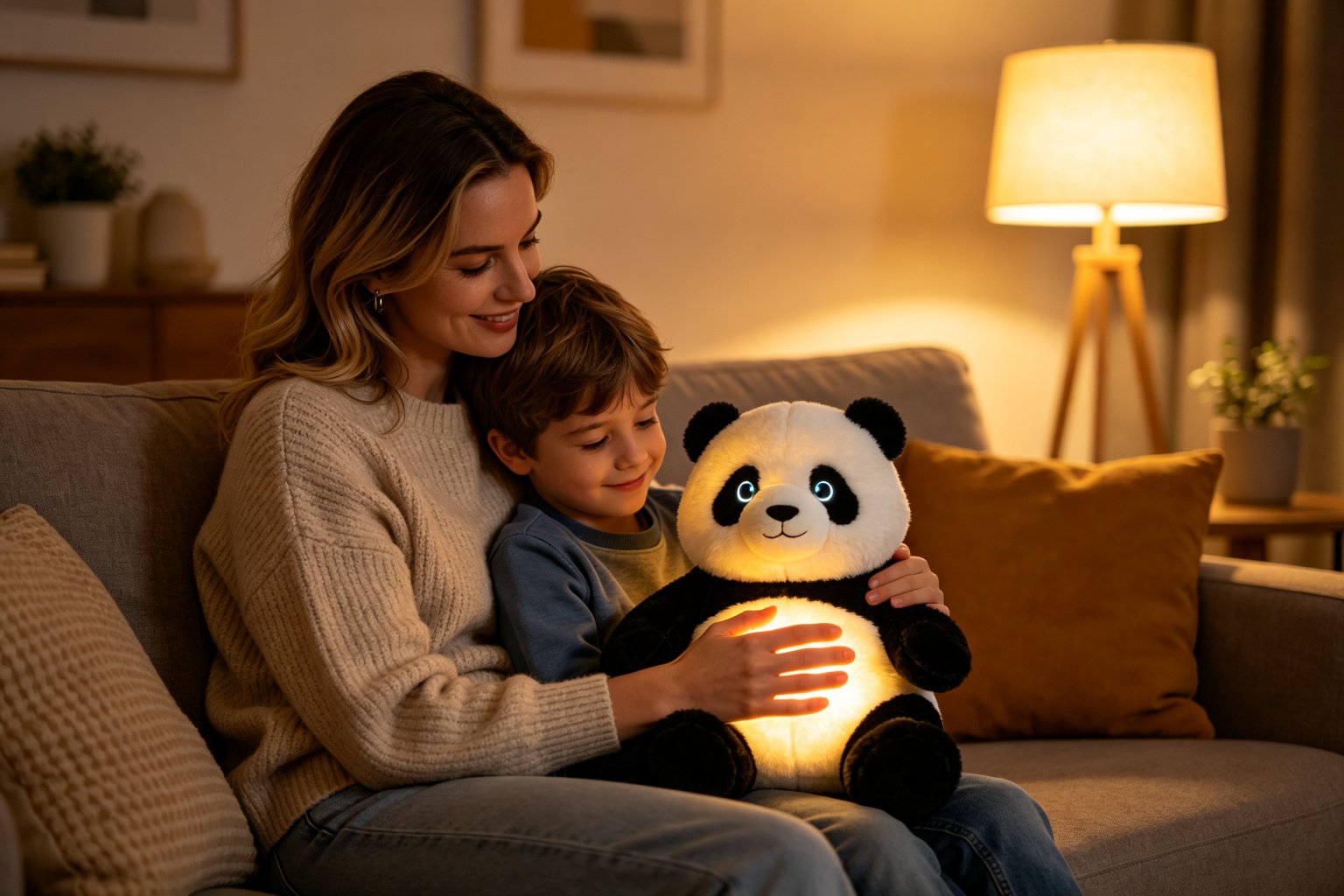
The 9-Point Factory Checklist
Use this checklist on every factory call. Ask for written answers.
1. Who owns the firmware and AI content? Many factories buy electronics and voice modules from a third party. When the supplier owns firmware and its content studio in-house, colorway changes, voice personas and content packs move fast, and one supplier replaces three vendors in your chain. Ask for evidence of in-house engineering before you sign.
2. Can the factory update firmware OTA? The AI toy you sell in 2026 will need updates — new content packs, safety patches, voice refinements. A factory with no over-the-air update capability is selling you a frozen product. Confirm the mechanism, who controls it, and what happens to the toy if the cloud service changes.
3. Does the companion have a real personality? This is the quality question that separates an AI plush from a stuffed toy with a speaker. Ask for a demo video: does the toy's voice respond naturally to a child's question? Do its eyes light up with expression that matches the moment? Can it remember a name and recall a story from last night? Remember the honest capability boundary — it will not run and jump like a person, but it can feel alive through soft fur, a warm glow, expressive LED eyes and simple robot-like gestures. A factory that can demonstrate that warmth in a demo understands the product category.
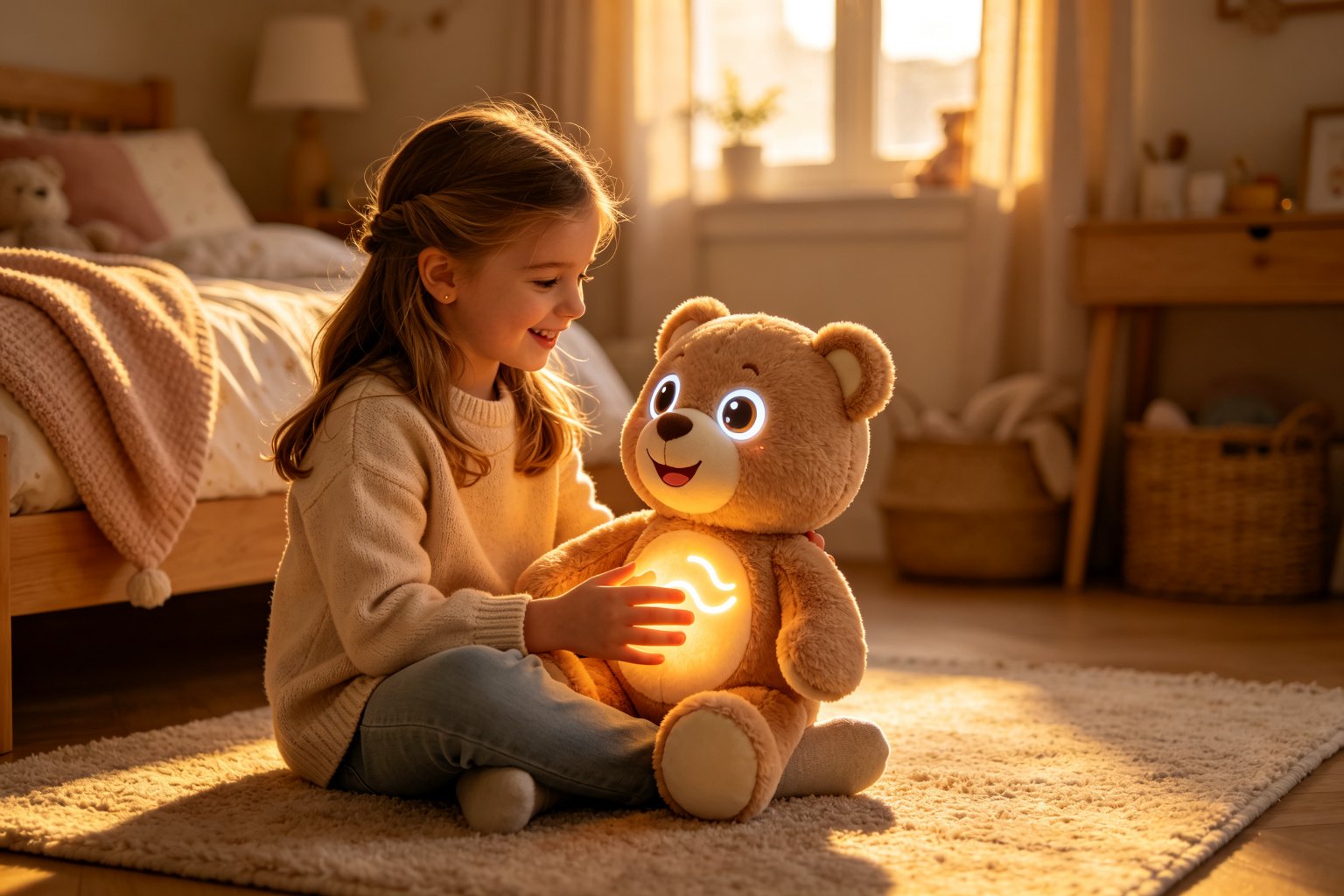
4. Can the factory match your market's certification requirements? Europe and North America are different worlds. Confirm the factory can issue CE, EN71, FCC, CPC/CPSIA and RoHS documentation with test reports and a Declaration of Conformity per shipment. For the US, know that ASTM F963 applies to toys, and if your product contains button batteries, UL 4200A and Reese's Law packaging rules are mandatory — a missing battery document is a customs hold and a retailer rejection. Ask whether the hardware is camera-free and GPS-free, and how voice data is handled under COPPA 2.0 and GDPR.
5. Where does the companion's "memory" live? Ask where voice data is processed and stored, whether it is encrypted, and whether it can be fully deleted on request. With COPPA 2.0 in force in 2026 and GDPR enforcement tightening, a supplier that cannot answer this in writing is a compliance risk you should not take. This connects directly to our COPPA 2.0 compliance guide.
6. What is a realistic sample and production timeline? A responsive factory turns a customization brief into a sample in roughly 7–10 days, with bulk production following in 25–35 days. Longer windows are often a sign that parts of the process are subcontracted — which brings back the fragmentation problem.
7. How is the minimum order quantity structured? MOQ depends on the level of change. In the 2026 market, semi-custom work (logo and color on existing designs) typically runs 100–300 pieces per style, while true custom with new tooling sits at 300–500 pieces. Below that range, you are buying sample-quality production, not retail-grade inventory. Ask for a tiered price list so the unit cost is clear before you commit.
8. Can the factory prove social compliance? Major retailers will not even open a conversation without it. ICTI, BSCI or Sedex audit certificates are table stakes for selling into Walmart, Target, Auchan or Lidl. If the factory cannot produce a current social compliance certificate, your retail dreams end before they start.
9. How will your goods be shipped and delivered? Ask for FOB, CIF and DDP options on dedicated EU and US sea and air lines, plus consolidated container loading for multi-SKU programs. A clear logistics answer means the supplier has real export volume, not just a showroom.
Red Flags: Walk Away From These Answers
A few answers should end the conversation immediately:
- "We work with partners for the electronics." Translation: nobody owns the integration risk. Expect the interface failures behind the 30–40% return rate.
- "The test report comes from the client." Certification is the factory's job. If they cannot produce reports with their own name, the dossier will not survive customs.
- "It needs a monthly subscription to work." Hidden subscription models are a top complaint driver in the category. If the toy's core play dies without a paid plan, your customers will review you for it, not the factory.
- "The sample fee is separate and non-refundable." A credible partner credits the sample cost against your first bulk order.
- "No, there is no offline mode." Cloud-dependent toys create privacy risk, connectivity complaints and COPPA exposure. Offline-first design should be standard, not a premium.
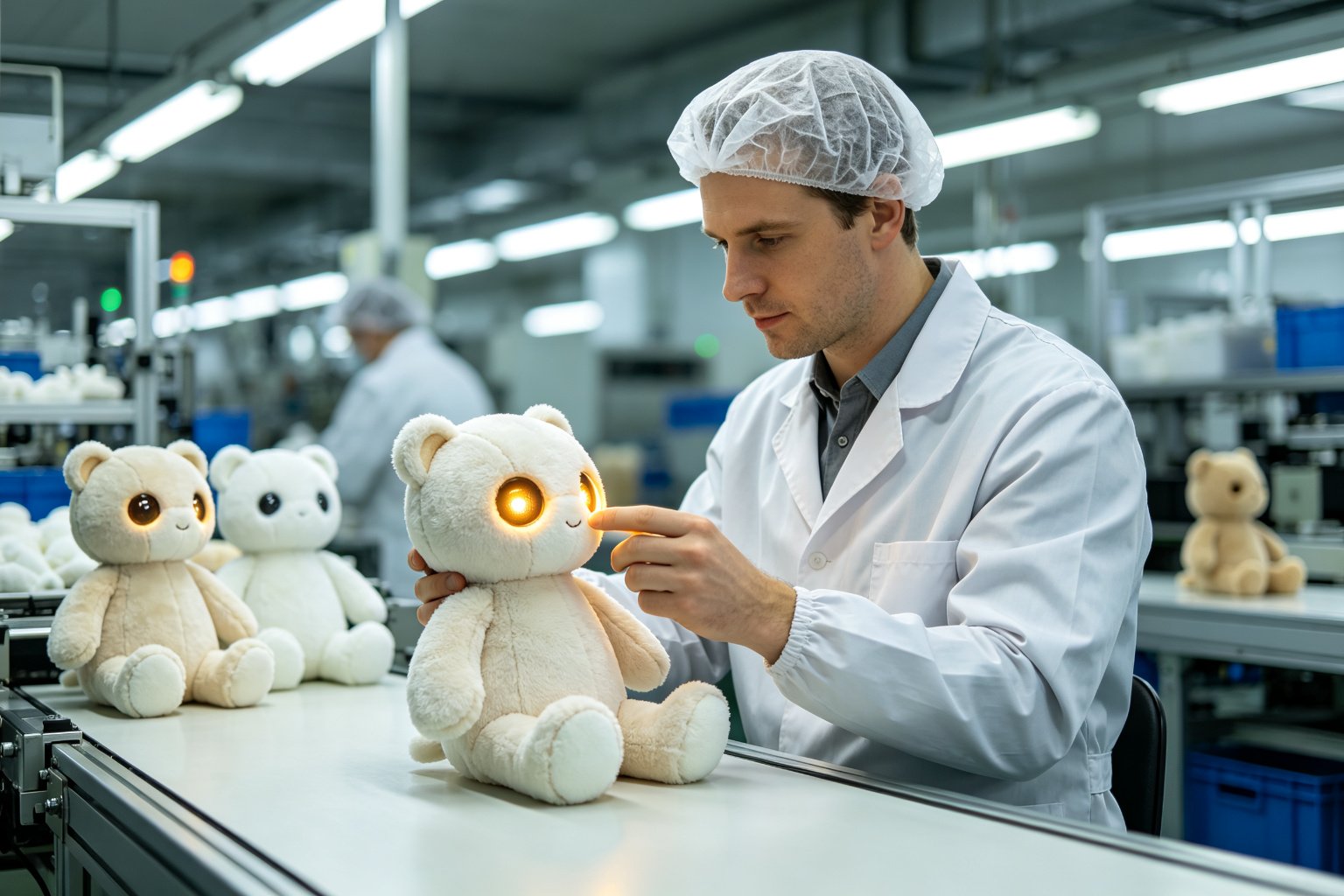
Certification by Market
The same toy needs different paperwork in different regions. Plan your certification stack before you negotiate, not after:
- European Union: CE, EN71, RoHS, REACH; EN IEC 62115 for electric toys.
- United States: FCC (wireless), CPSIA/CPC, ASTM F963; UL 4200A and Reese's Law packaging for button batteries; COPPA 2.0 data compliance for connected toys.
- Southeast Asia: SIRIM + MCMC (Malaysia), NBTC + TIS 685 (Thailand), SNI + SDPPI (Indonesia), NTC + BPS (Philippines), TCVN + MIC (Vietnam).
- Australia / other markets: confirm local standards at quote stage; the factory's export experience is usually the fastest way to discover them.
The CPSC maintains the US toy safety framework, and MING Sourcing's AI toy factory guide is a practical independent read on how to evaluate factories in practice. For a full sourcing walkthrough, start with our 2026 AI toy sourcing guide.
Sample, Then Decide
The fastest way to test a supplier is a stock platform sample. The sample cost should be creditable against your first bulk order. Once you have it in hand, evaluate four things together, not separately:
- Plush quality. Fabric feel, stitching, durability under a child's abuse.
- The personality. Does the voice feel responsive and warm? Do the eyes express emotion? Does it feel like a companion or a gadget?
- The compliance dossier. Are the certificates, test reports and DoC complete and in the factory's name?
- The software path. Can you update content? Is there an offline mode? What happens to the data?
If all four pass, move to a customized brief. If any one fails, no discount makes up for it.
Frequently Asked Questions
What is the MOQ for AI plush toys? In the 2026 market, semi-custom orders (logo and color changes on existing designs) typically start around 100–300 pieces per style, while true OEM customization with new tooling sits at 300–500 pieces. Below that range you are buying sample-quality production.
How long does sampling take? A responsive factory turns a customization brief into a sample in roughly 7–10 days, with bulk production following in 25–35 days. Longer timelines usually mean parts of the process are subcontracted.
Which certifications do AI plush toys need? It depends on the market: CE, EN71 and RoHS for the EU; FCC, CPSIA/CPC and ASTM F963 for the US, plus UL 4200A and Reese's Law compliance if the toy uses button batteries. Ask for the complete set in the factory's own name before you commit.
Do I need a different factory for the electronics and the plush? No — and that is the point. A fragmented supply chain spreads accountability across vendors, which is where interface failures, rework and certification gaps come from. A single accountable factory that owns plush, electronics, firmware and compliance eliminates most of those losses.
Can Niokyar handle full OEM customization? Yes. Niokyar is an AI toy factory covering appearance, features and software customization with one accountable team from design to delivery. Browse the wholesale catalogue or send your brief — we will return a plan covering samples, certification and landed cost.
Comments
No comments yet — be the first to share your thoughts.