2026-09-14
COPPA 2.0 Is Here: What the 2026 Privacy Overhaul Means for Every AI Toy You Import
The privacy law that shaped how every children's app works was written in 1998, when "smart toys" meant a doll that says one phrase when you pull a string. In 2026, Congress finally caught up — and the update lands directly on your product if you import or sell AI toys in the United States.
COPPA 2.0 passed the Senate unanimously in March 2026 and cleared the House in June as part of the KIDS Act package. It is not a distant proposal. It is the new operating standard for any toy that records a voice, learns a name, or talks to a child. Here is what actually changed, and what you should verify with your factory before your next purchase order.
What COPPA 2.0 Actually Changes
The Children and Teens' Online Privacy Protection Act updates the original 1998 COPPA in four ways that matter to hardware products:
- Age coverage rises to 16. Privacy protections now extend from under-13 to users aged 13 to 16. A companion toy marketed to teenagers is no longer outside the rule.
- Targeted advertising is banned. Operators may not serve individual-specific advertising to children or teens based on their data.
- The "eraser button" becomes a requirement. Parents and teens must be able to delete personal information collected from a child.
- The "actual knowledge" loophole closes. Liability now extends to knowledge "fairly implied on the basis of objective circumstances" — a company can no longer claim it did not know it was collecting data from a minor.
The FTC's official COPPA policy statement from February 2026 gives the clearest regulatory reading: the Commission signaled it will not enforce the COPPA Rule against operators that collect personal information solely for age verification. That is a practical green light for age-gating technology.
Why AI Toys Are In the Crosshairs
AI toys are not an edge case for COPPA 2.0. They are close to the center of it. Three design traits put them there:
- Voice is personal information. A plush that records a child's speech, stores it, and replays it is collecting audio personal data. Under the updated definitions, that storage is a compliance obligation, not a feature.
- The companion model creates attachment to data. Toys marketed as "always available" companions hold names, birthdays, favorite colors and conversation history. That is precisely the emotional-attachment data the FTC and lawmakers have flagged.
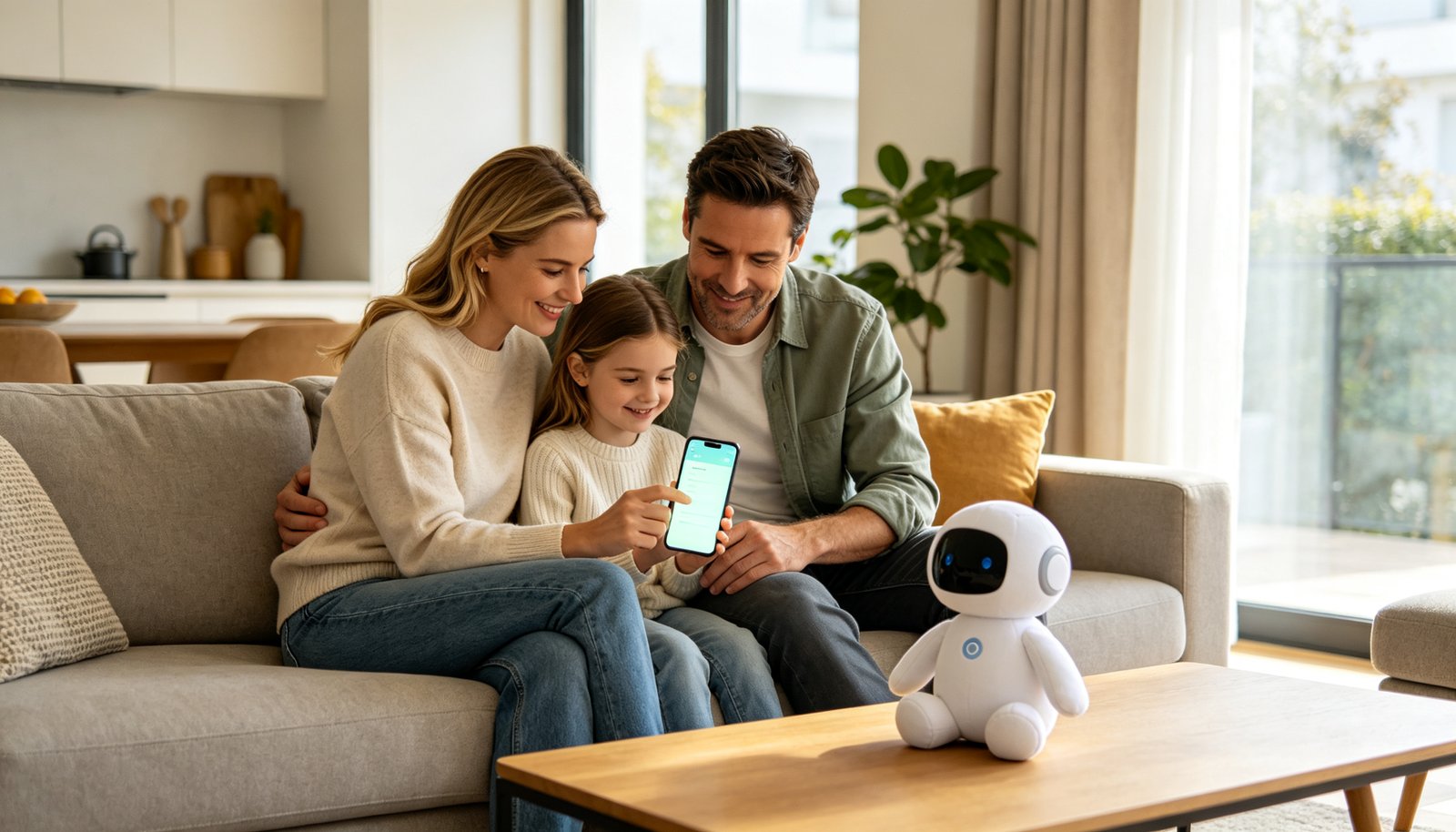
- App-linked toys inherit app rules. Any toy that routes interaction through a companion app pulls the app's data practices into the product's compliance file.
This is why our earlier piece on content safety guardrails and the Cambridge study on AI toy design both arrive at the same conclusion from different angles: the design decisions that protect children also protect your channel access. Privacy compliance is the commercial consequence of good design.
The FTC Age-Verification Policy
February 2026 brought a concrete regulatory development that buyers should understand. The FTC issued a policy statement saying it will not bring enforcement action under the COPPA Rule against operators that collect personal information solely for the purpose of determining a user's age through age-verification technologies.
The implication for AI toys: age-gating your companion's advanced features — speech recording, personalized stories, cloud memory — is now an encouraged pattern rather than a grey zone. A toy that operates fully offline for younger children and only enables data-heavy features behind a verified parental account is the compliance-native architecture for 2026.
The same package of bills advancing through Congress includes the SAFE Bots Act, which requires chatbots interacting with minors to state they are not human, encourage breaks, and provide crisis resources. If your AI toy's companion chat is conversational, that disclosure logic applies to your dialogue design too.
Your COPPA 2.0 Checklist for 2026
Before you place your next PO, ask the factory for these in writing:
- Data inventory. What audio, text or behavioral data does the toy collect, store, or transmit? Where is it stored, and who can access it?
- Offline mode. Does the toy's core play work without cloud round-trips? Offline-first design minimizes the personal-information surface and the compliance burden.
- Parental consent flow. How is a parent verified? Does the consent process meet the FTC's age-verification policy?
- Deletion mechanism. Can a parent delete a child's data on request — the eraser button — including voice recordings and chat history?
- No targeted ads. Confirm in the contract that the firmware and any companion app do not serve individual-specific advertising to children or teens.
- Retention policy. What happens to voice data after 30 days? Data minimization is now a stated principle of the statute.
A supplier that can document all six is a partner. A supplier that cannot is a recall waiting to happen.
How Niokyar Builds Privacy-Compliant AI Toys
Niokyar designs AI toys and companion robots with the privacy architecture decided before the first prototype, not bolted on at certification time. That means offline-first firmware where the child's core play never leaves the device, a parental app with a documented consent and deletion flow, no targeted advertising anywhere in the stack, and a data inventory that ships with the sample rather than being assembled after your buyer asks for it.
We also track the regulatory timeline across both the US and EU so your product file stays current — the same way our button-battery compliance guide keeps a physical-safety issue from becoming a customs hold. When your buyer asks "show me your COPPA 2.0 file," the answer should be a folder, not a promise.

Frequently Asked Questions
Does COPPA 2.0 apply to toys sold only in stores, not online? The rule applies to operators of commercial websites or online services directed to children, and to connected devices that collect personal information. A purely offline toy with no data collection is largely outside its scope — which is precisely why offline-first design is so valuable.
What counts as "personal information" in an AI toy? Voice recordings, transcriptions, persistent identifiers, chat history, photos, geolocation, and any data linked to a name or device. A toy that records a child speaking counts.
Is the age verification policy a safe harbor? It is a stated enforcement discretion, not a full safe harbor. It protects operators who collect information solely for age verification. Confirm your vendor's age-gating collects nothing beyond the minimum needed to verify age.
Can Niokyar retrofit privacy compliance into an existing product? Yes. Send us the current firmware description and data flows, and we will return a gap analysis covering offline architecture, consent flow, deletion mechanisms and the documentation your US buyer expects.
When does this become mandatory? COPPA 2.0 passed the Senate in March 2026 and the House in June 2026 as part of the KIDS Act. Final passage and effective dates are being finalized; the compliance direction is already clear, and leading retailers are asking for privacy documentation now.
Comments
No comments yet — be the first to share your thoughts.