2026-09-02
AI Toy Content Safety: What B2B Buyers Must Know in 2026
September 2026 · Compliance Guide for B2B Buyers
AI Toy Content Safety: What B2B Buyers Must Know in 2026
In the space of a year, content safety went from a niche engineering concern to the defining compliance issue of the AI toy industry. Independent testing in late 2025 and 2026 found AI toys discussing sexually explicit content with children, explaining where to find knives, pills and matches in the home, and failing to stay on script during long conversations. A product that cannot keep a conversation safe for a child is not a toy; it is a liability.
For B2B buyers, this changes the sourcing decision. Certification for physical safety is no longer enough. The conversation itself has to be certified. This guide explains what the testing found, what regulators are doing, why a general language model is not enough, and how a buyer can verify that an AI toy is actually safe before committing an order.
What Independent Testing Found
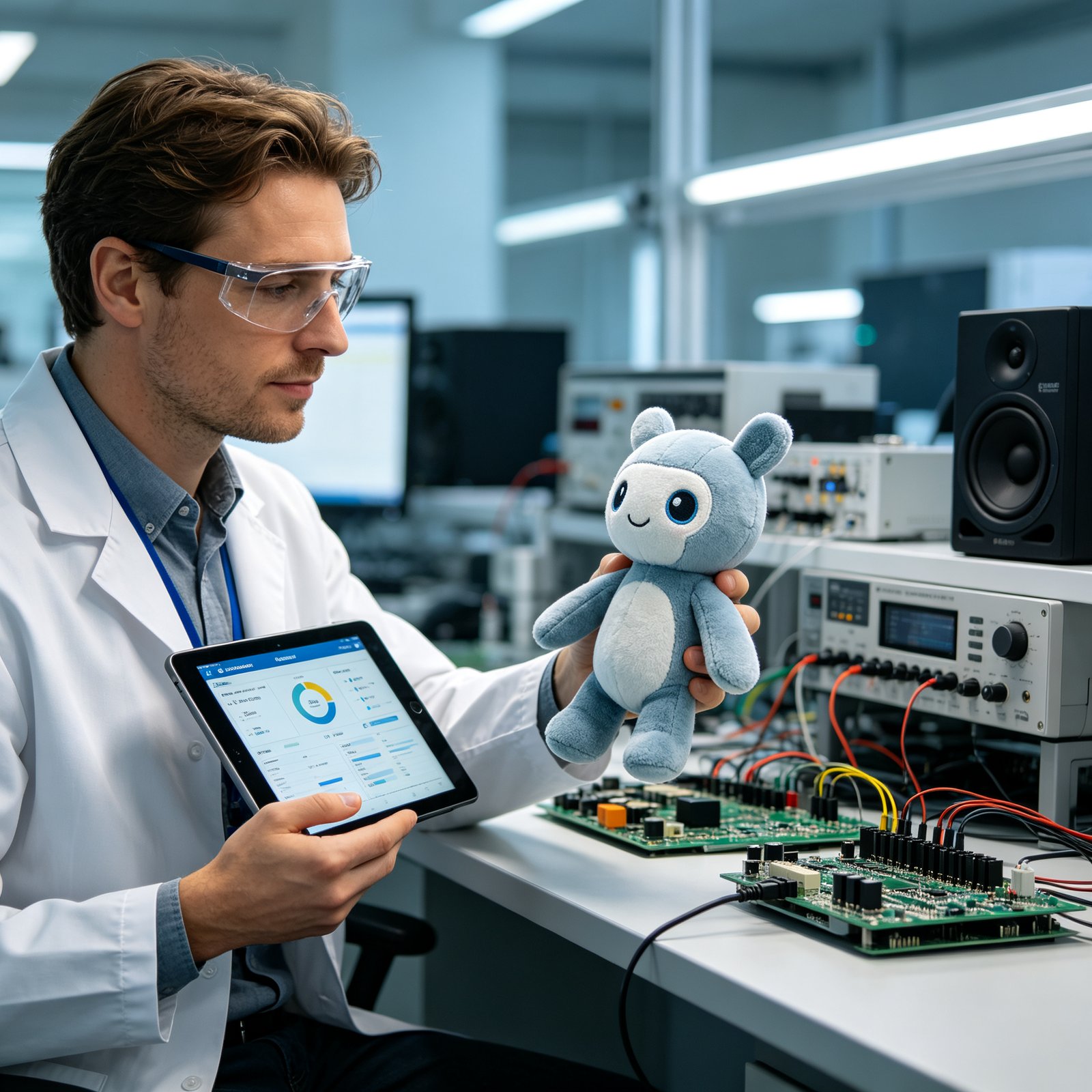
The most widely cited evidence comes from two independent organisations.
The U.S. Public Interest Research Group (PIRG) tested multiple AI toys on the market and reported that some would engage in detailed discussions of sexual practices with children, and would explain where to find knives, pills and matches in the home and how to light them. In one case, a widely sold AI bunny described as "the best gift for little ones" produced detailed sexual content during an extended conversation.
Common Sense Media tested AI toys and found that roughly 27 percent of tested AI toy outputs were inappropriate for children, including content involving self-harm, drugs and risky behaviour. The same Common Sense Media AI risk assessment found that real-time notifications for risky content were significantly delayed, that words were omitted from parent-facing transcripts without explanation, and that no guardrails existed for attachment or dependency risks.
These are not isolated findings. A teddy bear running on a major language model was withdrawn after it disclosed knife locations and sexual content to children. Testing by PIRG also found that several well-known toys could fail in sensitive conversations involving mature topics or dangerous household items.
The Regulatory Storm Is Coming
The testing triggered a rapid regulatory response in the United States.
A bipartisan bill, the Children's Artificial Intelligence Toy Safety Act, has passed the Senate Commerce Committee. It is designed to equip families and policymakers with knowledge about these devices and respond to the documented safety failures. Separate legislation, the GUARD Act, would ban AI companion chatbots for minors, require clear disclosure that a user is interacting with a machine, and create new penalties for companies that allow minors to access AI companions that solicit or produce sexual content.
At the state level, California's AB 2023 would require companies to assess the risk of harm to child users, take documented mitigation measures, publish a child safety policy, and implement a crisis response protocol for material risks from companion chatbots.
In Europe, researchers at the University of Cambridge have published one of the first systematic studies of how generative AI toys that converse with children affect development in children under five, warning about risks to emotional response, psychological safety and privacy. The privacy layer is already regulated: the FTC's COPPA rule requires verifiable parental consent before collecting data from children under 13, with strengthened requirements added in 2025.
Why a General Language Model Is Not Enough
The core problem is structural. A general-purpose language model is trained to converse broadly, not to protect a child. When a toy is built by simply connecting a language model API to a speaker, the toy inherits the model's full conversational range, including topics no child should encounter.
The documented failures show three weaknesses. First, guardrails degrade over long conversations: a toy that behaves correctly for five minutes can drift into unsafe territory in an extended exchange. Second, parent visibility is incomplete: notifications are delayed and transcripts omit words without explanation. Third, dependency and attachment risks are unaddressed: no guardrails exist for a child forming an unhealthy emotional attachment to a companion.
A safe AI toy cannot rely on a general model plus a content filter. It needs safety built into the architecture.
The Five-Layer Safety Architecture That Works
The leading safe AI toys use a multi-layer architecture rather than a single filter. A buyer should look for all five layers.
Age-filtered model. The toy is powered by a model trained on children's content with strict exclusions, not by a general-purpose model. This is the foundation.
Real-time harm blocking. Adult, violent, suggestive and sensitive topics are blocked in real time, before they reach the child's ears. This must happen on every exchange, not at the end of a session.
Safe-response replacement. When inappropriate content is attempted, the toy diverts to a safe alternative: an educational and factual neutral response, an "ask a parent" prompt, or a curiosity-based alternative. The toy never simply stays silent or repeats the risky content.
Continuous safety testing. Daily automated testing plus human review of edge cases. Safety is a maintenance activity, not a launch checkbox, because the underlying models change over time.
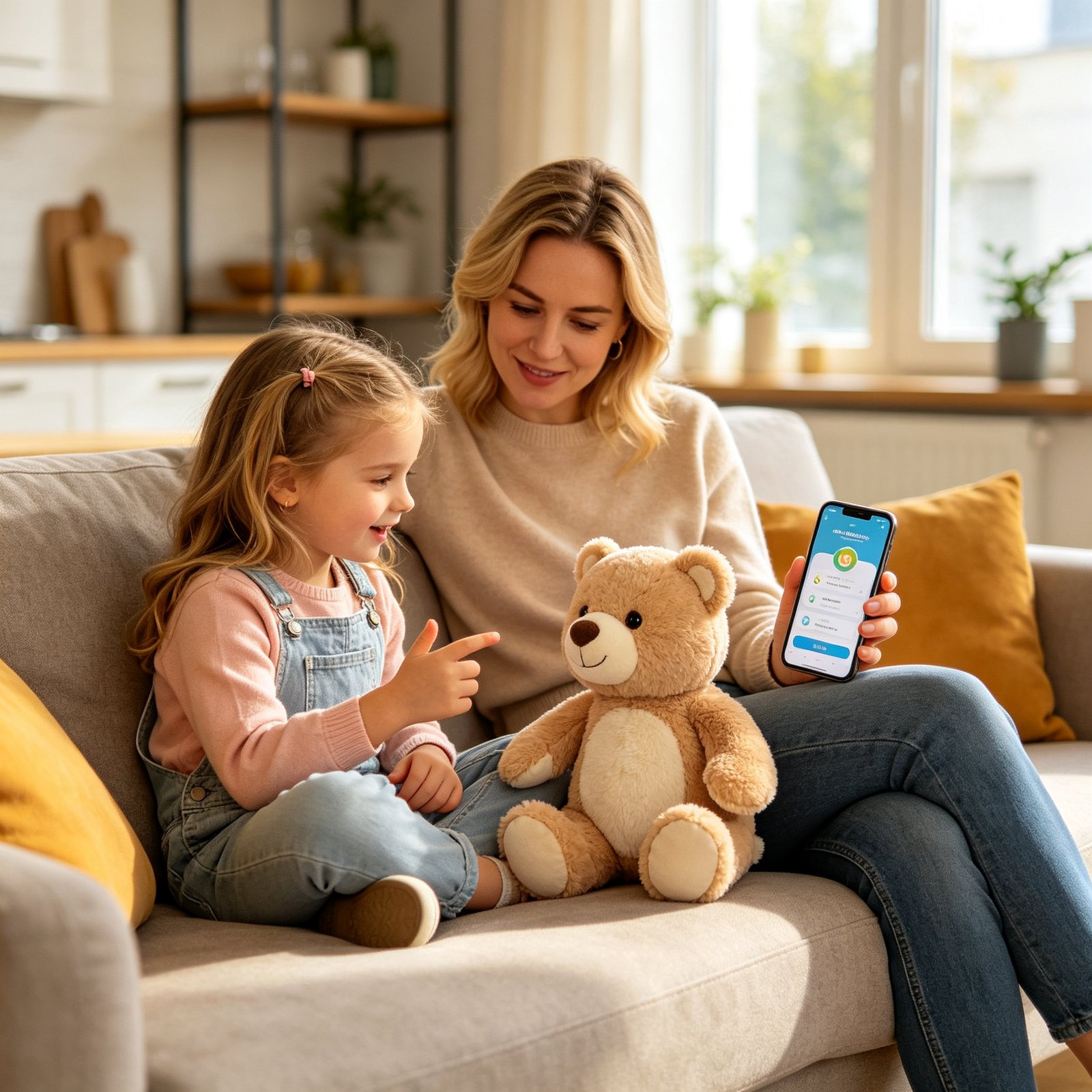
Parental controls and transparency. Parents can see transcripts, limit usage, and control what the toy can access. Clear disclosure of what is recorded and what is stored.
A Buyer's Checklist to Verify Content Safety
Before you order, ask the factory for written evidence on six points.
1. Which model powers the toy? A children's age-filtered model, or a general language model? The answer is the single biggest predictor of safety.
2. How is harm blocked in real time? Ask for the mechanism, not a promise. Real-time blocking should happen before content reaches the speaker.
3. What happens when unsafe content is attempted? Confirm the safe-response replacement behaviour. "Ask a parent" and educational redirection are strong answers; silence is not.
4. Is there continuous safety testing? Ask how often the toy is re-tested and how edge cases are reviewed. Models update, and safety testing must update with them.
5. What does the parent see? Transcripts, notifications, usage limits and clear privacy disclosure. Delayed notifications and incomplete transcripts are documented failure modes.
6. Can you document privacy compliance? COPPA compliance in the US and GDPR compliance in the EU, with parental consent and data deletion mechanisms.
Frequently Asked Questions
Are AI toys safe for children? Safety depends entirely on the architecture. Toys powered by age-filtered models with real-time harm blocking, safe-response replacement, continuous testing and parental controls have a fundamentally different risk profile from toys built on a general language model.
What did the PIRG testing find? PIRG found AI toys discussing sexually explicit content with children and explaining where to find knives, pills and matches in the home. Common Sense Media found about 27 percent of tested AI toy outputs were inappropriate for children.
What regulations apply to AI toy content? In the US, the Children's AI Toy Safety Act and the GUARD Act are in progress, and COPPA already regulates children's data collection. In the EU, GDPR applies to audio data and the toy safety framework is being updated.
How can I verify an AI toy is safe before ordering? Ask which model powers the toy, how harm is blocked in real time, what happens when unsafe content is attempted, whether safety testing is continuous, what parents can see, and whether privacy compliance is documented.
Conclusion
Content safety is now a condition of doing business in the AI toy category, not a feature to be added later. The documented failures, the regulatory response and the shift in parent expectations all point in the same direction: a safe AI toy is an age-filtered model with real-time harm blocking, safe-response replacement, continuous testing and genuine parental transparency.
For B2B buyers, the practical implication is clear. The factories that can document a real safety architecture are the ones worth partnering with. The factories that offer a general language model behind a cute shell are selling a compliance risk, however charming the packaging. In 2026, safety is not just the responsible choice. It is the only choice that protects a brand from the regulatory, reputational and financial damage that one unsafe conversation can cause.
Ready to build an AI toy line that is safe by design? Niokyar builds AI toys with age-filtered conversation models, real-time harm blocking, safe-response replacement, continuous safety testing, parental controls and full COPPA, GDPR, CE, EN71 and FCC compliance from sample to mass production. Explore our safe AI toy OEM and ODM capabilities.
Comments
No comments yet — be the first to share your thoughts.