2026-09-28
Why an AI Toy Mold Costs USD 1,200 — and Another Costs USD 24,000
Two buyers once sat across from us with the same part drawing. Same plush AI toy housing, same plastic, same factory. One received a mold quote of USD 1,200. The other was quoted USD 24,000.
Both asked the same question: "Which one is ripping me off?"
The honest answer: neither. They were not buying the same mold. They were buying two different sets of decisions wearing the same drawing.
If you are sourcing AI toys with injection-molded parts, this is the single most misunderstood number in your whole project. This guide breaks down where toy mold cost actually goes, why AI toy molds are different from industrial molds, and how to check a quote line by line — in under ten minutes.
Why an AI Toy Mold Is Not an Industrial Mold
An industrial bracket lives in a machine room. A toy mold lives under a different set of pressures.
- Volume is high. A successful toy runs hundreds of thousands of units. A mold that cannot survive 300,000 shots is not a tool — it is a cost you pay twice.
- Appearance matters more than structure. Toy parts are held, squeezed and stared at by children and parents. Visible sink marks, flow lines and weld lines get rejected at retail. That means more polishing hours than an industrial bracket will ever need.
- Safety constrains the design. No sharp edges, no pinch points, no small parts that can detach. Under EN 71-1 and CPSIA, the mold design itself has to make those outcomes impossible — which often means more complex parting lines.
- Materials are regulated. Toy plastics must meet EN 71-3 migration limits and CPSIA heavy-metal limits. The material choice interacts with the mold: different shrink rates, different flow, different polish behaviour.
That is why a toy mold quote is not a number you compare on a spreadsheet. It is a sum of decisions — and you should know which decisions you are paying for.
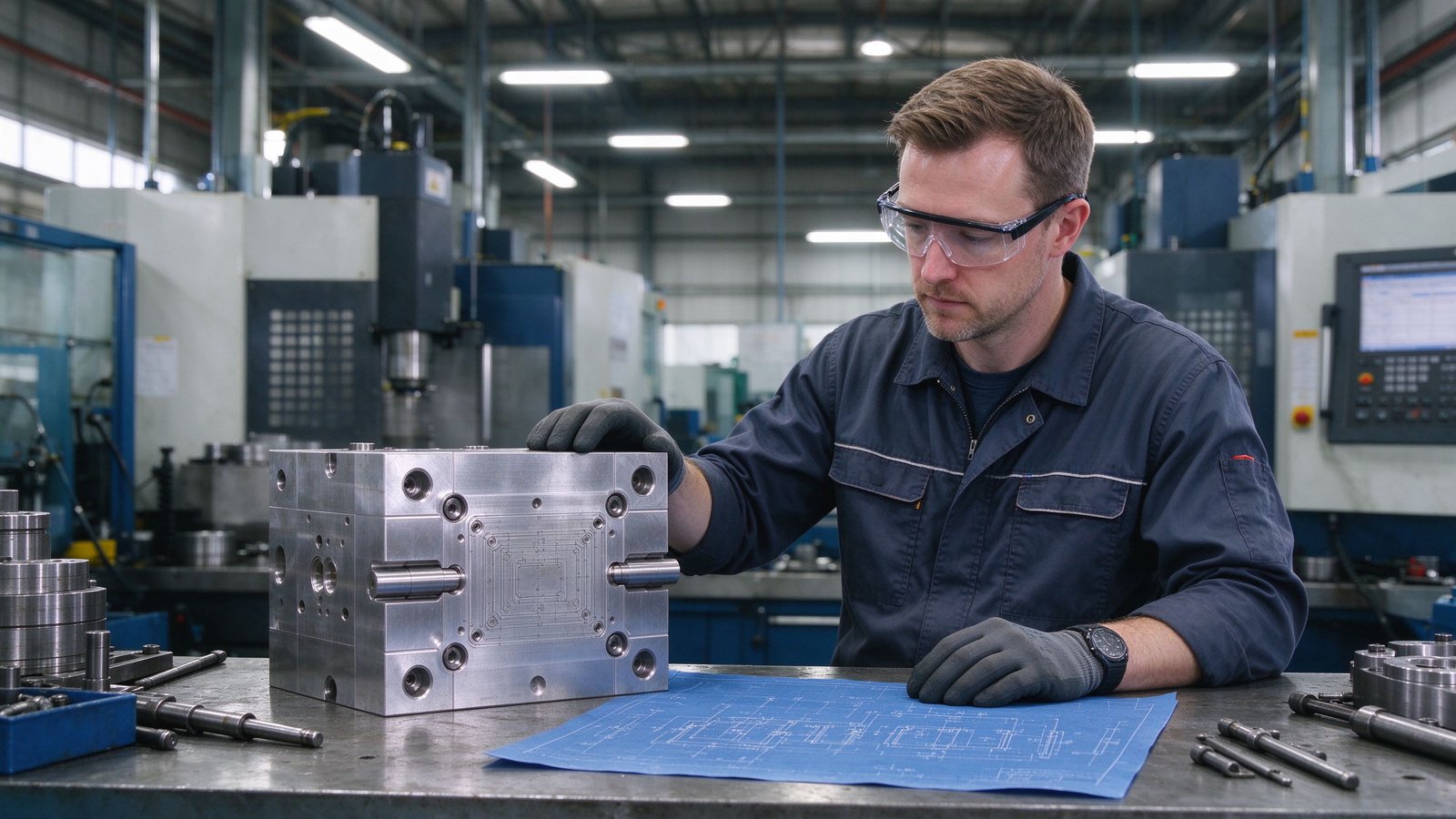
The Three Inputs That Drive Everything
Before any cost is calculated, three variables set the range.
Part size. The mold must be bigger than the part, by the wall thickness required to hold injection pressure. A bigger part means a bigger steel block, a bigger machine and more hours on every operation.
Cavity count. How many parts come out per shot. One cavity is cheapest to build and most expensive per part. A 16-cavity mold costs more to build and dramatically less per part. Toy buyers with real volume should almost always pay for cavities.
Complexity. Sliders, lifters, undercuts, hot runners, deep ribs, tall cores. Every mechanism is hours of machining plus a failure mode that may only appear in production.
A useful rule from the industry: the material cost of a mold can be as low as 20 percent of the total. The other 80 percent is work — design hours, machining hours, polishing hours, and trial rounds.
Where the Money Actually Goes
For a mid-size toy mold in China, the cost splits roughly like this:
- Design and DFM — converting a drawing into a manufacturable mold, checking draft angles, shrink, gate positions
- Machining — CNC, high-speed milling, EDM for the detail work; the wildcard line, and where an experienced supplier earns its margin
- Polishing — the finish on visible toy surfaces; mirror polish can double the hours
- Heat treatment — hardening the cavity steel so it survives 300,000 shots
- Trial rounds — first shots, flow and warp fixes, the second round nobody budgets for
- Steel — the block itself, often the smallest line
For very large and simple molds — think a chair or a bucket — material can reach 60 to 70 percent. For small, complex, high-cavity toy parts, machining dominates. That is why comparing two toy mold quotes on price alone is meaningless: you are comparing different piles of hours.
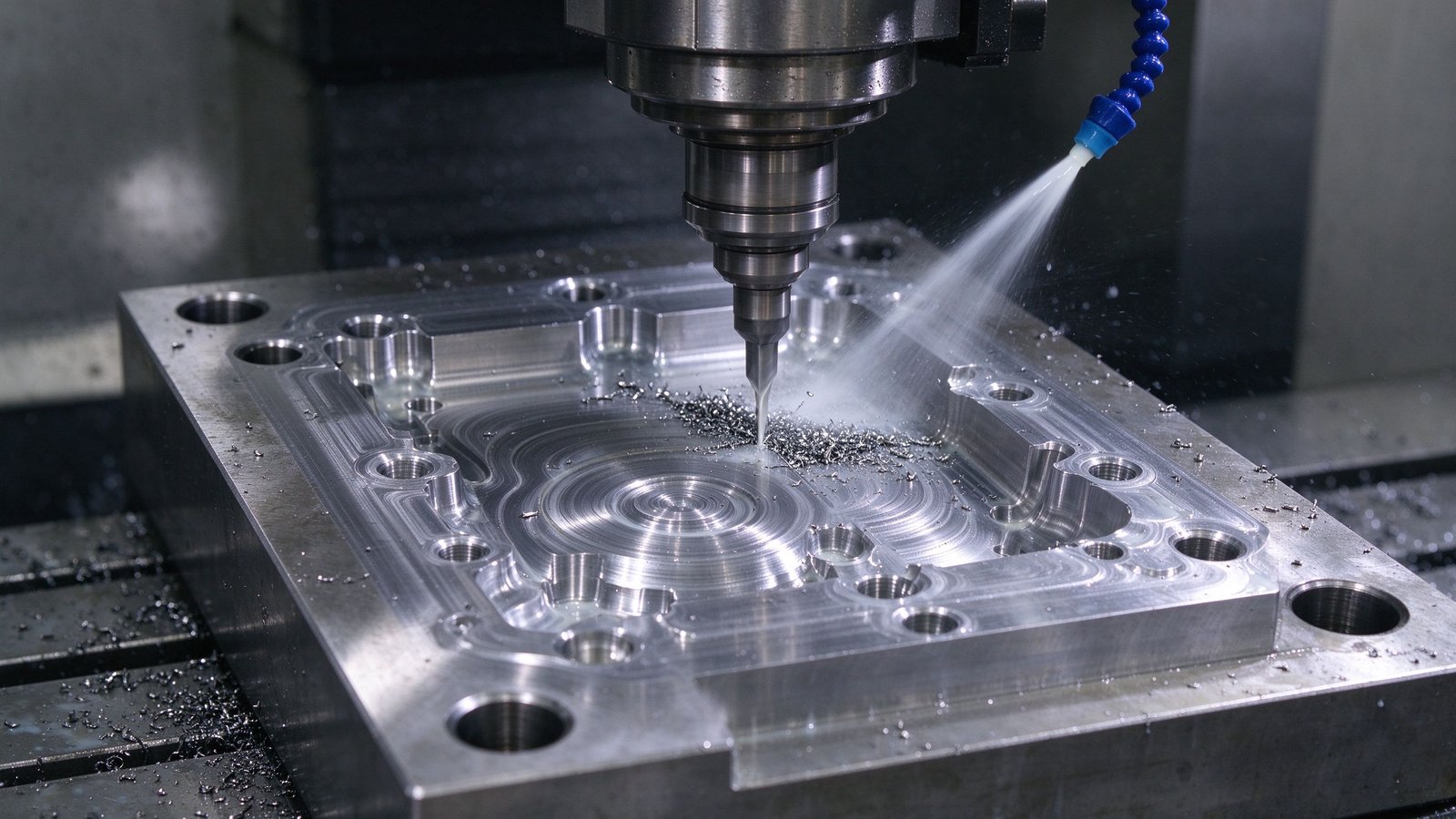
What Makes an AI Toy Mold Different
An AI toy is not a plain plush with a squeaker. It has electronics, and electronics change the mold.
- Glowing eyes mean a clear lens part with a light-guide, molded separately and assembled — that is extra tooling and a tight-fit requirement.
- Voice holes and microphones need clean acoustic ports in the housing — thin walls, small features, more polish.
- A battery compartment needs a door, a spring contact seat, and no sharp edges near the child — sliders or lifters.
- Touch sensors under plush can require overmolding or a carrier part that sits flush — a second shot, sometimes a second mold.
Every one of those is a slider, a lifter, a deeper core or a tighter tolerance zone. And every one is why an AI toy mold lands at the top of the complexity range — closer to USD 8,000 to 40,000 than to USD 1,200.
The Multiplier Shortcut: A 30-Second Quote Check
When you need a fast sanity check on a quote, use the multiplier method.
Mold price = total material cost x price factor
The price factor typically runs between 2.5 and 5. A simple single-cavity mold with no sliders sits near the low end. A high-cavity, multi-slider, mirror-polished AI toy mold sits at the top.
What pushes the factor up:
- Mold size — larger molds trend toward a lower factor, because material dominates
- Complexity — sliders, lifters, unscrewing cores
- Precision — tight tolerance zones, optical surfaces for glowing eyes
- Deep ribs and tall cores — more EDM electrodes, more polishing hours
- Hot runner systems — adds material and control cost
- Cavity count — more cavities means more of everything
- Steel hardness — pre-hardened 28-40 HRC versus fully hardened 46-54 HRC changes both machining time and tool life
If a quote comes in far below your multiplier estimate, ask which hours were skipped. There is always an answer.
A Real AI Toy Mold Breakdown
Here is a worked example: an AI plush housing with a lens eye port and a battery-door slide, roughly 150 x 150 x 15 mm, PP, 718H steel.
- Simple version — single cavity, no lens insert, standard finish: low four figures, simple parting line, no sliders beyond the battery door.
- Production version — four cavities, a clear lens insert, mirror-polished visible surfaces, a hot runner, fully hardened cavity steel: USD 8,000 to 15,000 or more.
Notice what did not change: the plastic. The plastic was never the cost driver. The hours were.
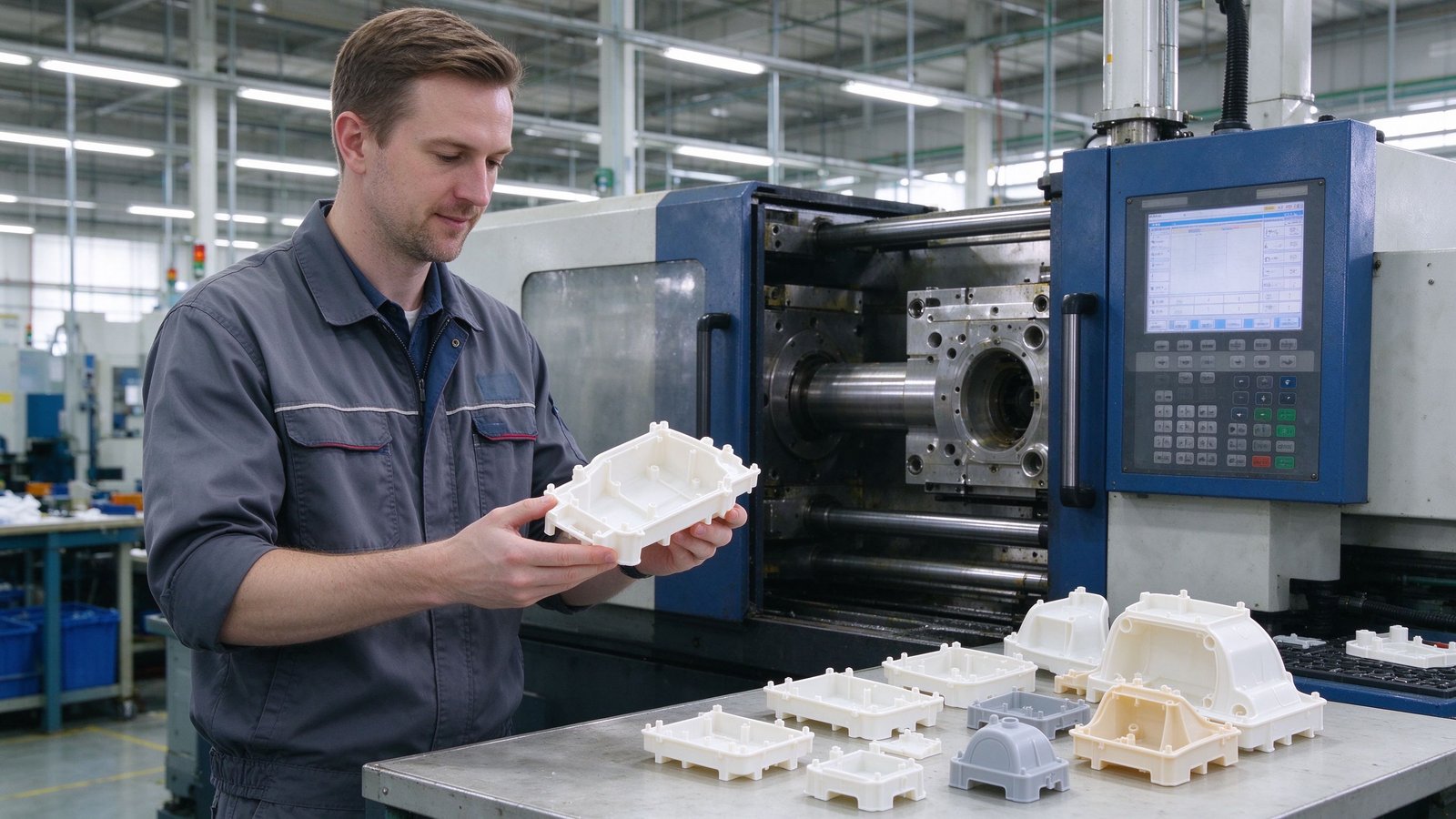
This is also why the same drawing quotes USD 1,200 from one shop and USD 24,000 from another: steel grade, cavity count, polishing standard, heat treatment, and whether the supplier included DFM work and trial rounds in the number.
Five Ways to Cut Mold Cost Without Cutting Quality
- Design out the undercuts. Every slider you remove saves machining hours and a maintenance item. Print the part, hand it to a child, and watch where it breaks — then design the mold so the parting line sits where the force is lowest.
- Use a family mold. If you have three small toy parts in the same material and colour, one family mold costs less than three separate molds and produces them in the same cycle.
- Match steel to function. The cavity side wears from flow and abrasion. The core side often does not need the same grade. A lower grade on the core can cut material cost meaningfully with no change in tool life.
- Standardize your mold base. Reusing a standard base size across a product family reduces design hours, shortens lead time, and makes spares simpler.
- Pay for cavities when the volume is real. A single-cavity mold is cheaper to buy and more expensive to run. At 100,000 units, the extra cavities usually pay for themselves in machine time within one production cycle.
The underlying principle — how injection tooling is designed and built — is worth understanding before you negotiate, not after: see the basics of injection moulding and the industry resources from PLASTICS for the material side.
How Niokyar Quotes Molds
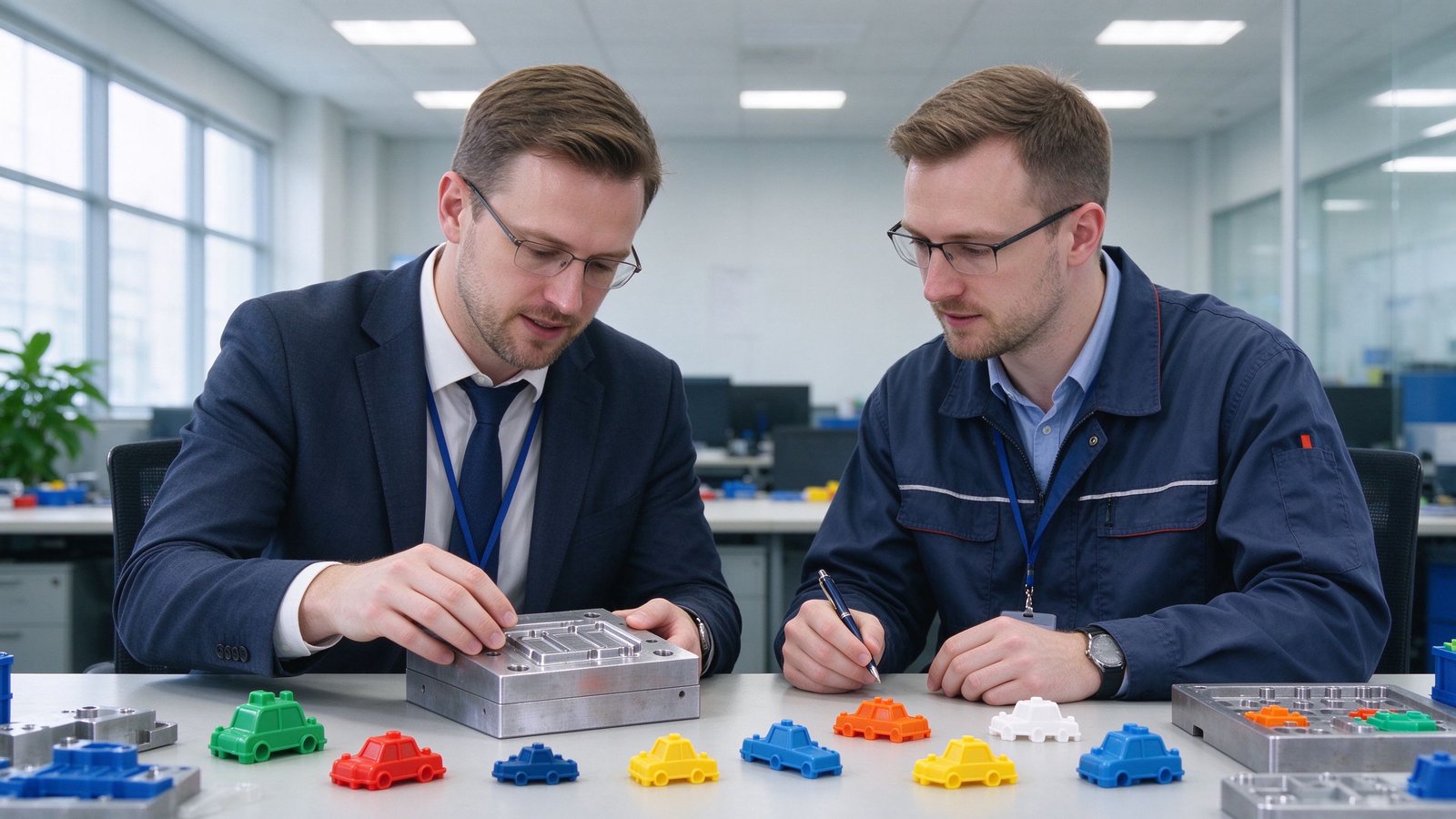
We build AI toys with molded plastic, electronics, plush and print components under one roof — and we quote mold cost line by line, in the same format as the table above, so you can compare suppliers on facts instead of price.
Send us your part drawing and your expected annual volume. We will send back a mold cost estimate using this exact model — steel, cavities, sliders, polish, trials — plus a unit price at that volume. If the mold fits into a full launch timeline with tooling and certification, we will show you that too. Start with the catalogue or send your drawing directly.
Frequently Asked Questions
What is a typical mold cost range for an AI toy part in China? Small and simple parts commonly land between USD 1,000 and USD 10,000. Mid-size housings with sliders, lens inserts and multiple cavities run USD 8,000 to USD 40,000. Large multi-cavity tooling can exceed that. The driver is complexity, not size alone.
Why do quotes for the same drawing differ by 3 to 20 times? Because the quotes are not for the same mold. The differences sit in steel grade, cavity count, polishing standard, heat treatment, and whether the supplier included DFM work and mold trials. Ask for a line-item breakdown, then compare line to line.
How long does an AI toy mold take to build? A simple single-cavity tool is typically 25 to 35 days from drawing release. Multi-cavity tools with sliders run 40 to 60 days. Add 5 to 10 days for a second trial round if the first shot reveals a flow or warpage issue.
Does a cheaper mold cost more in the end? Usually. A tool that skips heat treatment or uses a lower-grade cavity plate may fail within 50,000 shots. Rebuilding it costs more than the original price difference, plus downtime, plus the second trial round. In toys, where volumes are high, this is the most common expensive mistake.
Can I own my mold? Yes, and you should confirm it in writing. Ask for the mold ownership clause, the mold steel certificate, and a maintenance schedule. A mold is an asset; your contract should treat it as one.
Buyers: what was the most expensive mold mistake you have paid for? Tooling engineers: what do buyers always underestimate? I read every comment — the best question I ever received was from a buyer who asked how many shots the tool was designed for. That number tells you more about a quote than the price ever will.
Comments
No comments yet — be the first to share your thoughts.