2026-09-18
Robot Pets Hit $12.6B by 2030: The Pet-Tech Sourcing Window
Walk through any modern toy department and you will see it: a row of glossy robot pets with glowing eyes, waiting to be picked up, named and taken home. Five years ago they were a novelty. Today they are a category — and the numbers behind them are moving faster than almost anything else in toys.
The global smart pet robot market is projected to grow at a compound annual rate of 18.7 percent from 2024 to 2030, reaching roughly $12.6 billion by 2030, according to Grand View Research. In the same window, retail analytics show the robot pet category growing year over year at around 62 percent, with basic interactive robot pets already the hottest-selling AI toy segment on major marketplaces.
For B2B buyers, this is a sourcing window, not just a trend story. This guide explains what is driving the boom, which robot-pet segments are actually moving, and what to verify before you commit an order.
The Market Signal: A Category Growing Faster Than the Toy Industry
The macro picture is unusual. While the global toy industry grows at low single digits, the smart pet robot segment compounds near 19 percent annually. The market research behind that figure is consistent across independent trackers:
- $12.6 billion by 2030 at an 18.7 percent CAGR from 2024, per Grand View Research.
- Roughly 62 percent year-over-year growth in the robot pet category, per ShelfTrend retail analytics — with basic interactive robot pets already the top-selling AI toy segment in 2026.
- The category is consolidating into three price bands: entry-level interactive pets for families, mid-range emotional companions, and premium desktop robots for adults.
This is not a China-only phenomenon or a niche collector market. It is mainstream retail demand, and it is being met by a supply chain that is still learning how to build robot pets well.
Why Families Are Choosing Robot Pets
The demand shift is rooted in four very concrete pressures that buyers hear from their own customers:
1. The rising cost of real pets. Inflation has pushed up pet food, vet bills and grooming across North America and Europe. Many families that want the companionship of a pet now weigh a one-time toy purchase against an ongoing animal-care budget. For allergy-affected households, a robot pet is not a compromise — it is the only option.
2. Housing reality. Apartment living, rental restrictions and travel-heavy lifestyles make real pets impractical. A robot pet needs no walks, no litter box and no sitter.
3. The "zero-responsibility companion" appeal. Parents increasingly see robot pets as a way to give children the emotional experience of caring for something — naming it, feeding it, putting it to sleep — without the guilt of a neglected animal.
4. Screen-free play. Robot pets offer the interactivity of a tablet without the screen. As our Edge AI analysis explains, embedded intelligence means the pet plays fully offline, which is exactly what parents searching for "screen-free" alternatives are looking for.
None of these drivers is fading. If anything, the pet-cost and housing pressures are intensifying, which is why the category's growth curve looks structural rather than seasonal.
What "Robot Pet" Means Today
Before sourcing, it is worth being precise about what a robot pet can and cannot do in 2026 — because honest expectations are what keep a category from disappointing its first-time buyers.
What today's robot pets can do:
- Recognize and respond to their owner. They learn a name, respond to touch, and react differently to being petted, scolded or ignored.
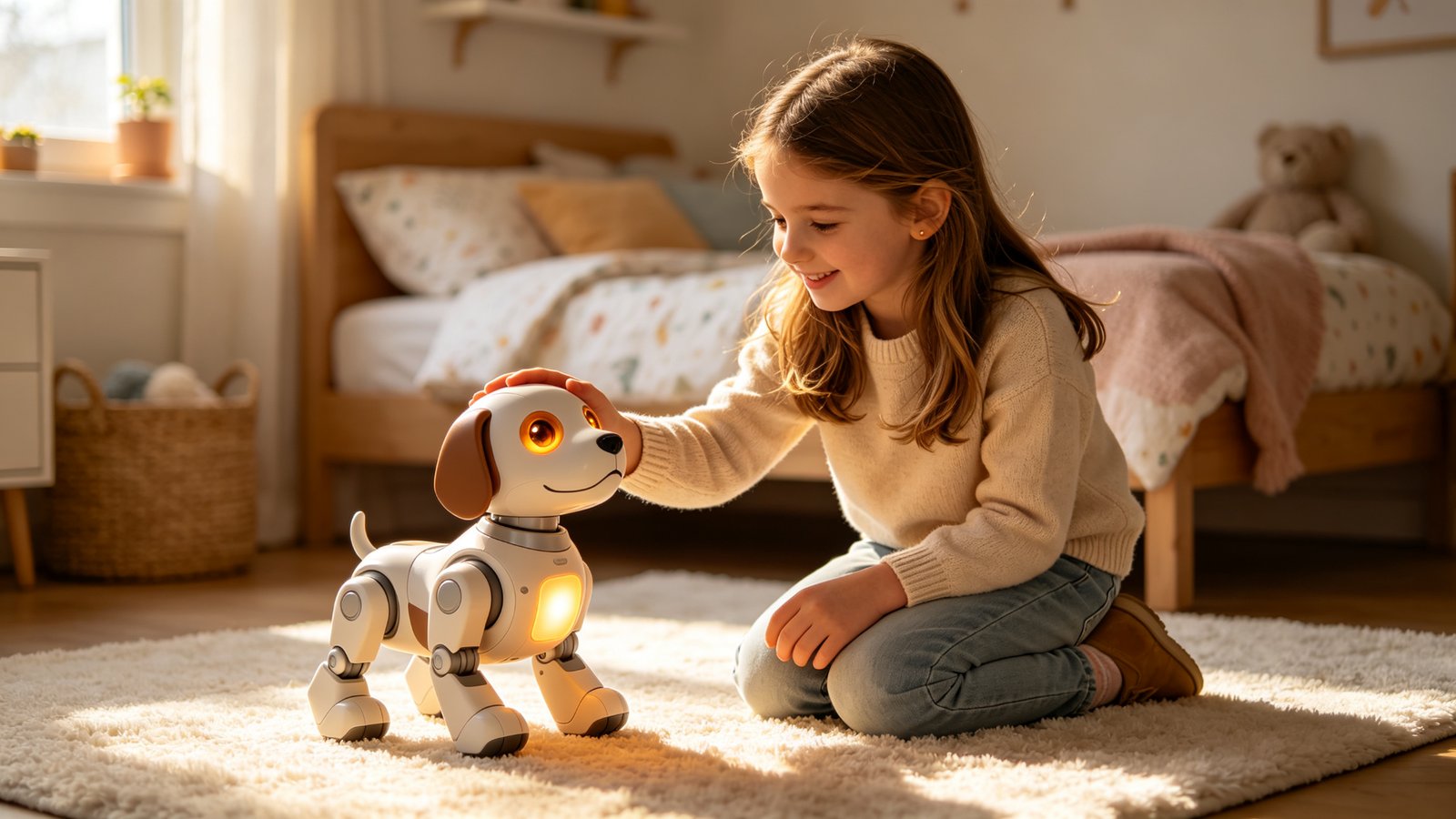
- Show emotion through expression. Glowing eyes and a softly lit chest convey happiness, sleepiness or curiosity — the pet's emotional vocabulary.
- Hold simple conversations and make sounds. Voice interaction on the device lets the pet answer, chirp or purr in response to a child.
- Move like a robot, not a real animal. They raise a paw, tilt their head, roll forward or wag a mechanical tail. They do not run, jump or fetch like a living pet — and they do not need to.
What they cannot do: replace the physical richness of a real pet. That honesty matters commercially: products that promise "just like a real pet" create return spikes. Products that promise a lovable, low-maintenance companion create repeat buyers.

The Buyer's Window: Which Segments Are Moving
Retail data points to three segments worth planning around for 2026-2027:
1. Basic interactive robot pets. Already the best-selling AI toy segment, driven by families with children aged roughly 3-8 who want a screen-free companion. These sell through Amazon, Walmart and general retail, which together hold about 62 percent of online toy sales.
2. Emotional companion pets. Mid-range robot cats, dogs and bunnies with richer conversation, longer memory and more expressive eyes. This is the fastest-differentiating band — the products parents buy when they want "a friend, not a gadget."
3. Desktop companions for adults. Robot pets positioned for desks, bedside tables and offices, sold through gift, gadget and corporate-wellness channels. This band is younger but growing fast, and it rewards distinctive design more than feature lists.
For a private-label or retail buyer, the practical strategy is to anchor a line in band one, differentiate in band two, and test band three — rather than spreading a budget evenly across all three.

What to Verify Before You Source
Robot pets are more complex than plush, so the verification list is longer. Cover these before you commit:
1. Battery and charging design. How long does the pet actually play on a charge, and how is it charged? Compare the real numbers against the marketing claims.
2. Offline capability. A robot pet that works fully offline is the version that passes privacy reviews and survives a dropped connection. Confirm what runs on-device and what — if anything — depends on a server.
3. Safety and certification. Secure battery compartments, non-toxic materials and the relevant electronic-toy standards for your market are non-negotiable. The privacy layer of the same checklist matters just as much — verify how the pet handles voice data before you order.
4. Content safety. If the pet converses, ask how inappropriate content is blocked and replaced, in real time. The AI toy content safety guide explains the five-layer architecture buyers should look for.
5. After-sales and repair. Robot pets have more that can break than a plush toy. Confirm the supplier's warranty, spare-parts policy and failure-rate data before ordering at scale.
How Niokyar Builds Robot Pets
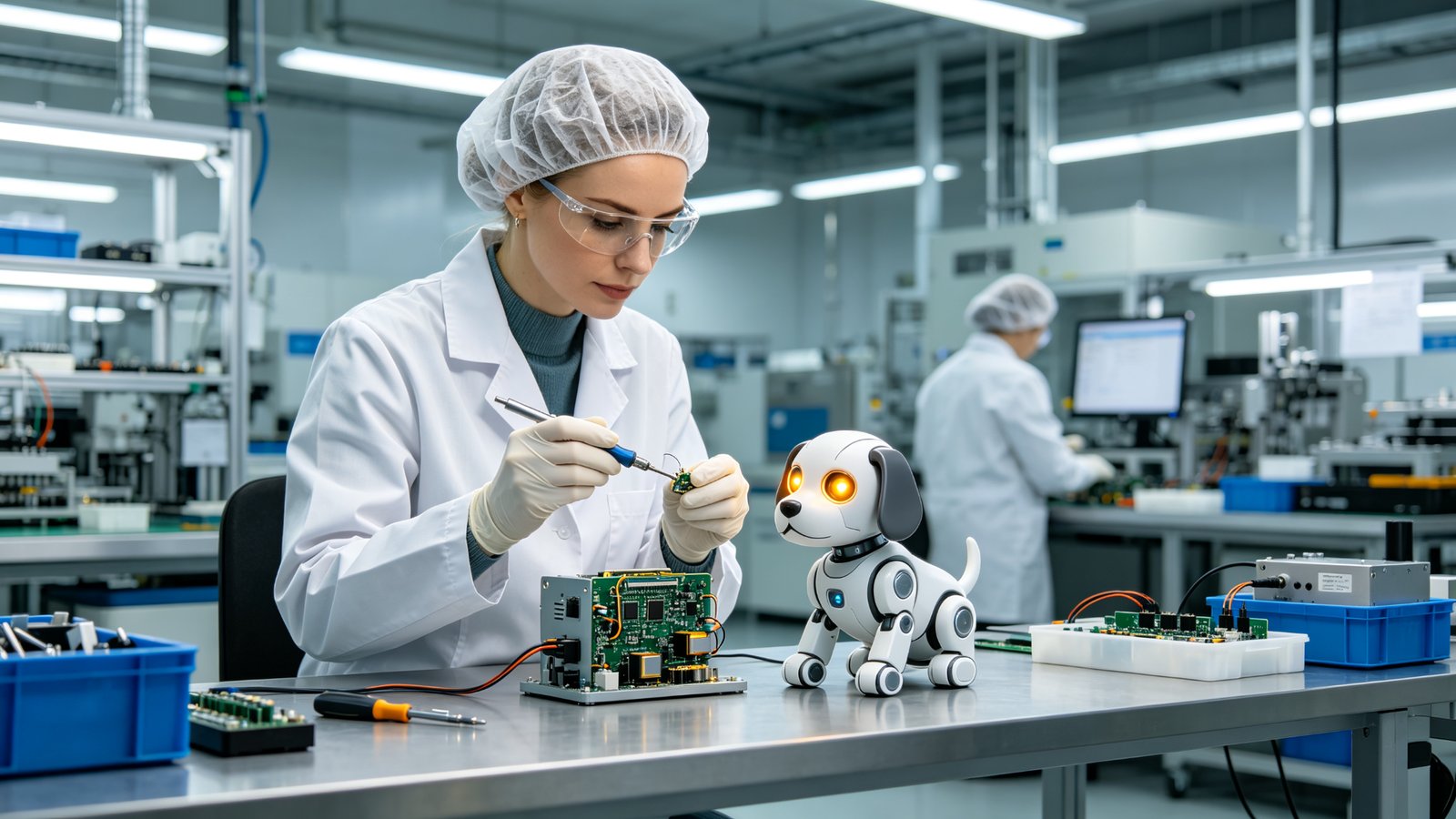
Niokyar builds robot pets with the same combined discipline as the rest of the AI toy range: embedded, offline-first intelligence; custom appearance, features and software; and production quality controlled from component selection to final QC. Whether the brief is an entry-level interactive pet for mass retail or a distinctive desktop companion, one accountable team handles the electronics, the soft goods and the software together.
If you are planning a robot-pet line for the pet-tech window, start with the wholesale catalogue or send your brief — we will return a development plan covering samples, certification and timelines.
Frequently Asked Questions
How big is the robot pet market? The smart pet robot market is projected to grow at an 18.7 percent CAGR from 2024 to 2030, reaching about $12.6 billion by 2030, according to Grand View Research.
Why are robot pets growing so fast? Rising pet ownership costs, apartment living, allergy constraints and the appeal of a zero-responsibility companion are pushing families toward robot pets — while parents also see them as screen-free alternatives to tablets.
Which robot pet segments sell best? Basic interactive robot pets are currently the best-selling AI toy segment. Emotional companion pets are the fastest-differentiating band, and desktop companions for adults are the fastest-growing new niche.
Can robot pets replace real pets? Not physically — they do not run, jump or fetch like a living animal. But they offer a lovable, low-maintenance companion with on-device voice, expressive eyes and simple robot movements, which is what most buyers are actually looking for.
Can Niokyar customize a robot pet line? Yes — appearance, features and software are built by one accountable team, with embedded offline-first intelligence as the default. Browse the catalogue or send your brief for a development plan.
Comments
No comments yet — be the first to share your thoughts.