2026-09-04
Edge AI Toys: The End of Cloud-Dependent Play
September 2026 · Technology Guide for B2B Buyers
Edge AI Toys: The End of Cloud-Dependent Play
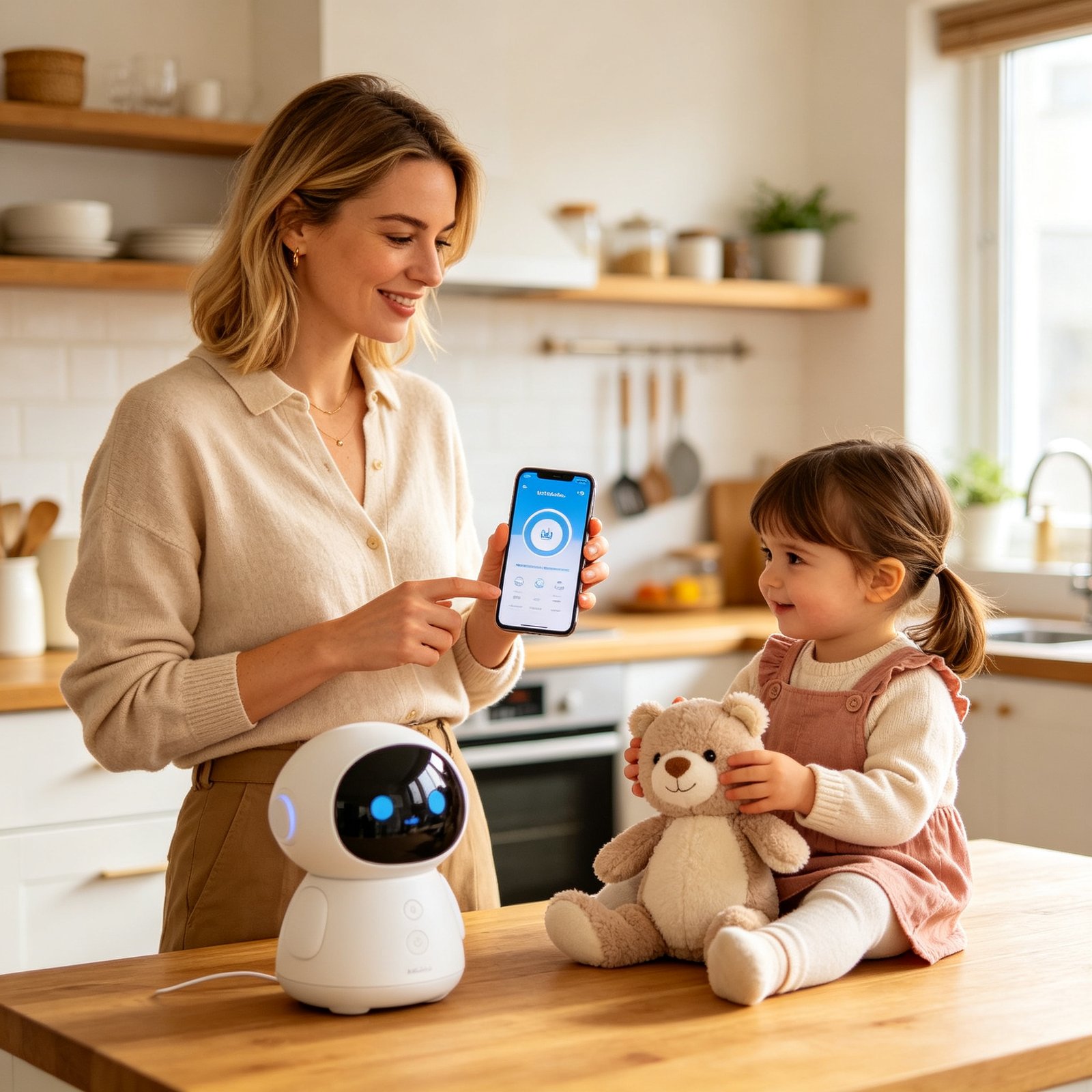
For the past few years, an AI toy has meant a connected toy. A plush bear that talks to a child usually worked by sending the child's voice to a cloud server, waiting for a language model to reply, and streaming the answer back. It was clever, but it came with a quiet cost: every conversation needed a connection, every exchange sent data off the device, and every interaction produced a bill.
That model is ending. AI is moving onto the toy itself, and 2026 is the inflection point. On-device intelligence, known as edge AI, lets a toy understand and respond on its own chip, without a cloud round trip. For B2B buyers this is not a technical detail; it changes the cost structure, the privacy story, the offline experience and the regulatory exposure of every product in the category. This guide explains what edge AI actually is, why the timing is right, what it means for a buyer, and how to evaluate an edge AI toy before ordering.
What Edge AI Means for a Toy
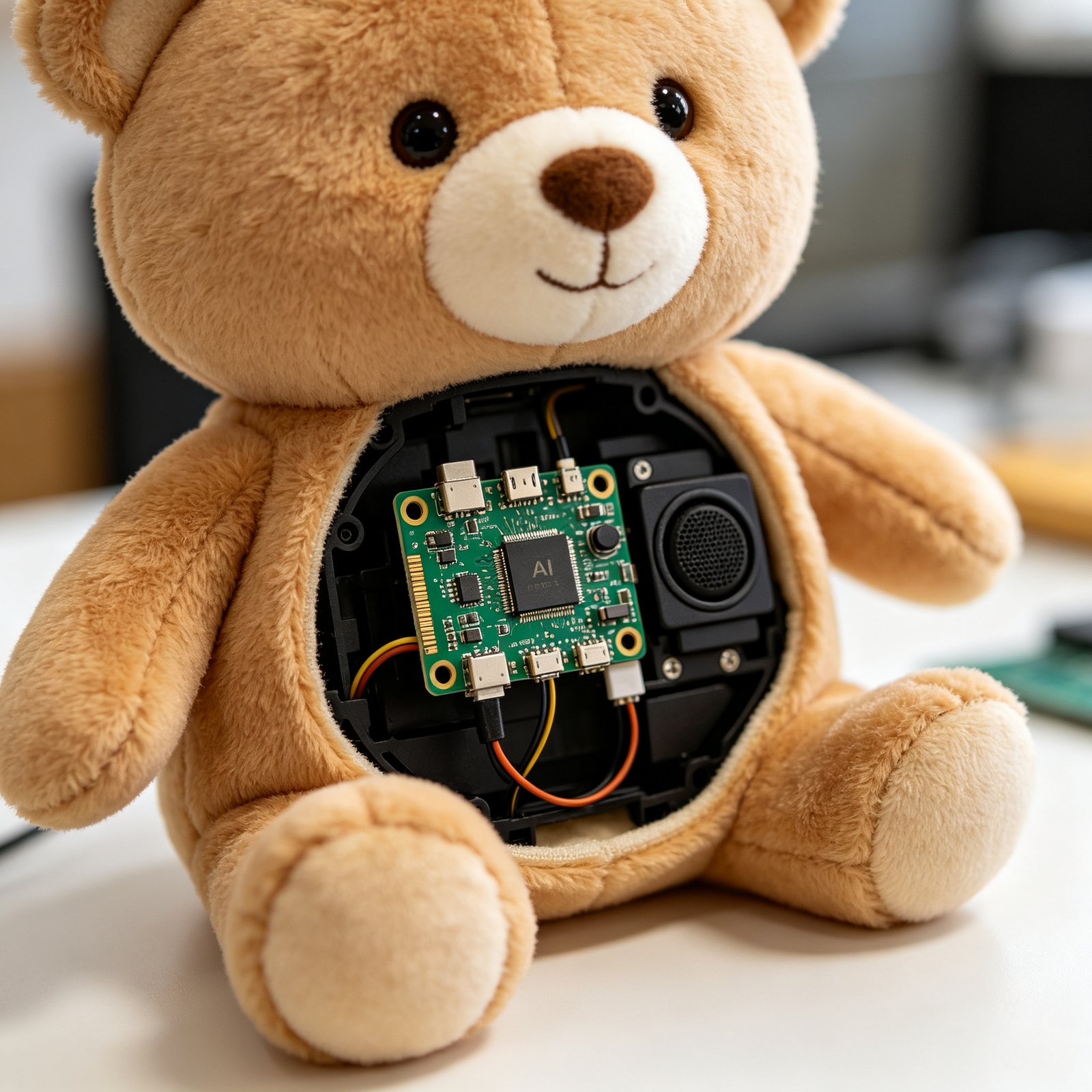
Edge AI simply means running artificial intelligence directly on the device, on a chip inside the toy, rather than sending data to a server and waiting for a result. In a cloud-based toy, the device is a microphone and a speaker connected to a distant brain. In an edge AI toy, the brain lives in the toy.
The practical difference is large. An edge AI toy responds instantly because there is no network delay. It keeps working when there is no connection, on a plane, in a car, in a room with poor signal. And critically, the child's voice never leaves the device, which is the strongest possible answer to privacy concerns. The trade-off is that a chip in a plush toy cannot run the largest language models, so edge AI products typically run efficient on-device models for everyday conversation, sometimes with a hybrid cloud option for complex requests.
Why 2026 Is the Turning Point
Three forces have converged to make on-device AI practical for toys.
Chips got cheap enough. The cost of edge AI processors has fallen sharply in recent years, the same force that enabled the broader AI toy boom. A capable on-device chip that was once reserved for premium robotics can now sit inside a plush toy at a mainstream price.
The industry is already moving. Edge AI processors already power a majority of premium AI toys on the market, and industry analysis of smart AI companion toys finds edge-AI processors now power over 60 percent of premium units while satisfying strict child-privacy regulation. One major research house projects that on-device large language models will make cloud-free companions mainstream by around 2030.
Regulation is pushing in the same direction. In Europe and North America, parents and regulators are asking hard questions about what AI toys record and where the data goes. Privacy-focused on-device processing is increasingly a condition of sale, not a feature. In markets with limited broadband, on-device AI also opens products to families that cloud-dependent toys simply cannot serve.
Four Reasons Edge AI Matters to a B2B Buyer
Privacy and compliance. A toy that processes voice on the device has a fundamentally smaller data footprint than one that uploads everything to a server. Under GDPR, COPPA and similar rules, this is a decisive advantage in procurement. It is far easier to document what a device never collects than to explain what it does with what it collects.
Lower long-term cost. Cloud interaction is a hidden cost that scales with usage. Industry analysis has suggested that cloud design can account for a large share of a connected toy's total cost, and research on the smart toys market points to on-device AI as the path that addresses privacy concerns while expanding reach. Moving routine conversations on-device removes most of that recurring bill. For a buyer shipping thousands of units that talk every day, this is a real margin difference.
Offline reliability. An edge AI toy keeps working without a connection. This matters for travel, for low-connectivity regions, and for families who do not want their child's play dependent on the home network. It also removes the worst failure mode of a cloud toy: a dropped connection mid-conversation.
A cleaner product story. Parents today are wary of toys that listen and upload. An on-device toy with clear offline capability is easier to market, easier to trust and easier to defend if a question arises.
Why a Hybrid Architecture Is the Practical Answer
Pure edge AI has limits: a small chip cannot run the most capable models, and content still needs to be updated over time. Pure cloud has the costs and privacy issues described above. The architecture that works in the market is a hybrid.
In a hybrid toy, on-device models handle wake words, routine conversation, offline play and the first layer of content filtering, all without leaving the device. The cloud is reserved for complex requests, new content and firmware updates, and it is used sparingly. This keeps the recurring cost low, keeps the privacy story strong, and still allows the toy to grow over time through over-the-air updates. For a buyer, the question is not edge or cloud; it is how the device uses each one.
How a B2B Buyer Can Evaluate an Edge AI Toy

Before you commit to a supplier, verify five things.
What actually runs on the device? Ask what happens offline. A real edge AI toy should hold a meaningful conversation with no connection at all. If it only works when online, it is not an edge AI product.
What is the wake and response latency? The point of on-device is instant response. Test or request figures for wake word detection and reply time without a network.
What data, if any, leaves the device? Ask for a written data-flow statement. The strongest products collect nothing in routine offline play and document exactly what is transmitted in the cloud mode.
How is content updated over time? An edge toy still needs fresh stories and skills. Confirm over-the-air update support and how content is delivered without undermining privacy.
What is the hybrid balance? Ask which tasks run on-device and which use the cloud, and whether the cloud use is a predictable fixed scope or an open-ended dependency.
Challenges and Limitations
Edge AI is not a magic answer, and an honest buyer should know the limits.
Local hardware has boundaries. A chip in a toy cannot run the largest models, so conversational quality can lag behind the best cloud systems. The on-device experience must be designed around what a small model does well.
Updates still need a connection. New content and firmware require periodic connectivity. An edge toy is offline-capable, but it is not offline forever, and buyers should plan for the update mechanism.
Hybrid means two things to manage. A device with both edge and cloud paths has two systems to test, secure and document. The privacy story is only as strong as the cloud mode's discipline.
Frequently Asked Questions
What is an edge AI toy? An edge AI toy runs its intelligence on a chip inside the device, so it can understand and respond without sending data to a cloud server. It works offline and keeps the child's voice on the device.
Why does edge AI matter for AI toys? It removes the recurring cloud cost, strengthens privacy and compliance under GDPR and COPPA, enables offline play, and gives buyers a stronger product story for privacy-conscious parents.
Can an edge AI toy work without internet? Yes, for everyday conversation. On-device models handle routine talk and offline play without any connection. Complex tasks and content updates may still use a hybrid cloud path.
How should a buyer evaluate an edge AI toy? Verify what runs on the device, test offline conversation and latency, ask for a data-flow statement, confirm over-the-air updates, and understand the hybrid balance between on-device and cloud.
Conclusion
The cloud-dependent AI toy had a good run, but its weaknesses were always structural: recurring cost, privacy exposure, offline failure and regulatory risk. Edge AI removes most of those problems at their source, and the technology has reached the point where it can sit inside a plush toy at a mainstream price. By the end of the decade, the industry expects on-device language models to make cloud-free companions the norm.
For B2B buyers, the implication is practical and immediate. A toy that thinks on the device is cheaper to run, easier to certify, more reliable offline and simpler to sell to worried parents. The toys that depend on the cloud for every conversation are becoming the legacy product of this category. The edge AI toy is not a feature upgrade; it is the new baseline.
Ready to build an edge AI toy line? Niokyar builds AI toys with on-device intelligence for offline conversation and instant response, a documented hybrid architecture that controls cloud cost, over-the-air content updates and full GDPR, COPPA, CE, EN71 and FCC compliance from sample to mass production. Explore our AI toy OEM and ODM capabilities.
Comments
No comments yet — be the first to share your thoughts.