2026-09-21
Back-to-School 2026: How AI Toys Are Winning the Classroom-Channel Race
The back-to-school season used to mean backpacks, notebooks and tablets. In 2026, it increasingly means AI toys. Independent market research finds that educational robots already appear in roughly 29 percent of primary schools in Europe, while about 70 percent of parents rank learning value as the single most important reason they buy an AI toy.
That is not a fad. The classroom channel is turning AI toys from a seasonal gift purchase into a recurring education-category purchase, and buyers who understand what "classroom-ready" actually means are winning the season. This guide explains the shift, the spec sheet, and the buying calendar.
Why the Classroom Channel Is Heating Up
Three structural forces are pulling AI toys into schools, homes and after-school programs at the same time:
1. Education institutions are adopting robots first. Roughly 29 percent of European primary schools now use educational robots, and that number is climbing as curriculum-aligned content becomes available. Europe already holds about 28 percent of the global smart-toy market across roughly 92 million children, with Nordic household penetration near 37 percent.
2. Parents are buying for learning, not just fun. Around 70 percent of parents say educational value is their top purchase driver for AI toys. Screen-free smart toys now represent about 31 percent of smart-toy sales — parents explicitly want interactivity without a tablet screen.
3. Language barriers are dissolving across borders. AI toys supporting 24 or more languages expand cross-border adoption by roughly 41 percent. A toy that speaks a child's first language can sell across the EU, the UK and the US without redesigning the hardware.
For buyers, this means the same product can serve three channels at once: the classroom, the after-school program, and the home on the family dinner table.
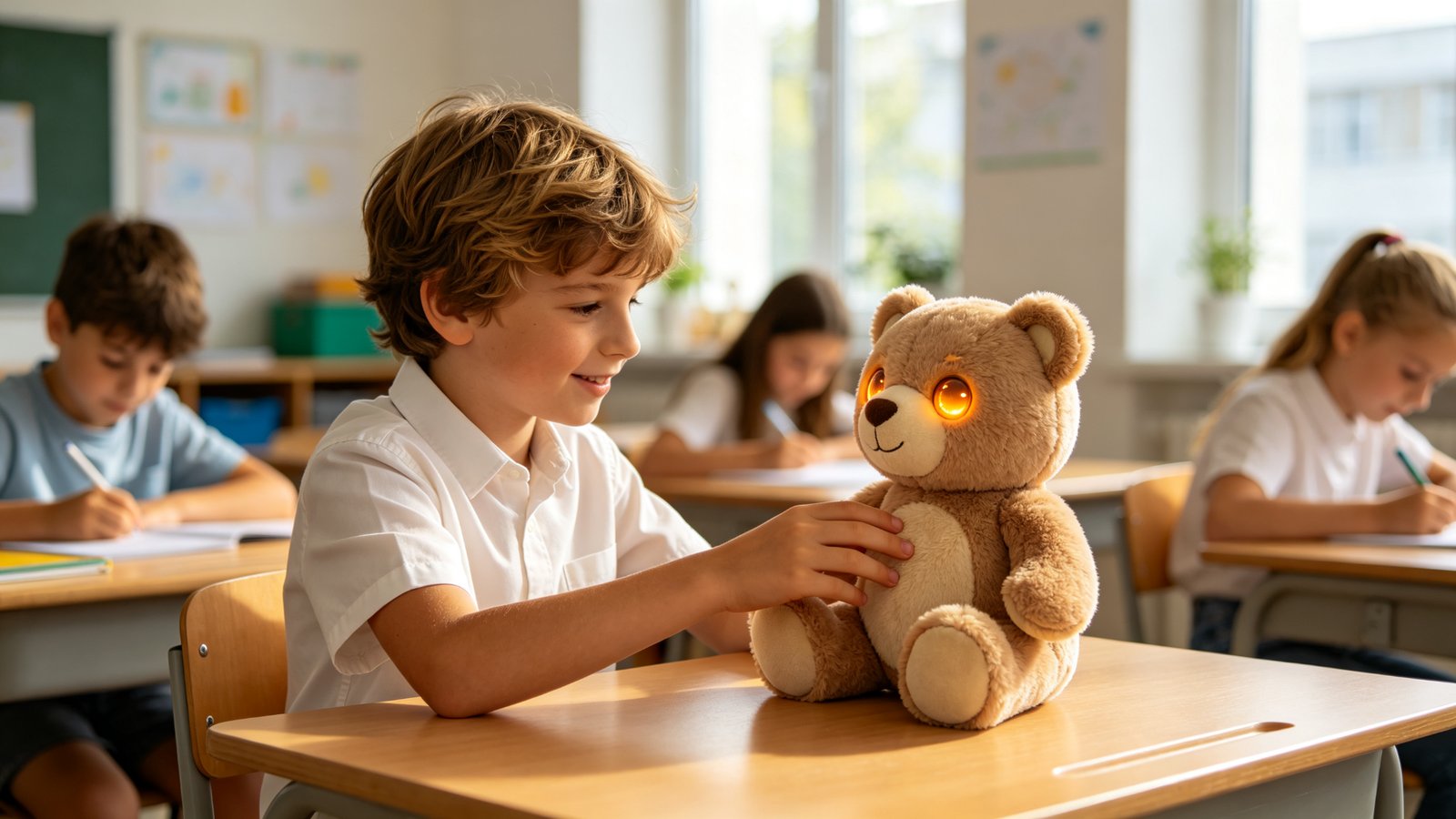
What "Classroom-Ready" Actually Means
A consumer AI toy and a classroom-ready AI toy are not the same product. The education channel demands a specific spec set:
Curriculum alignment. The content has to map to real learning goals — phonics, counting, shapes, simple coding concepts, not just random chat. Our adaptive learning guide covers how toys that adapt to a child's level outperform one-size-fits-all content.
Multi-language and local culture. 24+ languages, but also cultural references — a fairy tale that makes sense in Madrid should also make sense in Munich. This is localization, not just translation.
Battery safety and reliability. The education channel has zero patience for a toy that dies mid-lesson. Battery safety compliance reduces annual device failure to under 3 percent in well-built products, and secure battery compartments are non-negotiable for school use.
Screen-time and usage controls. Teachers and parents need time limits, bedtime modes and progress visibility. A toy without these controls will not pass a school's procurement review.
Offline-first play. A classroom Wi-Fi network will fail at the worst moment. Toys that run fully offline are the ones that survive a real school day, no matter how bad the connection is.
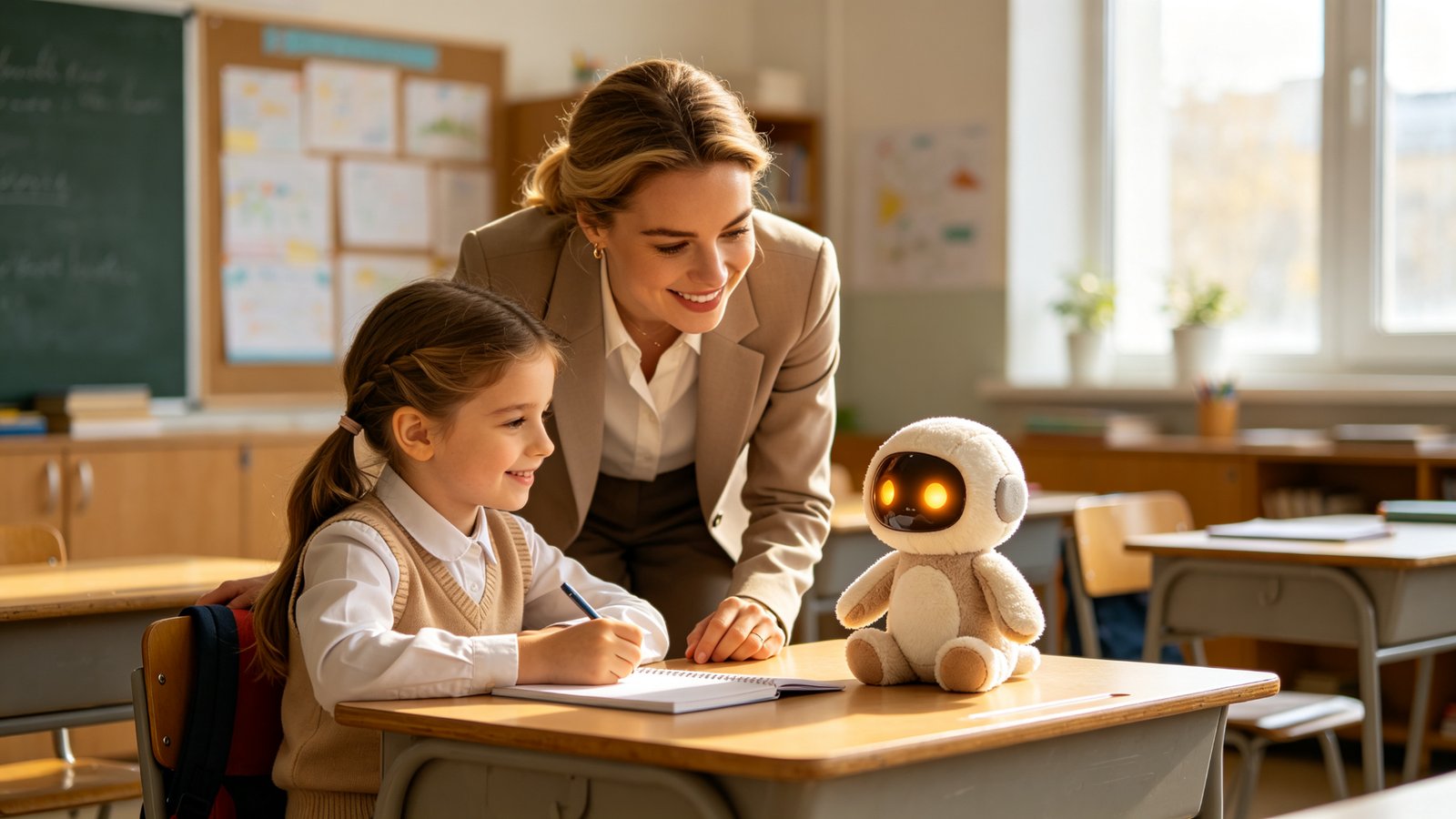
The Buyer's Calendar: When to Buy for Back-to-School
The classroom channel runs on a calendar, and timing is money:
- January–March: Curriculum procurement and budget approval. Buyers lock specifications for the fall season.
- April–June: Samples, certification and first production runs. This is when delays hurt the most.
- July–August: Final quantities and shipping. Lead times and freight costs dominate.
- September: Season peak in retail and school rollout.
Practical takeaway: the smart move is to design for next year's season before this season ends. A toy that arrives in late September has already lost the classroom window.
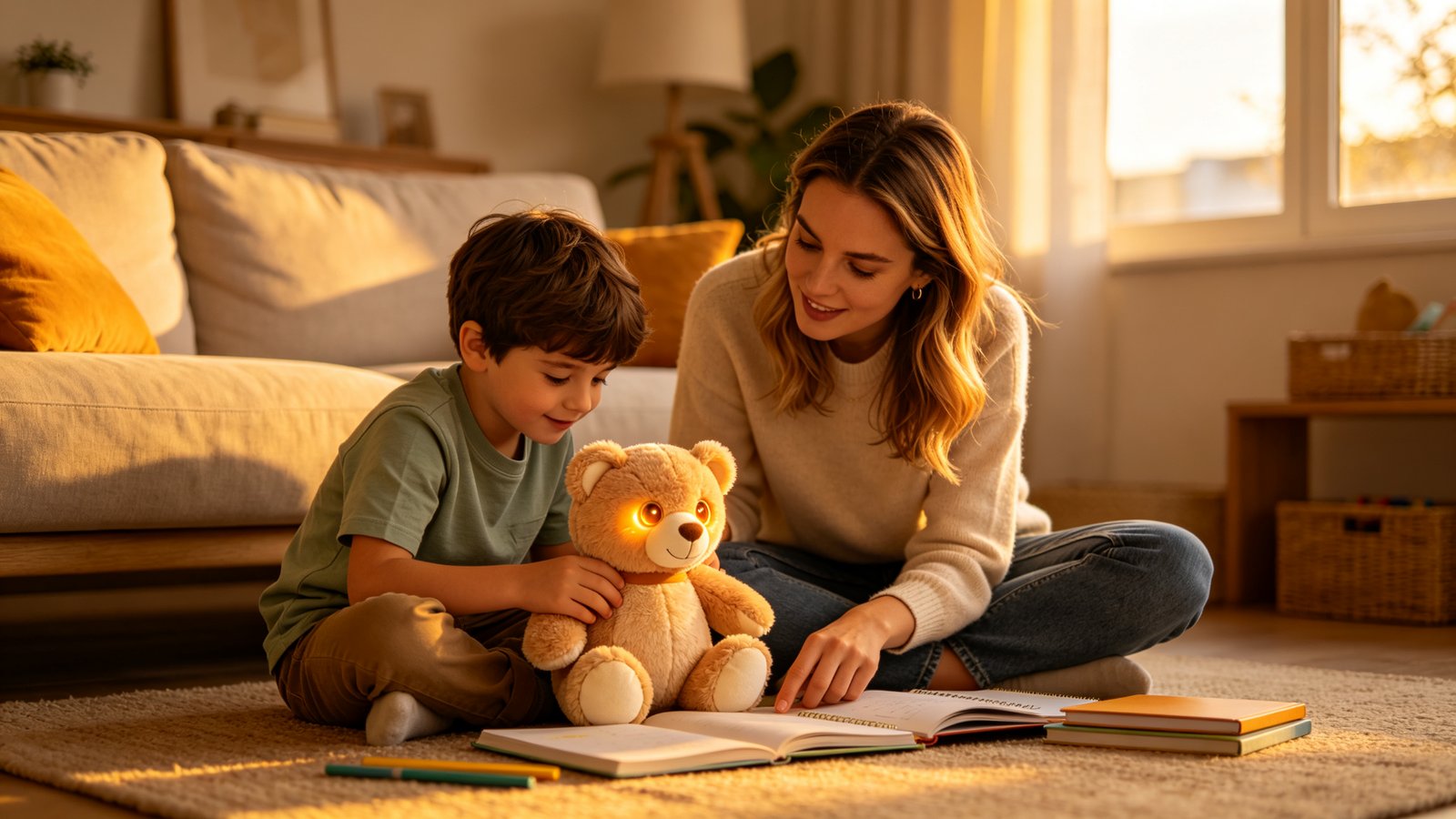
Designing AI Toys for the Education Channel
For a factory partner, the education channel rewards a specific combination: embedded offline-first intelligence so the toy works anywhere; curriculum-safe content pipelines that can be updated; multi-language voice with culturally localised responses; and hardware built to the safety and battery standards schools require.
Our early learning AI toy guide goes deeper on the age-by-age product design, and the wholesale catalogue shows the platforms buyers can customise for classroom lines.
How Niokyar Builds Classroom-Ready AI Toys
Niokyar designs and manufactures AI toys with one accountable team across appearance, features and software — so a classroom-ready line stays consistent from the first sample to final QC. Offline-first embedded intelligence, multi-language voice, safe batteries and curriculum-safe content are built in, not bolted on.
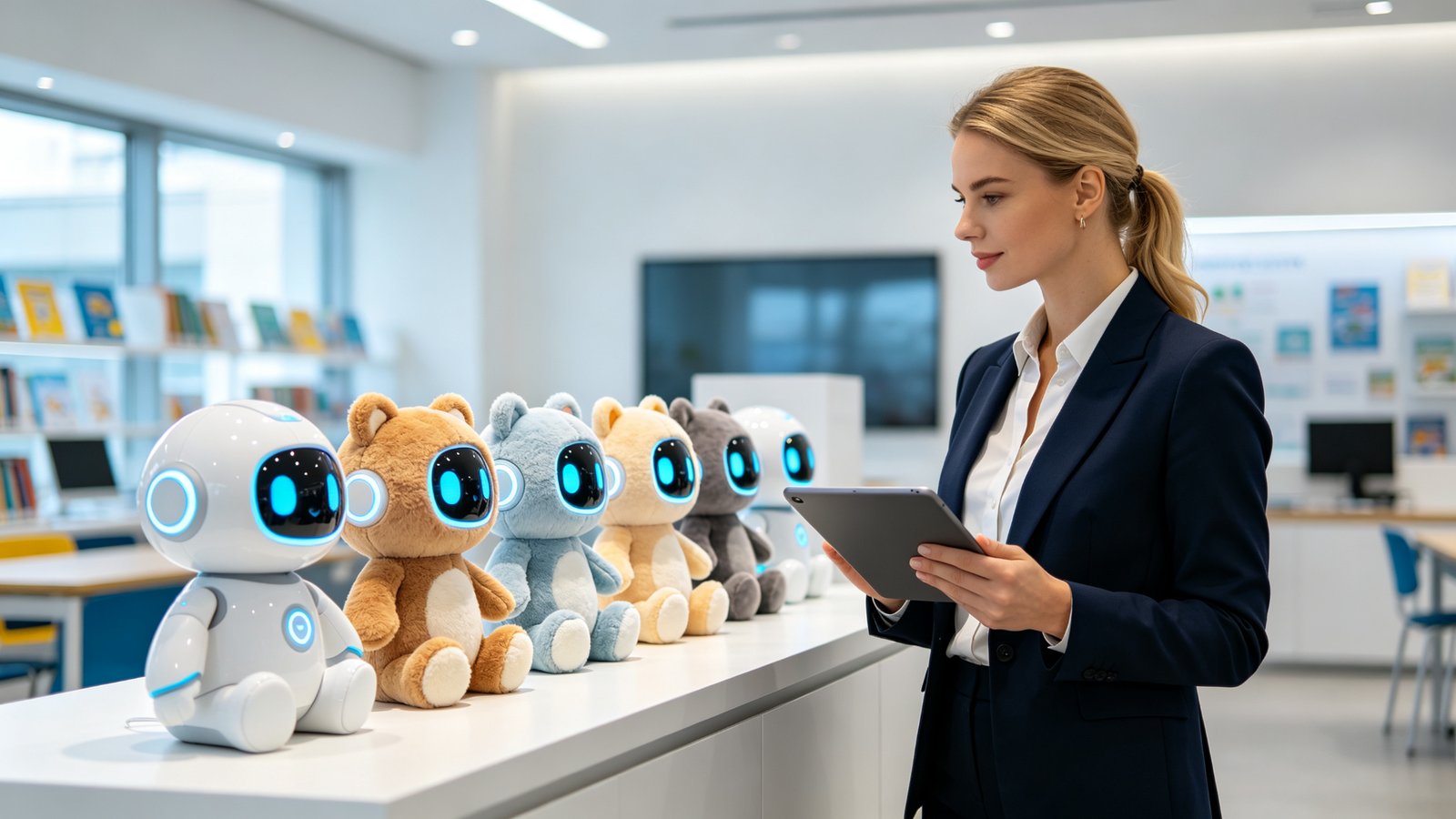
If you are planning an AI toy line for the 2026-2027 school season, start with the catalogue or send your brief — we will return a development plan covering samples, certification and timelines.
Frequently Asked Questions
How many schools use educational AI toys? Research finds educational robots in roughly 29 percent of European primary schools, with the share climbing as curriculum-aligned content becomes available.
What do parents actually want from an AI toy for school? About 70 percent of parents rank learning value as their top reason to buy, and about 31 percent of smart-toy sales are now screen-free — interactive play without a tablet.
Can one AI toy sell across multiple countries? Yes. AI toys supporting 24 or more languages expand cross-border adoption by roughly 41 percent, though real localization also means culturally localised content, not just translated text.
When should buyers order for back-to-school? Curriculum procurement happens in Q1, samples and certification in Q2, and final quantities in Q3. Designing for the next season before this season ends is the standard winning strategy.
Can Niokyar customise a classroom-ready AI toy line? Yes — appearance, features, multi-language voice and curriculum-safe content are built by one accountable team, with offline-first embedded intelligence as the default. Browse the catalogue or send your brief.
Comments
No comments yet — be the first to share your thoughts.