2026-08-26
Educational Toys for Toddlers: How AI Plush Is Transforming Early Learning
The global early education toy market is undergoing its biggest transformation in a generation. What was once a category of alphabet blocks, shape sorters and board books is now being reshaped by artificial intelligence — and the fastest-growing product within it is the AI plush toy.
For B2B buyers — importers, distributors, retail chains and early education groups — understanding this shift is not optional. The brands that get ahead of the AI early-learning curve now will define the category for the next five years. Those that wait will be competing on price in a crowded market.
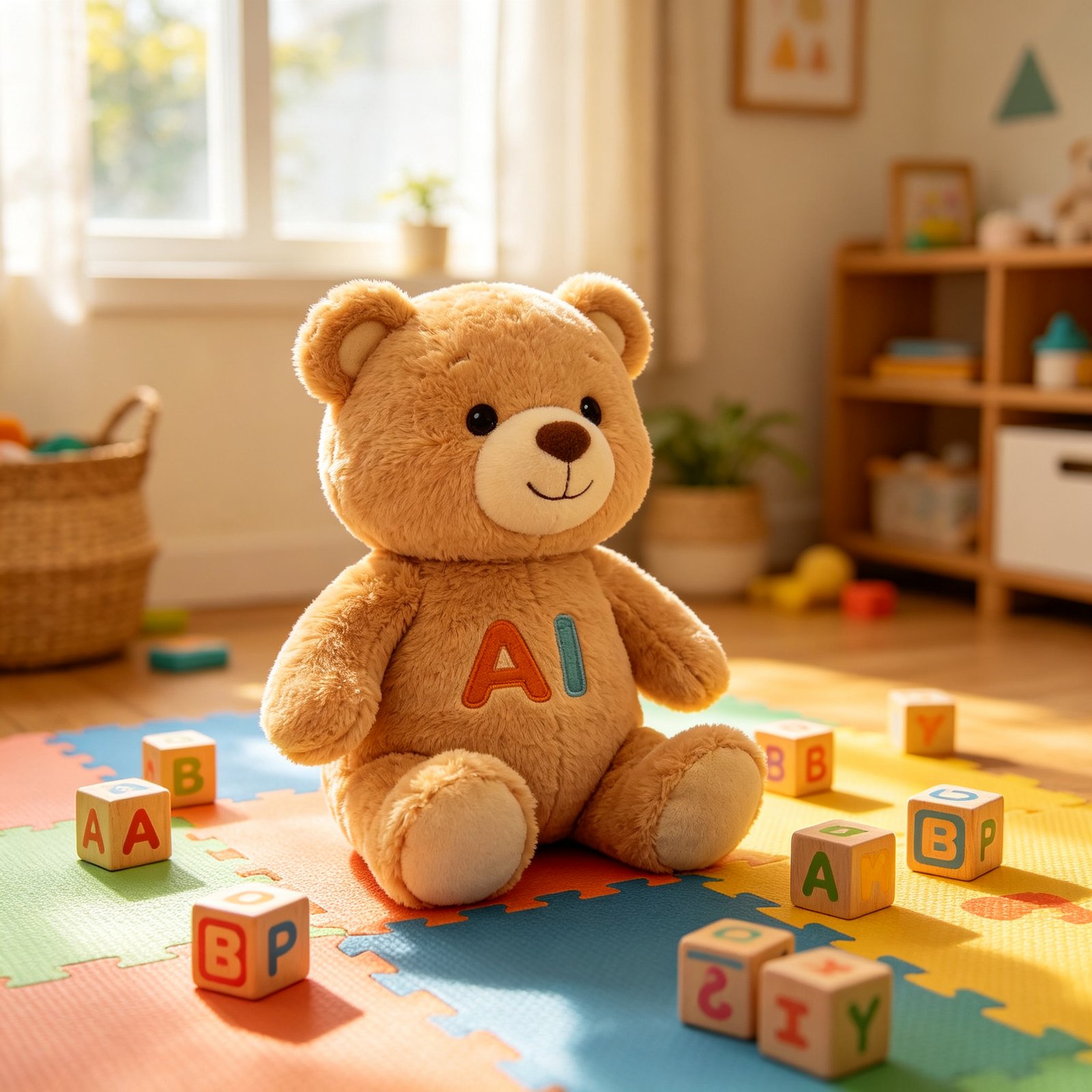
In this guide, we break down the early education toy market, explain why AI plush is the category to watch, outline the features that drive sales, and give B2B buyers a clear sourcing checklist for 2026–2027.
The Early Education Toy Market: By the Numbers
The educational toys market was valued at approximately $64 billion in 2024 and is projected to exceed $120 billion by 2032, growing at a compound annual growth rate of roughly 8% according to industry market research.
Within that broad market, three data points stand out for plush toy buyers:
- Ages 4 and under dominate — the under-4 segment is expected to hold approximately 54.5% market share by 2026, driven by demand for products that support early cognitive and language development.
- AI toys are surging — major e-commerce platforms report AI toy SKU growth of 210% year-on-year, with sales volume up 283% during peak shopping seasons.
- Screen-free is the new premium — parents increasingly pay a premium for toys that deliver educational value without a screen. AI plush fits this demand perfectly.
The convergence of these three trends — toddler dominance, AI growth, and screen-free preference — is why AI plush is the single most important subcategory in early education toys right now.
Why AI Plush Is the Future of Early Learning
Traditional educational toys are passive. A shape sorter teaches shapes, but it does not adapt to the child. A board book teaches words, but it cannot answer a follow-up question. An AI plush toy does both — and more.
Here is what makes AI plush uniquely effective for early learning:
Conversational Language Practice
A toddler does not learn language from flashcards. They learn from conversation — asking questions, hearing answers, and trying again. An AI plush toy engages in natural back-and-forth dialogue, practising vocabulary, sentence structure and pronunciation in a way no passive toy can match.
Generative Storytelling
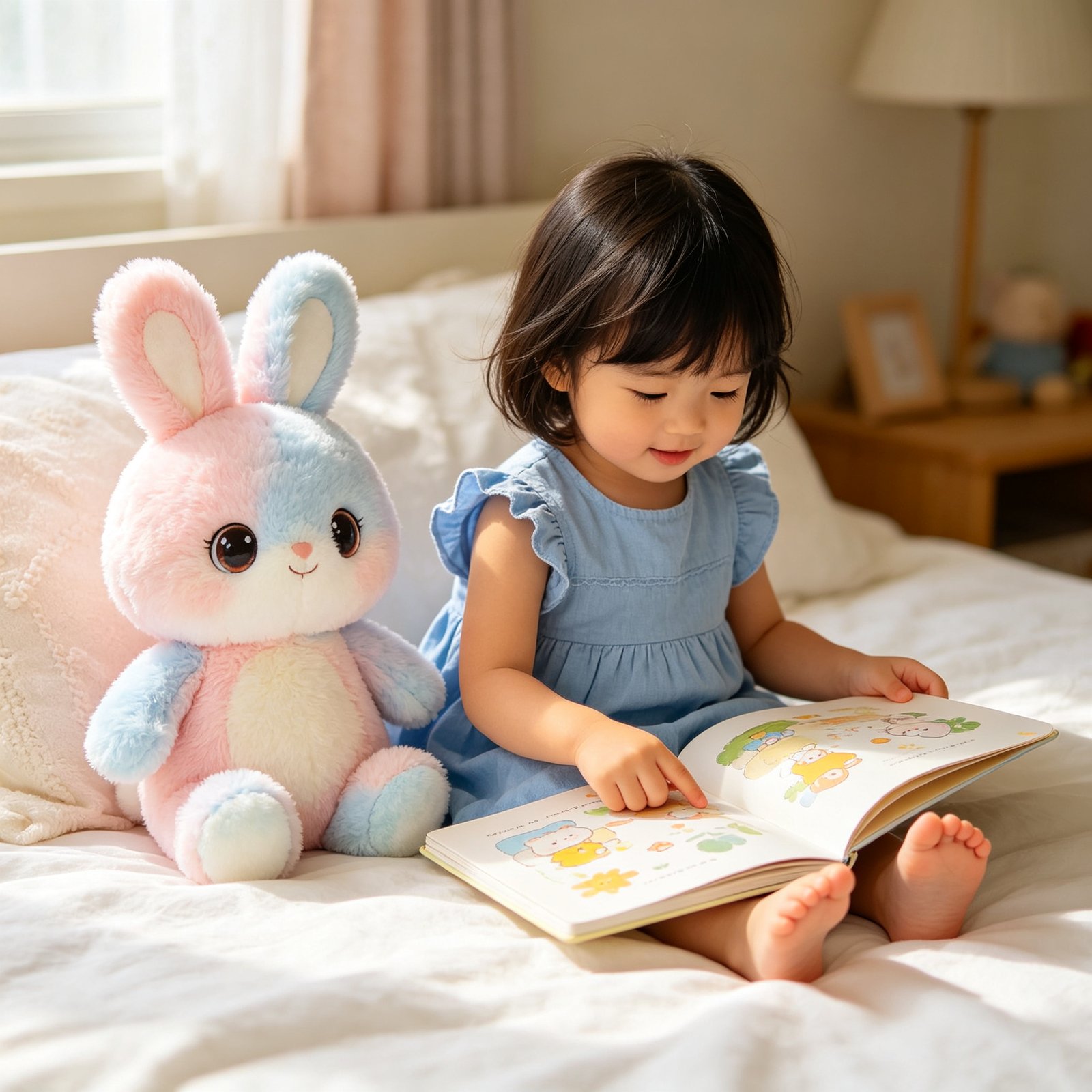
Every child has heard the same three bedtime stories a hundred times. An AI plush can generate original, personalised stories based on the child's interests, age and favourite characters. This not only holds attention longer — it builds narrative comprehension and creativity.
Adaptive Difficulty
A shape sorter has one difficulty level. An AI plush can adjust its content in real time: simpler vocabulary for a 2-year-old, more complex concepts for a 5-year-old, curriculum-aligned content for a 7-year-old. The toy grows with the child, extending its useful lifespan from months to years.
Emotional Support and Routine
Early learning is not just cognitive — it is emotional. AI plush toys can soothe anxiety, establish bedtime routines, and provide comfort during transitions. This dual role — educator and companion — is what makes parents willing to pay premium prices.
The Five Features That Drive Sales
Not all AI plush toys are created equal. Based on buyer feedback and retail data, these are the five features that most strongly correlate with sales velocity and reorder rates:
1. Multilingual Voice Support
In an increasingly global market, toys that support multiple languages outsell single-language products by a significant margin. Top-selling platforms support 30+ languages, including English, Spanish, French, German, Arabic, Mandarin and Japanese. For distributors serving diverse markets, multilingual support is no longer optional — it is table stakes.
2. Offline Functionality
Parents do not want a toy that stops working when the Wi-Fi drops. The best AI plush platforms offer hybrid offline-online mode: core functions (story playback, basic dialogue, music) work without an internet connection, while advanced features (generative conversation, content updates) require Wi-Fi. This is especially important for travel, car rides and households with unreliable connectivity.
3. Parent Dashboard and Progress Tracking
Modern parents want visibility into what their child is learning. A companion app that shows usage patterns, vocabulary growth, and content recommendations turns a toy into an educational tool — and justifies a higher price point. For early education groups and preschools, teacher dashboards with classroom-level analytics are an even stronger selling point.
4. Durable and Washable Design
Toddlers are rough. They drool, drop, throw and step on toys. The best AI plush products feature detachable electronic modules that allow the plush cover to be machine-washed, reinforced stitching that withstands pulling, and non-toxic, hypoallergenic materials that meet international safety standards. A toy that breaks after two weeks does not get reordered.
5. Over-the-Air Content Updates
A toy that ships with the same 10 stories forever gets boring quickly. Platforms that support over-the-air content updates — new stories, songs, curriculum modules and seasonal content — keep the toy fresh and extend its useful life. For B2B buyers, this also creates an ongoing revenue opportunity through premium content subscriptions or bundled content packs.
Age-Appropriate Design: A Breakdown by Stage
Early learning is not one-size-fits-all. Here is how AI plush features should be calibrated by age group:
Ages 1–2 · Sensory and Emotional Foundations
- Developmental goals: Sensory exploration, first words, emotional comfort
- Recommended features: Soft textures, lullabies, simple word repetition, soothing sounds
Ages 2–4 · Vocabulary and Early Cognition
- Developmental goals: Vocabulary expansion, basic counting, colour and shape recognition
- Recommended features: Interactive Q&A, counting games, colour identification, simple stories
Ages 4–6 · Language and Logical Thinking
- Developmental goals: Sentence structure, early literacy, logical thinking
- Recommended features: Generative storytelling, language practice, basic math concepts, curiosity-driven Q&A
Ages 6–8 · Literacy and Social-Emotional Learning
- Developmental goals: Reading comprehension, curriculum support, social-emotional learning
- Recommended features: Curriculum-aligned content, reading practice, emotional intelligence modules, multi-language learning
For B2B buyers, offering a single hardware platform with age-tiered content is the most efficient approach - one SKU, four age profiles, maximum market coverage.
Compliance and Safety: Non-Negotiable for Educational Toys
Selling an AI plush toy into the EU or US as an "educational" product does not lower the compliance bar — it raises it. Educational toys for children under 8 are subject to some of the strictest safety and data regulations in the world:
- EU: CE marking, EN71-1/2/3 (physical, flammability, chemical), REACH, RoHS, GDPR (data protection)
- US: FCC (electronics), CPC/CPSIA (children's product certification), ASTM F963 (toy safety), COPPA (children's online privacy)
- Both markets: No camera, no GPS, transparent data policies, parental consent mechanisms, and secure firmware updates
The COPPA amendments that took full effect in April 2026 expanded the definition of personal information and introduced stricter parental consent requirements — including for voice data collected by AI toys. Buyers who source from factories without in-house compliance expertise are one customs inspection or FTC complaint away from a full shipment hold.

B2B Sourcing Checklist: What to Ask Before You Commit
Before placing an order for AI educational plush toys, ask every supplier these five questions:
- Do you own the firmware and AI content in-house? If the answer is no — if they buy electronics from a third party — every customization, language update and content change becomes a coordination nightmare.
- Can you issue full CE, EN71, FCC, CPC and RoHS documentation with test reports? Ask for sample test reports before committing, not after.
- What is the sample lead time and mass production timeline? A responsive factory should deliver a custom sample in 7–10 days and mass production in 25–35 days.
- How many languages does the platform support, and can new languages be added? Look for 30+ languages with over-the-air language updates.
- Is the electronic module detachable for washing, and what is the battery life? Detachable modules and 10+ hours of battery life are the benchmarks for premium products.
Our AI software and voice content platform supports multilingual voice profiles, curriculum-aligned content, and parent/teacher dashboards — all built on in-house firmware that can be customized to your brand. Browse our full wholesale catalogue to see existing AI plush platforms that can be adapted to your early education programme.
The Road Ahead
Early education is being redefined by AI plush — and the window for B2B buyers to establish a leadership position is open right now. The brands that ship compelling, compliant, age-appropriate AI educational plush in the next 6–12 months will capture the premium end of the market. The brands that wait will be competing on price in a commoditised space.
The technology is mature. The demand is proven. The parents are waiting. The only question is whether your brand will be on the shelf when they start buying.
Ready to source AI educational plush toys for your market? Reach out to our team for one-stop OEM/ODM — from appearance and firmware to multilingual educational content, with full EU and US compliance support.
Comments
No comments yet — be the first to share your thoughts.