2026-09-15
"Android Toy" Searches Jumped 400%: Embedded Intelligence Is the New Buyer Priority
Some search trends are noise. This one is a signal you can build a buying plan on.
Search interest in the term "android toy" peaked in June 2026 at roughly 400% above early-2025 levels, according to market research tracked by Grand View Research. But the buyers and parents typing that phrase are not asking about the Google operating system. They are asking for something much more specific: a toy that is intelligent on its own — no phone, no companion app, no account required.
That one search curve is quietly reordering the AI toy category. Consumers are prioritizing embedded intelligence over app-dependent play. The products winning the shelves — from pet-like companions to plush with generative-AI personality — offer voice commands, gesture control and emotional feedback built into the device itself. The official ToyTrends for Spielwarenmesse 2026 make the same call official: "AI Loves (to) Play" is now a named industry trend, not a niche. The losers are the toys that die in a drawer the moment the app gets deleted or the subscription lapses.
This article explains what the 400% surge actually means, why it is reshaping buying decisions, and how to build a line that matches it.
What the 400% Surge Actually Means
When search interest for a term quadruples in under eighteen months, it usually signals a vocabulary change before a spending change. "Android toy" has become the consumer's shorthand for a device that does not need a smartphone to be smart.
The data behind the phrase lines up with that reading. Grand View Research's tracking shows the term peaking in June 2026, and the product landscape that ranks for it is consistent: voice-responsive pet robots, gesture-controlled companions, and generative-AI plush that interpret what a child says and reply in the moment — all running on embedded intelligence rather than an app.
Two market forces explain the spike:
- Parents are tired of app sprawl. Every connected toy used to mean one more app, one more account, one more privacy permission to grant. Embedded toys remove the phone from the equation entirely.
- The meaning of "smart" changed. A toy that only works beside a phone no longer feels smart. It feels like an accessory. A toy that listens, reacts and remembers on its own feels alive — and that is what shoppers are now searching for.
As our Edge AI analysis explained, the technology to make this happen is already mainstream. The search surge is the demand side catching up with the supply side.
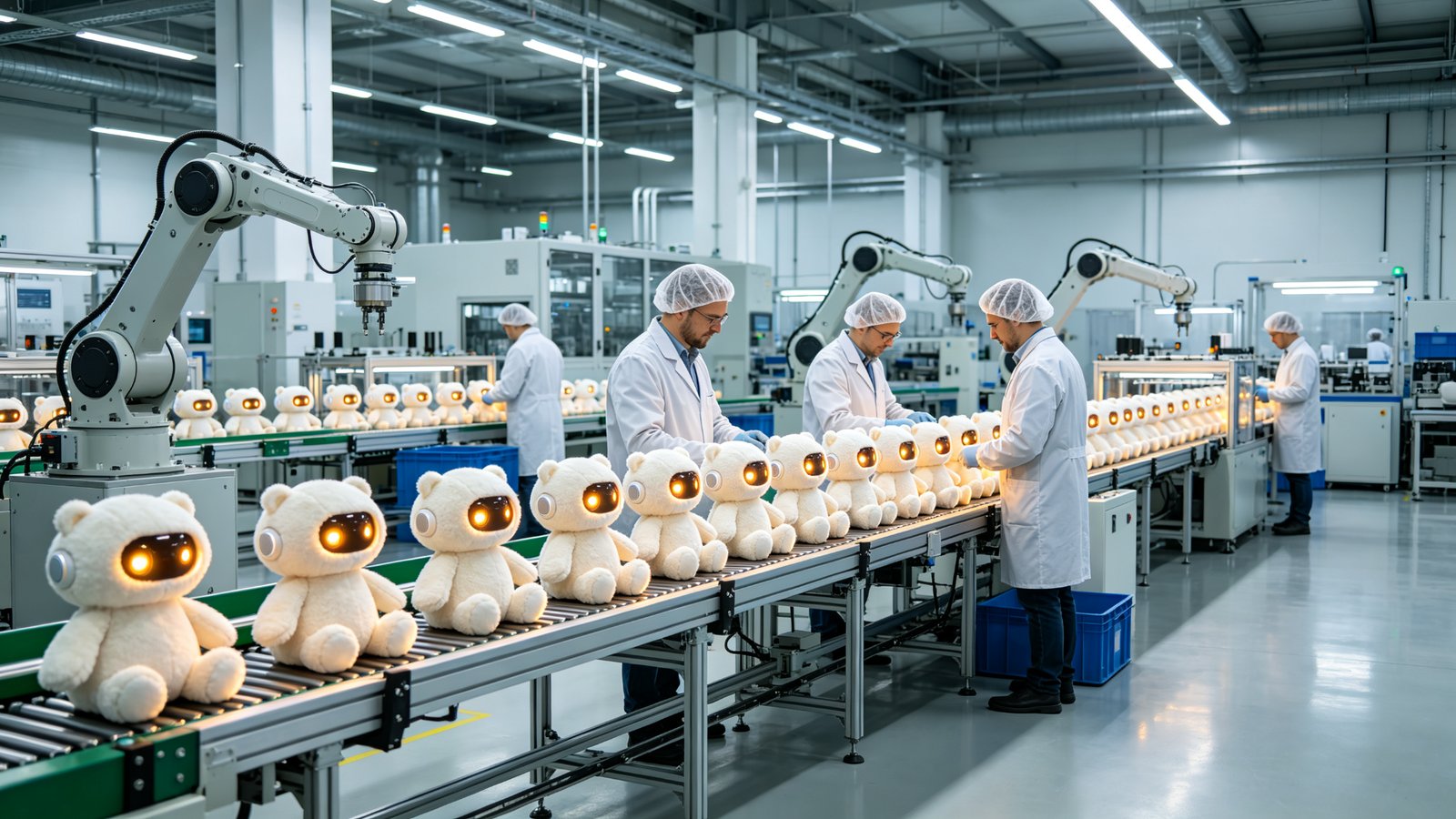
Why Consumers Are Moving Away From App-Dependent Play
The shift is not a preference — it is a reaction to real, repeated pain points. Industry reviews of app-connected companion robots consistently flag three problems:
- Battery life under two hours per charge. An app-connected robot spends most of its energy maintaining a wireless link. An embedded toy spends it on play.
- Always-on microphone anxiety. A toy that streams audio to a cloud service, through an app, raises the exact privacy questions parents have learned to ask since COPPA 2.0 and GDPR reshaped the data landscape.
- The abandonment problem. The moment an app stops being updated, a subscription lapses, or the startup's server goes dark, the toy becomes a paperweight. Parents have been burned by this more than once, and they remember.
Retailers feel the same pain from the other side. App-dependent SKUs generate returns when customers fail to pair, rage-quit the setup, or discover the "free" app hides a subscription. Embedded toys skip all of it: open the box, turn it on, play.
This is why our privacy compliance guide reaches the same conclusion from the regulation side — offline-first, embedded design is not just a feature, it is the compliance-native architecture for the next decade of toys.
What "Embedded Intelligence" Looks Like in Practice
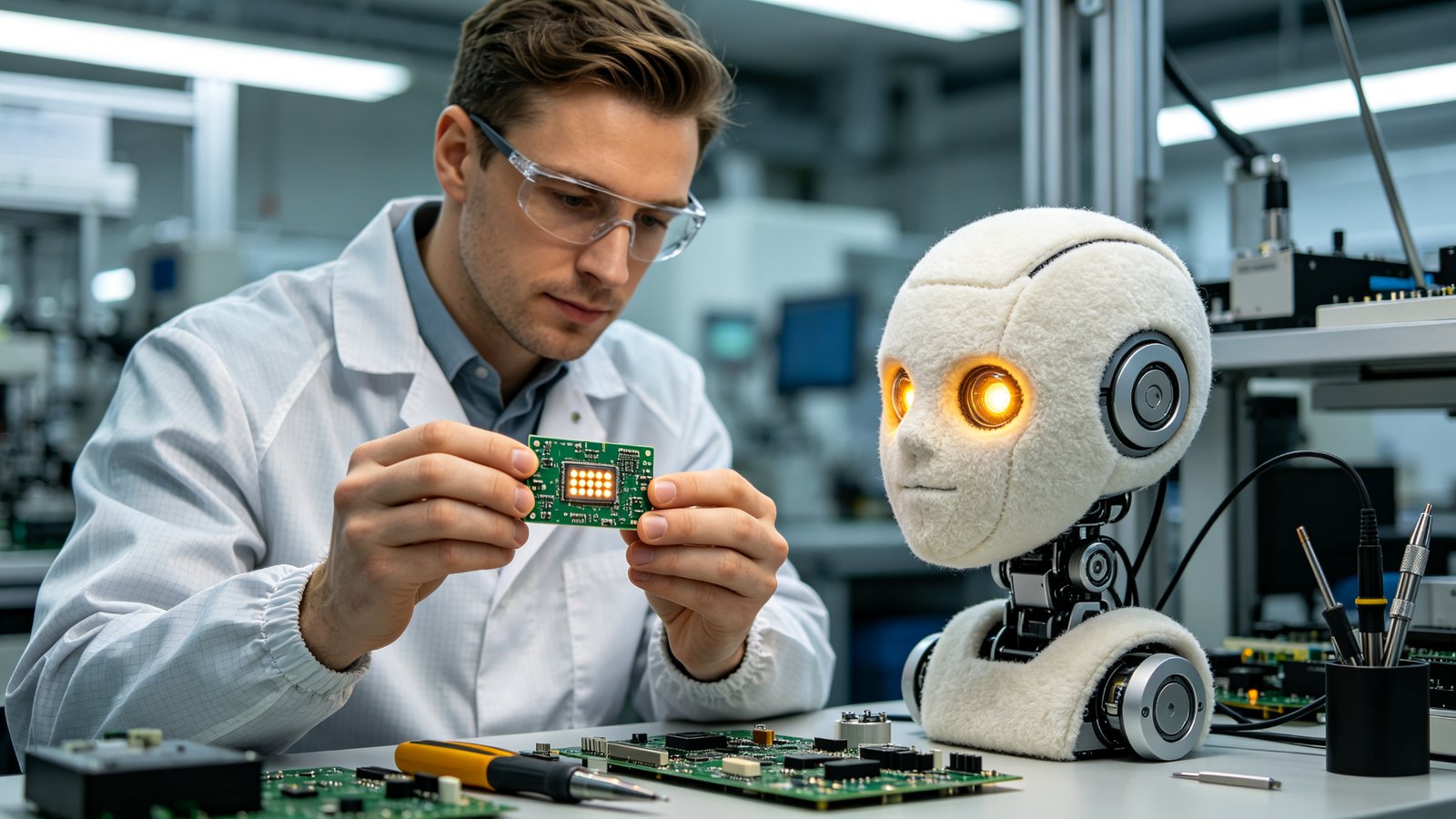
Let's be precise about what embedded intelligence can and cannot do in a plush or companion toy today — because honest expectations are what keep buyers (and their customers) satisfied.
What it can do:
- Voice interaction on the device. The toy interprets simple speech and responds conversationally without routing every phrase through a phone app.
- Gesture and touch control. Over 65% of new AI toys ship with voice or gesture control as standard. The toy reacts to being held, petted, or waved at — no screen required.
- Emotional feedback through expression. Eyes that light up with the right emotion, a chest glow that responds to being comforted, sounds and postures that mirror the child's mood.
- On-device memory. The companion remembers a name, a favorite color, and where yesterday's story stopped — a small but powerful personalization that makes it feel alive.
- Honest capability boundaries. It will not run and jump like a person. It moves like a robot: simple arm raises, head tilts, playful gestures. That is fine — children bond with the personality, not the acrobatics.
What it means for the play experience: the toy is the whole product. No second screen competing for attention, no parent as tech support, no fragile link to a cloud account. Play starts the second the box opens.
What This Means for Buyers and Retailers
For anyone building an AI toy line for 2026-2027, the 400% search surge is a buying instruction in three parts:
1. Build an embedded-first assortment. Make embedded, offline-capable toys the core of the line, not an optional premium tier. Open-box-and-play is the feature parents are searching for.
2. Use app features as a complement, not a requirement. A companion app that adds parental controls, content packs or progress insights is fine — as long as the toy's core play never depends on it. The app should enhance the toy, never own it.
3. Verify the factory's firmware independence. Ask how much of the intelligence runs on-device, whether the toy works fully offline, and what happens if the cloud service or app ever disappears. The answers separate a 2026-ready partner from a legacy assembler.
The autonomous robot toy segment already sits at roughly $1.8 billion and is growing — but growth is concentrating in products that feel self-sufficient, not screen-dependent. The line you plan this quarter determines whether you ride that curve or miss it.
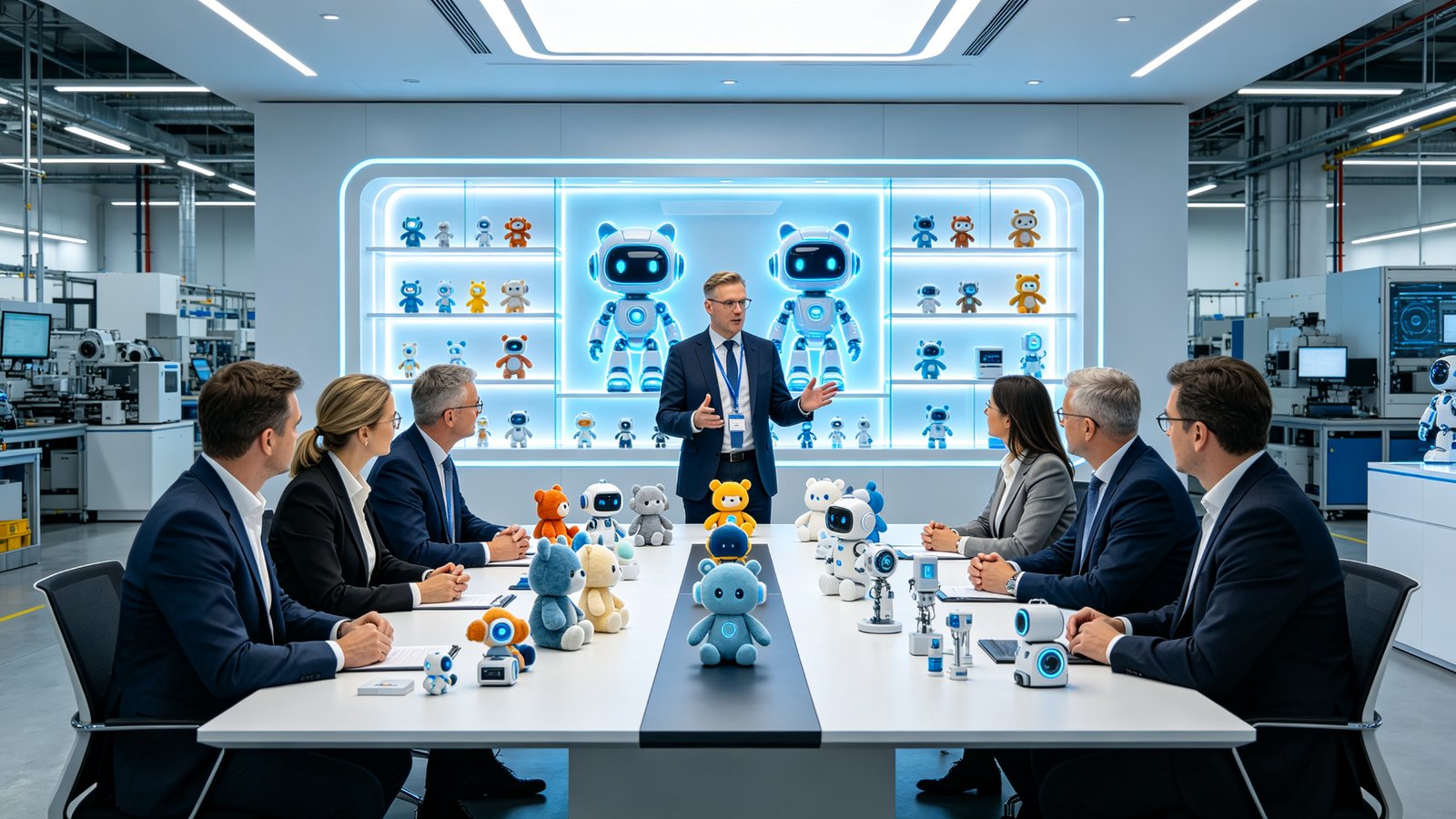
How Niokyar Builds Embedded-Intelligence Toys
Niokyar designs AI plush and companion robots with embedded intelligence as the default architecture, not an upgrade:
- On-device voice and expression. Firmware is engineered so the companion's core personality — voice, emotion eyes, gesture responses — runs locally, with the phone completely out of the loop.
- Offline-first by default. The toy that works in a cabin with no signal is the same toy that passes privacy reviews and survives a dropped connection.
- OTA content when you want it. Updates exist for content packs and refinements, but the toy is never hostage to an active subscription or a live server.
- Full customization. Appearance, features and software are built by one accountable team, so an embedded-intelligence design can be tuned for your market's age band, language and price point.
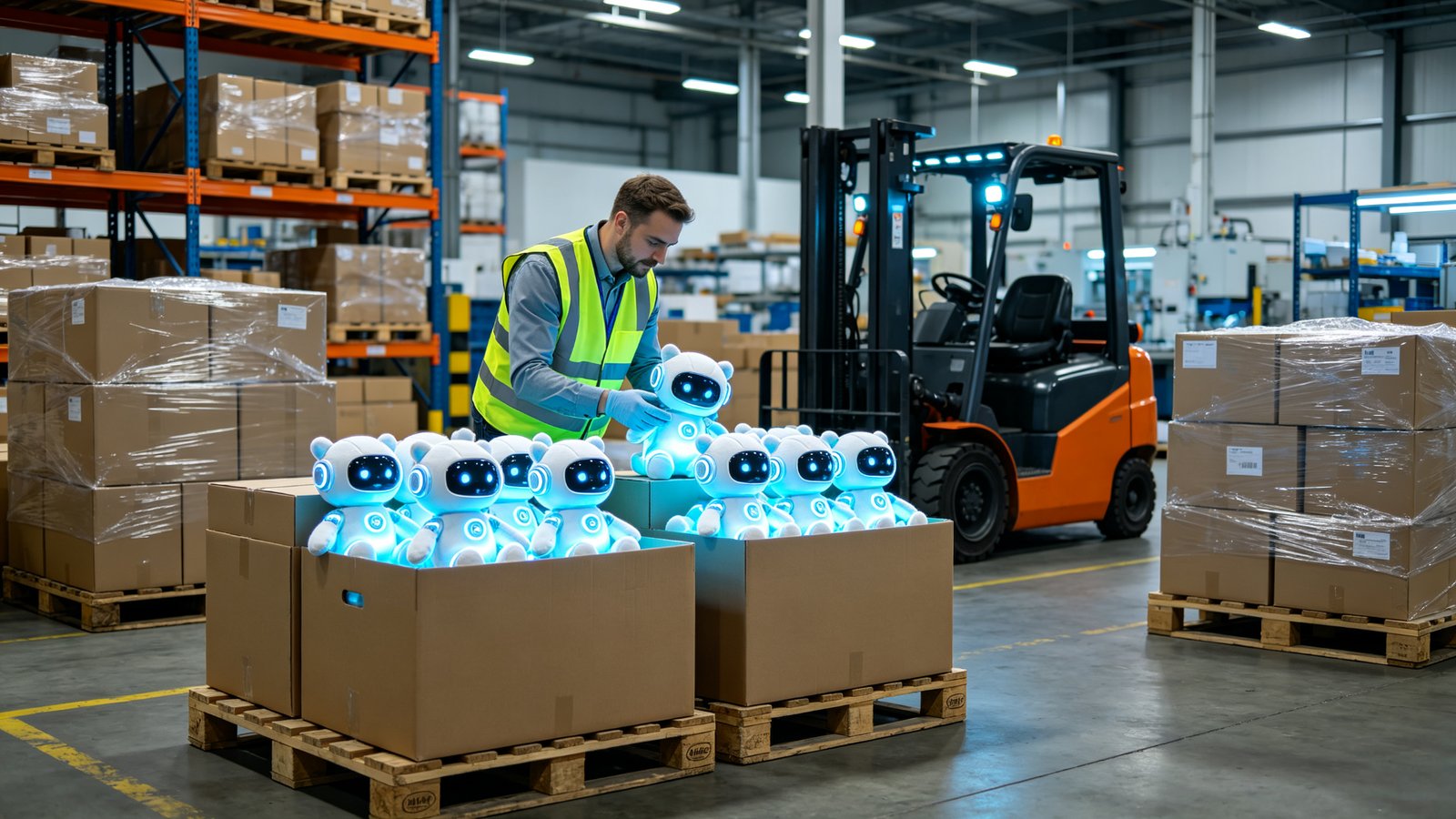
If you are sourcing embedded AI toys for the 2026-2027 season, start with the wholesale catalogue or send your brief — we will return a plan covering samples, certification and landed cost.
Frequently Asked Questions
What does "android toy" actually mean in search? Consumers use it as shorthand for an intelligent toy that runs on its own — no phone, no companion app, no account. The search surge reflects demand for embedded intelligence, not for the Android operating system.
Why did "android toy" searches jump 400%? The term peaked in June 2026, roughly four times its early-2025 level, as parents and buyers looked for toys that are smart without requiring a smartphone. It tracks the broader shift from app-dependent play to embedded intelligence.
Are embedded AI toys less capable than app-connected ones? Not for the core play experience. Embedded toys handle voice interaction, gesture control, emotional expression and on-device memory directly. App-connected toys add remote features at the cost of battery life, privacy exposure and abandonment risk.
Should I stop selling app-connected AI toys? No — but make embedded, offline-capable toys the core of your assortment and treat app features as a complement. Products whose core play depends on an app or subscription are the ones driving returns and bad reviews.
Can Niokyar build an embedded-intelligence toy with custom design? Yes. Niokyar covers appearance, features and software customization with one accountable team, with embedded and offline-first intelligence as the default architecture. Browse the catalogue or send your brief for samples, certification and landed cost.
Comments
No comments yet — be the first to share your thoughts.