2026-09-16
AI Plush Market to $3.96B by 2032: Why Soft Beats Hard
Walk into any toy fair and you will see the two worlds side by side: glossy plastic robots that roll, scan and strike poses, and soft plush companions that simply glow, listen and lean into a hug.
The surprising winner of the AI toy race is not the one with more motors. It is the one with more fabric.
The global AI plush toy market is projected to grow from roughly $1.10 billion in 2025 to $1.47 billion in 2026, and on to more than $3.96 billion by 2032 — a compound annual growth rate near 18%, far above the broader toy industry. Soft-bodied AI companions are not just a niche inside the AI toy category; they are becoming its largest, most reliable engine.
This article explains why soft beats hard, what an AI plush line should actually deliver, and how buyers can source one without the usual pitfalls.
The Market Signal: Plush Is Winning the AI Category
The numbers tell a clear story. Industry research tracking the AI smart plush segment shows the category crossing $1.10 billion in 2025, reaching about $1.47 billion in 2026, and compounding at roughly 18% annually through 2032, when it is expected to surpass $3.96 billion.
For context, this is happening while the broader AI toy conversation is still dominated by robots, screens and app-connected gadgets. The plush segment is growing faster because it solves a problem the hard-shell category never could: it makes artificial intelligence feel safe to touch.
The smart AI companion toy market is expanding in the same direction — toward companionship, emotional support and therapeutic applications, with North America leading adoption and Europe close behind. Those are exactly the use cases where a soft body, not a hard shell, is the whole point.

Soft Beats Hard: Four Structural Reasons
The preference for plush is not nostalgia. It is structural, and it shows up in four places that matter to buyers:
1. Touch is trust. A plush body triggers the same soothing response as a beloved blanket or a real pet. The fabric — not the speaker — is what earns a child's trust in the first minute. Hard robots, however impressive, ask a child to bond with plastic. Plush asks nothing; it is already safe to hug.
2. Age-appropriateness. Common Sense Media's guidance is explicit: children five and under should not use AI toys, and children six to twelve should use them with caution — concerns focused on emotional attachment, privacy and content appropriateness. Soft plush companions are the format that best respects those limits: they are huggable, washable, and carry no sharp edges or hard parts. A toddler can safely hold an AI plush while a hard-shell robot belongs to a different age band entirely.
3. Honest capability fits a soft body. Today's AI toys express themselves through glowing eyes, warm sounds and simple movements — arm raises, head tilts, a gentle lean. Those are exactly the gestures that look natural in a plush body and slightly mechanical in a hard one. The toy does not need to run or jump; a soft companion that glows and leans into a hug feels more alive than a robot that tries to be human and fails.
4. A gentler ownership experience. Plush toys survive drops, car rides and bedtime wrestling matches. There are no exposed joints to break, no wheels to jam, no hard shell to crack. For retailers, that translates into fewer damaged units and a more forgiving product for young children — a quiet advantage that shows up in lower return pressure.
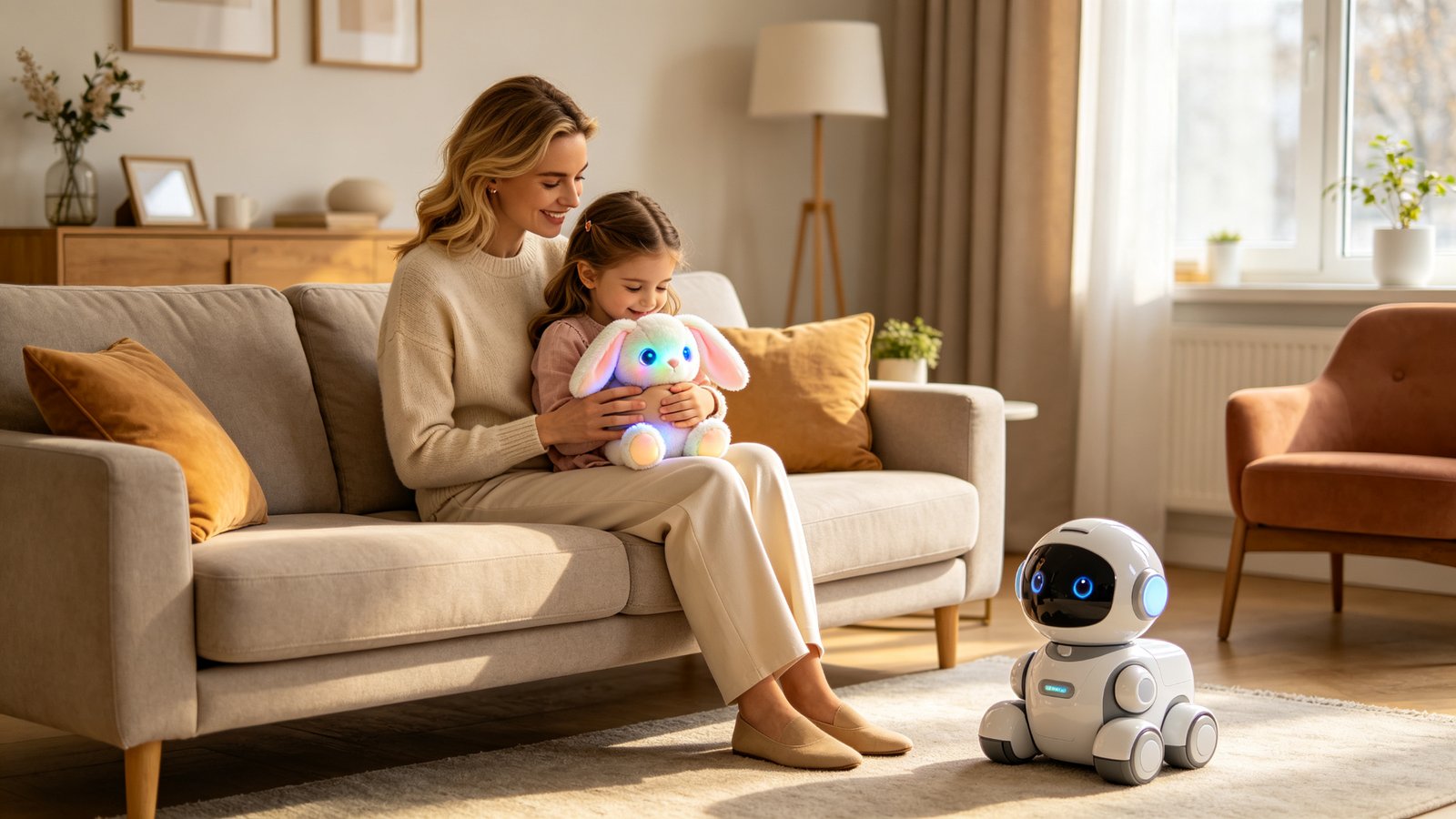
What "Soft + AI" Actually Feels Like
A modern AI plush companion combines familiar soft-goods craft with embedded electronics:
- Glowing expression eyes. LED arrays behind soft fabric show warmth, curiosity or sleepiness — the toy's emotional vocabulary.
- Voice interaction on the device. The companion listens and responds conversationally, with speech recognition and response running on embedded intelligence rather than a phone app.
- Touch and motion sensing. Sensors under the plush detect a hug, a pat or a gentle squeeze, and the toy responds with light, sound and small movements.
- Honest, simple motion. It does not run like a pet or gesticulate like a person. It performs small robot-like gestures — raising an arm, tilting its head — which children read as personality, not limitation.
- Washable, cleanable construction. The electronic core is removable or sealed so the plush itself stays practical for everyday family life.
This is what "soft + AI" means in practice: a companion that a child can hug, tell secrets to, and carry into bed — while the intelligence quietly does the work underneath the fabric.
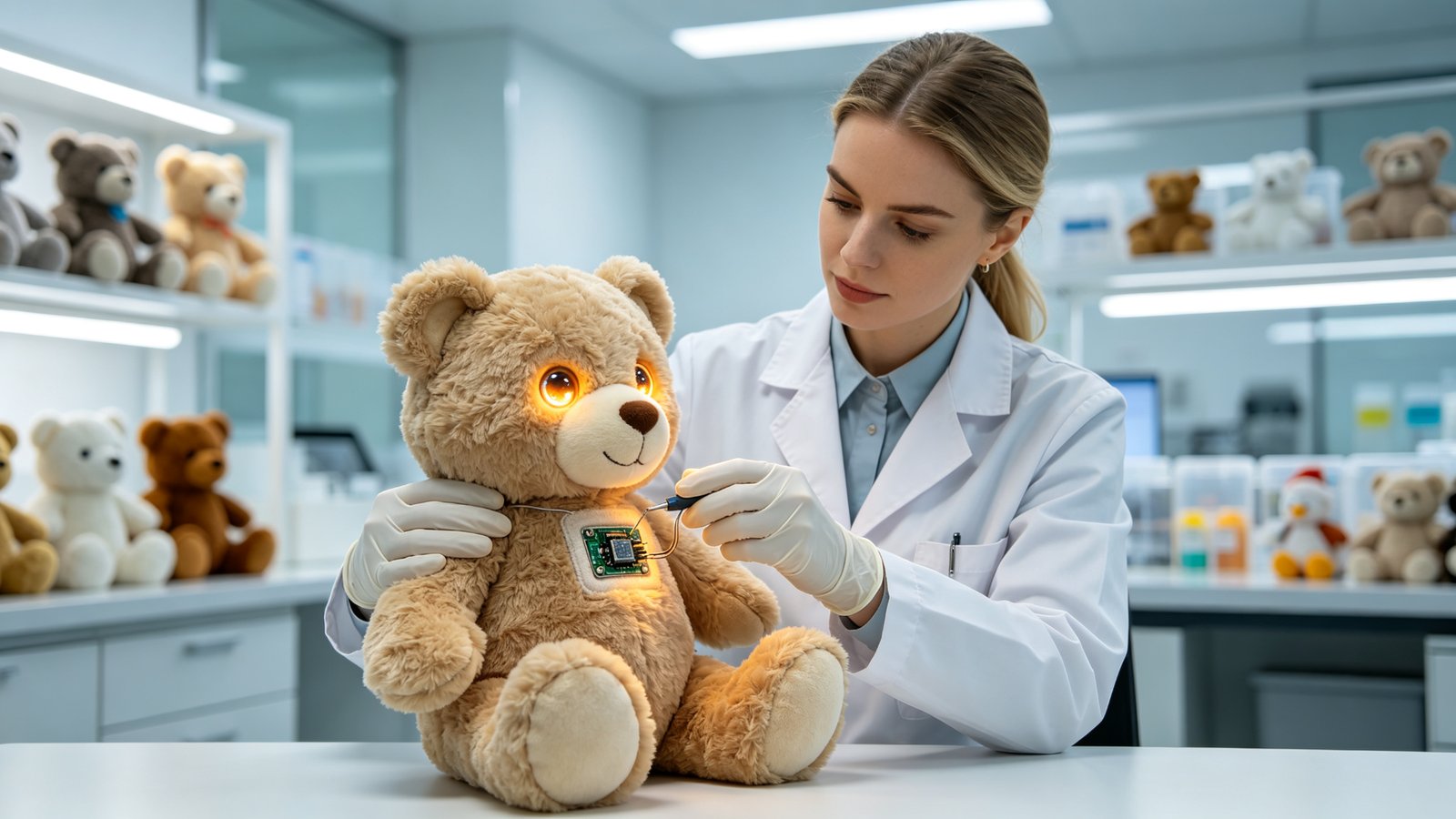
What Buyers Should Look For in an AI Plush Line
If you are adding AI plush to a retail or private-label assortment, the category rewards a specific kind of diligence. Focus on five checkpoints:
1. Electronics integration quality. The real manufacturing difficulty is not the AI — it is embedding speakers, microphones, LED arrays and batteries inside soft goods without compromising feel, safety or durability. Ask to see the internal layout and how components are secured.
2. Washability and cleaning plan. Soft toys get dirty. Confirm how the electronic core is protected or removed, and what the care instructions promise without voiding the product.
3. Sensor placement and response design. Where the touch sensors sit and how the toy reacts determines whether the companion feels magical or gimmicky. Test the response to a hug, a pat and a squeeze.
4. Battery compartment and compliance. A secure, child-resistant battery compartment is non-negotiable — and the relevant safety standards for button batteries and electronic toys must be met for your target market. Our COPPA 2.0 compliance guide covers the privacy side of the same checklist.
5. Offline capability. Parents increasingly search for toys that work without a phone and without a subscription. An AI plush that plays fully offline is not a downgrade; it is the version that passes privacy reviews and survives a dropped connection. Our Edge AI analysis explains why on-device intelligence is now the default expectation.
Why Manufacturers Need a Soft-Goods Mindset
Most hard-shell robot factories think in plastic, PCBs and injection molds. AI plush requires a different discipline: fabric engineering, seam placement, stuffing density, and the delicate job of hiding electronics inside something that still feels soft and huggable.
That is precisely where the category's supply chain differs. A manufacturer that only knows hard goods will struggle to make a plush companion that feels right; a soft-goods maker without embedded-electronics experience will struggle to make it smart. The winning partner combines both: one team accountable for the fabric, the electronics and the software together.
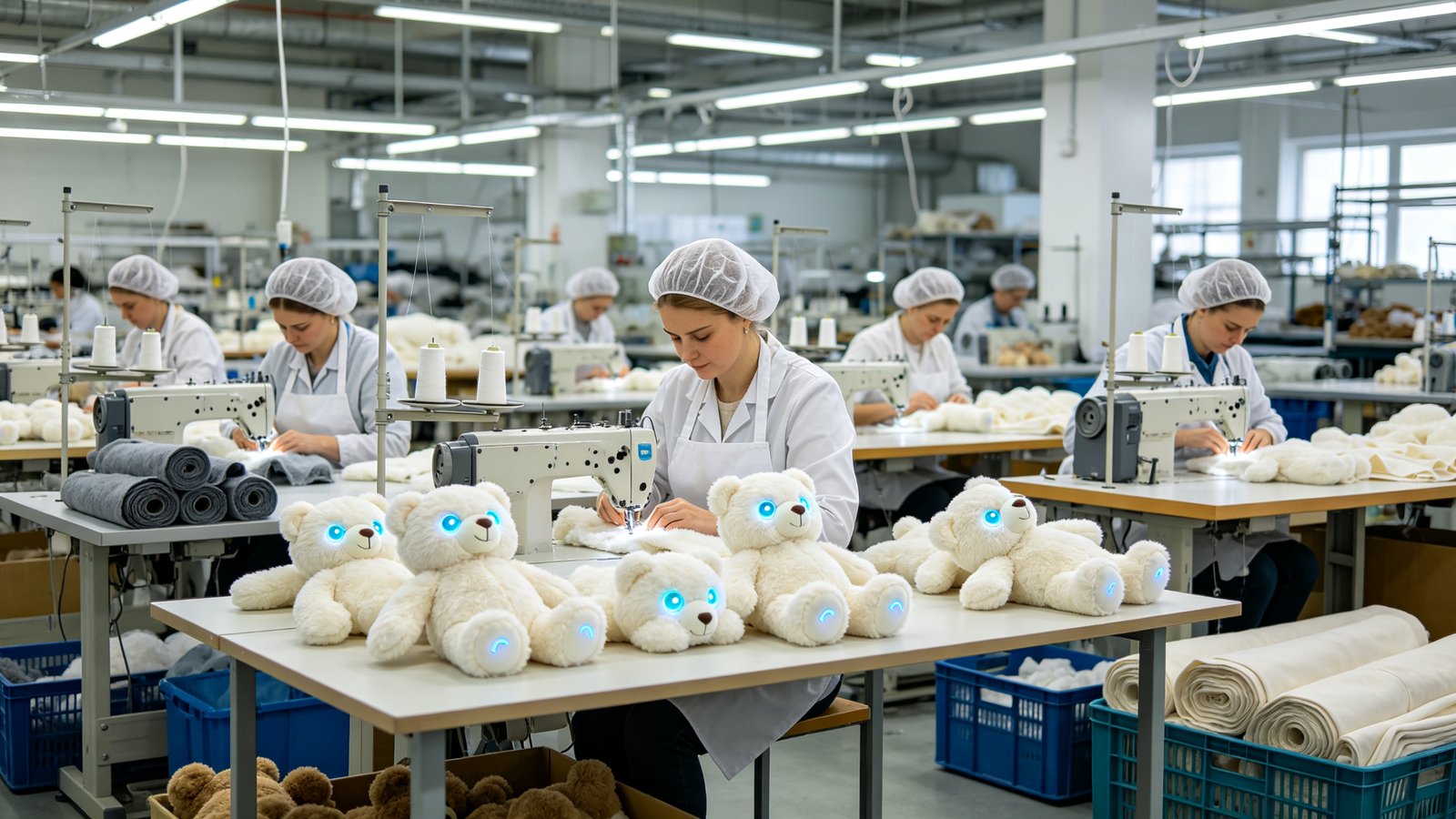
Niokyar builds AI plush with that combined discipline — embedded intelligence, custom appearance and software, offline-first behavior, and production quality controlled from fabric cutting to final QC. Explore the AI plush and companion range or send your brief to get a development plan covering samples, certification and timelines.
Frequently Asked Questions
Why is the AI plush market growing faster than hard-shell AI robots? Soft-bodied companions solve the emotional and age-appropriateness problems that hard-shell robots cannot: fabric builds trust on touch, suits younger children, and matches the simple, honest expression language of today's AI toys.
What is the projected size of the AI plush market? Industry research projects the AI smart plush category at roughly $1.10 billion in 2025, $1.47 billion in 2026, and above $3.96 billion by 2032, compounding near 18% annually.
What can an AI plush toy actually do? Today's AI plush offers glowing expression eyes, on-device voice interaction, touch and motion sensing, simple robot-like gestures, and offline play — with no phone or subscription required.
Are AI plush toys safe for young children? Soft bodies remove sharp edges and hard parts, and the electronic core is sealed or removable for cleaning. Buyers should still verify battery compartment security and the relevant electronic-toy safety standards for their target market.
Can Niokyar customize an AI plush line? Yes — appearance, features and software are built by one accountable team, with embedded, offline-first intelligence as the default architecture. Browse the catalogue or send your brief for a development plan.
Comments
No comments yet — be the first to share your thoughts.