2026-11-01
Customs Valued Your AI Toy Wrong? The $3,600 Tooling Assist
November 2026 · Customs Valuation and Duty Planning for B2B Buyers
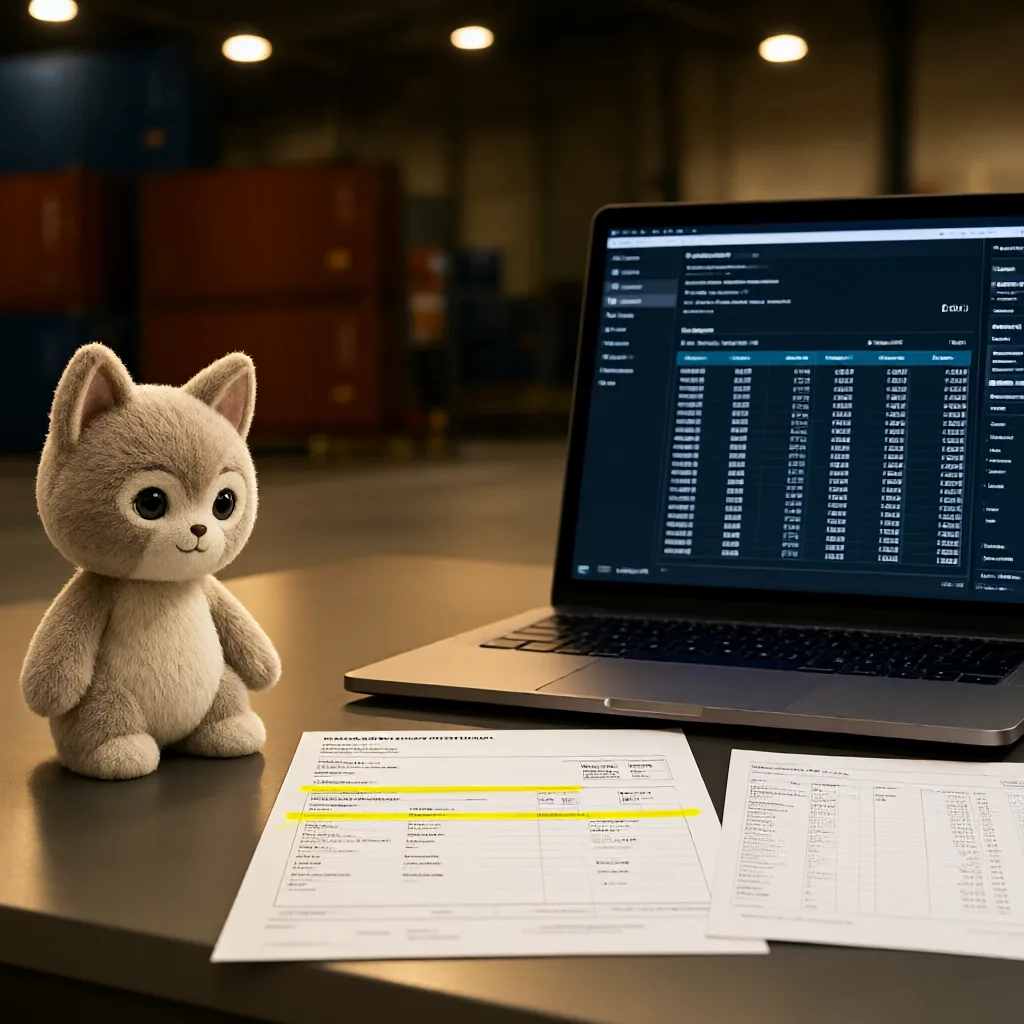 Two importers buy the same AI plush toy from the same factory at the same ex-factory price. One pays duty on USD 29 per unit. The other pays duty on USD 31.50. Neither invoice is wrong — but only one of them understood that the USD 6,000 tooling bill they paid the factory in March is part of the value of the goods they import all year.
That gap is not academic. It compounds across every entry, it is exposed in a CBP audit up to five years later, and it is the single most common valuation error in AI toy sourcing — because AI toys are one of the few toy categories where the buyer routinely pays for molds, app development, voice recording, artwork and tooling outside the unit price. Each of those payments can be a dutiable assist. Most importers treat all of them as overhead.
This guide sets out what 19 CFR Part 152 actually requires, where the assist trap sits in an AI toy bill of materials, what changed for importers moving to DDP terms, and a five-step audit you can run before your 2027 purchase orders leave the drawing board.
What "Transaction Value" Actually Measures
US customs value is built on transaction value under section 402 of the Tariff Act of 1930, as amended, implemented at 19 CFR 152.101 through 152.107. Section 152.101(b) sets the order of appraisal methods, and transaction value comes first. Section 152.103 then defines it as the price actually paid or payable, plus specific statutory additions.
Two of those additions decide your landed cost:
- Packing costs — 19 CFR 152.102(e) defines packing costs as the cost of all containers and coverings, plus the labor and materials used to place merchandise in condition, packed ready for shipment to the United States. Retail packaging, blister inserts, gift boxes and the inner trays that protect a plush toy's electronics are packing costs. They are dutiable.
- Assists — 19 CFR 152.102(a) defines an assist as anything the buyer supplies, directly or indirectly, free of charge or at reduced cost, for use in connection with the production of the imported merchandise. The definition is deliberately broad, and the four categories it lists map almost one-to-one onto the way AI toys are actually developed.
What is not added is equally important. Section 152.102(f) defines the price actually paid or payable as exclusive of transportation, insurance and related services incident to the international shipment. The regulation's own Example 4 makes the point concretely: a USD 2,000 payment for a toy shipment that bundled USD 1,850 of goods with USD 150 of ocean freight and insurance was valued at USD 2,200 — the freight excluded, an indirect payment included. Freight and duty are separate numbers, and mixing them is exactly how a landed-cost model drifts.
The Four Assists Hiding in an AI Toy BOM
19 CFR 152.102(a)(1) lists four categories. Read them against a typical AI plush or companion robot project and the exposure becomes obvious.
1. Materials, components and parts incorporated in the product. Usually nil — the factory buys the fabric, PCB and speaker. But it is not always nil. If your brand supplies proprietary voice modules, custom silicon or licensed fabric from a nominated vendor at a reduced price, you have an assist on the difference.
2. Tools, dies, molds and similar items used in production. This is the big one for AI toys. A sculpted face shell, an ear-mold, a speaker housing injection tool, a silicone mold for the plush head, jigs and fixtures, and test rigs all fall here. Our breakdown of why one AI toy mold costs USD 1,200 and another costs USD 24,000 walks through the tooling spectrum; every dollar of it is potentially an assist if the importer pays it and the factory uses it to make goods shipped to the United States.
3. Merchandise consumed in the production of the imported merchandise. For AI toys this covers engineering samples, pilot-run bodies scrapped during testing, fabric consumed in trial sewing, and material written off when a firmware change forces a housing redesign.
4. Engineering, development, artwork, design work, plans and sketches undertaken outside the United States and necessary for production. This is where AI toys diverge sharply from conventional plush. Character design, 3D modelling, industrial design, voice script authoring and recording, sound design, app and firmware development performed by your own studio or a third party outside the US can all be assist value — if they are necessary for the production of the imported goods. Section 152.102(a)(2) carves out work performed in the United States by US-domiciled individuals acting as the buyer's employee or agent, and incidental to work done in the US. That carve-out is narrower than most brand owners assume.
The regulation then tells you how to value the assist. Section 152.102(a)(3) is short and worth reading line by line:
- An assist available in the public domain is valued at the cost of obtaining copies.
- If production of the assist occurred in the US and one or more foreign countries, the value is the value added outside the United States.
- If the buyer purchased or leased the assist from an unrelated person, the value is the cost of that purchase or lease.
The same money, taxed twice
Here is the trap. Suppose a brand pays a factory USD 6,000 for tooling and the factory then amortises USD 0.48 per unit into the quoted unit price across a 12,500-unit run. If the tooling payment is an assist and is also baked into the unit price, the duty base contains it twice. On a USD 29 unit price at a nominal 20% duty rate that is about USD 6,000 of double-counted value across the order — roughly USD 1,200 of avoidable duty on one SKU, before penalties or interest enter the picture.
The reverse error is just as common: the buyer pays the tooling separately, tells the factory to keep it out of the unit price, and never declares it as an assist. That is duty evasion by omission, and it is exactly what a CBP audit under 19 U.S.C. 1509 is designed to find.
Either way, the fix is the same: decide, in writing, where each development cost lives — amortised in the unit price, or declared as an assist — and make the invoice and the entry agree.
Comparison: Five AI Toy Cost Lines and How Each Is Treated
The table below summarises how the principal cost lines of an AI toy project are handled under 19 CFR Part 152. It is a planning tool, not a ruling; confirm classification and valuation treatment with your broker or a CBP ruling request for anything material.
Cost line matrix
Tooling paid by buyer
- Typical AI toy example: USD 6,000 face-shell mold
- Customs treatment under 19 CFR 152: Dutiable assist, prorated across units unless amortised into unit price (152.102(a)(1)(ii))
- Who usually carries the error: Brand owner, on first PO
Design and voice work offshore
- Typical AI toy example: Script authoring + recording, 3D modelling
- Customs treatment under 19 CFR 152: Potentially a dutiable assist if necessary for production (152.102(a)(1)(iv))
- Who usually carries the error: Brand and its studio
Packing
- Typical AI toy example: Retail gift box, blister tray, inner foam
- Customs treatment under 19 CFR 152: Dutiable, added to price if not included (152.102(e))
- Who usually carries the error: Factory, silently
Ocean freight and insurance
- Typical AI toy example: CIF to Long Beach
- Customs treatment under 19 CFR 152: Not part of transaction value; separately dutiable base excluded (152.102(f))
- Who usually carries the error: Freight broker model
Royalty to IP holder
- Typical AI toy example: Character licence per unit
- Customs treatment under 19 CFR 152: Added only where payment is a condition of sale of the imported goods
- Who usually carries the error: Licensing and customs teams, separately
Royalties: The Line That Turns Legal Advice Into Duty
Royalties and licence fees are the assist-adjacent question buyers ask about most, and the answer is genuinely conditional. The regulatory test turns on whether the royalty is paid as a condition of sale of the imported merchandise. A per-unit character royalty to a licensor who is unrelated to the factory, paid because the goods cannot be sold without the licence, behaves one way. A royalty paid for domestic marketing rights, or for trademark rights that are not a condition of the sale for export, behaves another.
For AI toys the complexity is structural. A licensing deal for an AI plush character typically bundles: the character art, the voice persona, the companion app content, and the marketing rights. Those four may not be treated alike for valuation purposes. The safe practice is to negotiate the licence agreement so that the components are separately invoiced and separately described, so your broker can see what they are buying and take a defensible position — and to obtain a ruling if the amounts are material.
Where the paperwork lives for five years. Once you declare an assist, you own the audit trail. 19 CFR 163.4(a) requires entry-related records to be kept for five years from the date of entry. Section 163.2(b)(2) is worth highlighting for brand owners: a person who orders merchandise from an importer in a domestic transaction is treated as knowingly causing the import — and must keep records — if "technical data, molds, equipment, other production assistance, material, components, or parts are furnished by the person placing the order with the importer with knowledge that they will be used in the manufacture or production of the imported merchandise." In plain language: a brand that furnishes molds to its factory and routes goods through a third-party importer of record can pull itself inside the recordkeeping perimeter. Read that sentence twice before you sign a distribution arrangement that separates the tooling payer from the IOR.
Origin Marking: The Penalty Nobody Budgets For
Valuation is only half of the entry. The other half is the mark. Under 19 CFR 134.1(b), country of origin means the country of manufacture or production, and work added in another country only becomes the origin if it effects a substantial transformation. For a plush toy assembled in Vietnam from Chinese electronics and fabric, the answer is not automatic.
The penalty for getting it wrong is not advisory. Section 134.2 imposes additional duties of 10 percent of the final appraised value on articles not marked as required, unless exported or destroyed under customs supervision before liquidation. Section 134.3 allows CBP to withhold delivery until marking is corrected and, if goods are already released, to demand redelivery within 30 days. Section 134.4 raises the stakes for concealment: intentional removal, defacement, destruction or alteration of a required origin marking to conceal it can carry criminal penalties of up to USD 5,000 and/or imprisonment for one year under 19 U.S.C. 1304(h).
A mislabeled origin is therefore a 10% duty premium on the whole shipment plus a real chance of a redelivery demand during your holiday sell-through — which is precisely the window where a container stuck at port is unrecoverable.
What Changed With DDP, and Why Importers Are Re-Classifying Themselves
Many AI toy brands now buy DDP: the Chinese factory or forwarder quotes a delivered duty paid price, handles the entry and hands the brand a cost per unit. It looks simple. In customs law it is not.
If the foreign seller is the importer of record, the customs value is based on that seller's transaction, and the buyer's brand — the entity with the licence, the design files and the tooling — may not see the declared value at all. When the arrangement is later examined, the entry may show a price that reflects the seller's selling price to the US brand only partially, or that treats the brand's assists differently from how they should be treated. The consequence is not the seller's problem alone: a brand that controls the specification, supplies the mold and takes the margin is likely to be treated as the party with real knowledge of the transaction, and is dragged into the audit.
Three practices reduce the exposure without abandoning DDP:
- Get the declared value in writing. Ask the DDP counterparty to confirm the unit value declared at entry, and reconcile it against your own invoice and assist schedule quarterly.
- Nominate the IOR deliberately. If the brand is the importer of record, it keeps control of valuation, marking and response times. If a third party is the IOR, the brand needs a written allocation of duty exposure in the supply contract.
- Separate the assist from the price once. Publish one number for "tooling declared as assist" and one for "tooling embedded in unit price", and never allow both for the same mold.
Five-Step Valuation Audit Before Your 2027 POs
- Rebuild the cost stack from the factory's invoice, not your planner. Pull every payment made to the factory or its affiliates in the last 24 months: tooling invoices, pilot run charges, sample fees, packaging design fees, and any credit notes that reduce the unit price. Each one is either an assist, a price adjustment, or provably neither.
- Separate offshore from onshore development. For design, voice and app work, record where the work was performed and by whom. Section 152.102(a)(3)(ii) values the assist at the value added outside the United States, so the onshore/offshore split is the number that matters.
- Check the tooling double-count on every SKU. Compare amortised tooling in the unit price against the tooling invoice. If both exist, fix the invoice or the entry — this is the cheapest correction you will ever make.
- Verify the origin mark against the actual production route. Confirm the marking rule you rely on, confirm the legend is on the product or its packaging as section 134.3 requires, and photograph it from the packing line. If your goods transit a second country for assembly, get a written substantial-transformation view before, not after, the first shipment.
- Book a five-year records folder per SKU. Entry records, assist schedules, tooling invoices, licence agreements and origin determinations, all in one folder per SKU, retrievable within the day. Section 163.4(a) gives CBP five years of window; the practical test is whether you can produce the file in an afternoon.
Timing: Why This Work Has to Happen in Q4
Spielwarenmesse 2027 runs from 2 to 6 February in Nuremberg. That is the meeting where tooling commitments are typically locked and mould-making starts. If your valuation structure is settled after the tooling invoice is paid, you are choosing between an awkward amendment and an under-declared entry. Settling it in November and December — while you are still choosing between suppliers, and while you have the leverage to specify invoicing terms — is materially cheaper.
For buyers still selecting factories, our nine-point checklist for choosing an AI plush toy manufacturer covers the commercial side of the same conversation, and our guide to how a 300-unit low MOQ order breaks down by cost shows where tooling amortisation actually bites on a small run. Buyers working backwards from the February show should also check the 2027 trade show and order calendar so the valuation audit lands before tooling is committed rather than after.
What to Do This Week
The work is unglamorous and finite. Download every tooling and development invoice from the last two years. Mark each one "assist", "price adjustment" or "not applicable", with the regulation reference beside it. Send the resulting schedule to your customs broker and ask for a written position on the three largest items. If the position is uncomfortable, request a prospective ruling before the 2027 tooling cycle begins.
Then put the schedule in the PO template as a required attachment. A one-page assist schedule attached to every purchase order costs nothing and closes the gap that five years of entry records otherwise leaves open.
Sources
- 19 CFR Part 152, Subpart E — Valuation of Merchandise, including § 152.101 (basis of appraisement), § 152.102 (definitions: assist, packing costs, price actually paid or payable) and § 152.103 (transaction value) — https://www.ecfr.gov/current/title-19/chapter-I/part-152/subpart-E
- 19 CFR Part 134, Subpart A — Country of Origin Marking, including § 134.1 (country of origin), § 134.2 (additional duties of 10 percent), § 134.3 (delivery withheld until marked) and § 134.4 (penalties for alteration of marking) — https://www.ecfr.gov/current/title-19/chapter-I/part-134/subpart-A
- 19 CFR Part 163 — Recordkeeping, including § 163.2 (persons required to maintain records) and § 163.4 (five-year retention) — https://www.ecfr.gov/current/title-19/chapter-I/part-163
- Tariff Act of 1930, section 402 (19 U.S.C. 1401a) — valuation of imported merchandise, as referenced in 19 CFR 152.101
- 19 U.S.C. 1304 (marking of imported merchandise) and 19 U.S.C. 1509 (CBP audit authority)
- 2. ProdSV — Zweite Verordnung zum Produktsicherheitsgesetz (Verordnung über die Sicherheit von Spielzeug), § 4(3): instructions and safety information must be provided in German — https://www.gesetze-im-internet.de/gpsgv_2/BJNR135000011.html
- Directive 2009/48/EC on the safety of toys, Annexes II, III, IV and V, as implemented by 2. ProdSV
- Spielwarenmesse, Nuremberg, 2 to 6 February 2027 — show calendar and timing of tooling commitments
Comments
No comments yet — be the first to share your thoughts.