2026-11-06
The 7 mm Gap That Turns a Compliant AI Plush Toy Into a Recall
November 2026 · Product Safety Design, Small Parts Testing and Holiday Shipping Cut-Off for B2B Toy Buyers
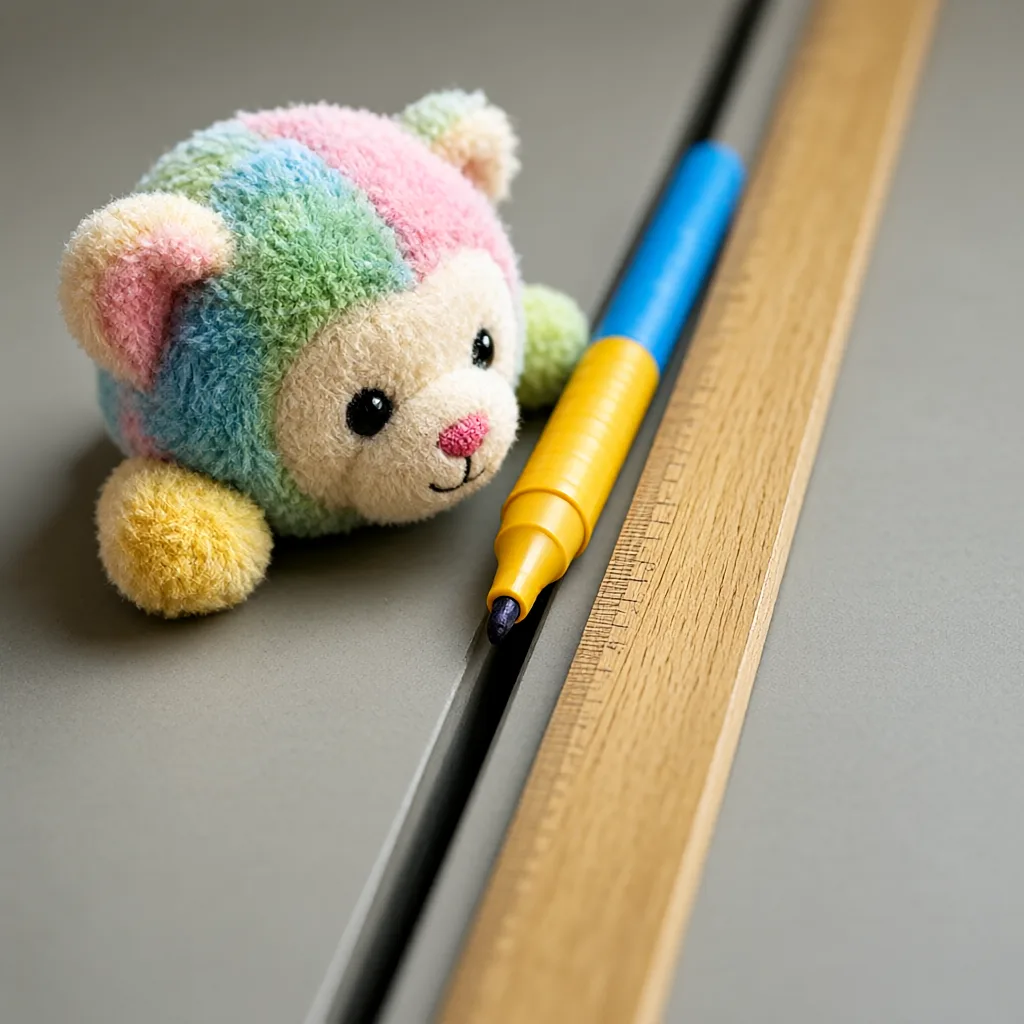
A plush AI toy that ships in November does not become non-compliant on the ship date. It became non-compliant eight months earlier, on the day the mould was cut, because the hinge gap between two plastic plates is 7 mm and a 6 mm pen fits through it. Nobody notices until a test lab in Shenzhen returns a paragraph that says the article fails 16 CFR 1501.4, and by then the tooling is paid for, the cartons are printed and the retailer has already loaded the SKU into its holiday grid.
This article is about the sixteen weeks between a sample approval in early August and the last moment a container can leave a Chinese port and still reach a US or EU warehouse before the peak selling weeks. It is written for importers, brand owners, educational toy buyers and channel partners who source voice-enabled plush, learning tablets and companion robots, and it focuses on one unglamorous design decision: the choke hazard gap. The deadline arithmetic at the end is not a forecast. It is the shipping transit you can read off a sailing schedule and the port closures you can read off a public holiday calendar.
Why the choke hazard gap decides your November
Small parts compliance is the first filter every toy passes through, and it is the one that fails latest. Dimensional failures are cheap to prevent and expensive to fix, because the fix is a mould change, not a label change.
The US rule is layered. A toy or other article intended for use by children under 3 years of age that presents a choking, aspiration or ingestion hazard because of small parts is a banned hazardous substance under 16 CFR 1500.18(a)(9), and 16 CFR Part 1501 sets the test. Section 1501.2(a) of that part names stuffed, plush and flocked animals explicitly, along with dolls intended for use by children under 3. Section 1501.4(b) describes the procedure: place the article, without compressing it, into the test cylinder, and if it fits entirely inside in any orientation it fails. If it does not fit, subject it to the use and abuse tests of 16 CFR 1500.51 and 1500.52, and any detached components or pieces that then fit entirely inside the cylinder are also a failure.
Note the small print, because it is where AI toys live. Section 1501.4(b)(2) excludes paper, fabric, yarn, fuzz, elastic and string for the size assessment. A piece of polyester fibre pulling out of a seam is not automatically a small parts failure. A plastic battery door latch, a listening-mode button cap or a magnetic clasp moulded into the same plush is judged by the cylinder, and the same attached components are also what the magnet, battery and electronic requirements address separately in ASTM F963-23 under 16 CFR 1250.2.
The EU rule asks a different question. Under the Toy Safety Directive 2009/48/EC, a choking hazard assessment is not a cylinder test but a hazard assessment for the age group the toy is intended for, and the harmonised standards EN 71-1 for mechanical and physical properties and EN 71-2 for flammability are the test methods most third-party laboratories use to show presumption of conformity. EN 71-1 contains its own small parts cylinder and its own drop, torque and tension tests. A component that survives the US use and abuse protocol can still be judged detachable under EN 71-1, because the forces and the cycle counts differ.
The practical consequence for a buyer is simple. You cannot test for one market and ship to both.
EU versus US: the same plush, two failing tests
Here is the comparison that matters when you sit with an engineering team. It is written as point-by-point comparison rather than a table so it reads cleanly on a phone in a factory meeting room.
- Governing instrument. EU: Directive 2009/48/EC with EN 71-1 as the harmonised standard used for presumption of conformity. US: ASTM F963-23 incorporated by 16 CFR 1250.2, plus the small parts ban in 16 CFR 1500.18(a)(9) and the test method in 16 CFR Part 1501.
- Age logic. EU: the maker declares an intended user age and the hazard assessment follows the essential safety requirements for that group. US: section 1501.2(b) looks at stated intent on the label, at advertising and promotion, and at whether the article is commonly recognised as intended for children under 3. A marketing photo of a two-year-old on your Amazon listing rewrites your compliance scope.
- The cylinder. EU: EN 71-1 defines the small parts cylinder used in its own test clauses. US: 16 CFR 1501.4 sets the cylinder and states, in 1501.4(a), that the English dimensions govern for compliance and the metric figures are for convenience only.
- Detachment testing. EU: EN 71-1 drop, torque and tension tests with its own force values and its own judgement on components. US: 16 CFR 1500.51 and 1500.52 use and abuse tests, with the bite tests of 1500.51(c) and 1500.52(c) expressly excluded for the small parts procedure.
- What is excluded from the size test. EU: EN 71-1 treats textile, fibre and similar materials in its own way within the small parts clauses. US: 16 CFR 1501.4(b)(2) excludes paper, fabric, yarn, fuzz, elastic and string, so the plastic hardware on a soft toy carries the whole risk.
- Electrics and battery. EU: EN 62115 for electric toys sits alongside EN 71-1, and a rechargeable lithium cell adds IEC 62133-2 cell testing and, for air shipment, UN 38.3. US: ASTM F963-23 section 4 plus 16 CFR 1505 for electrically operated toys.
- Third-party testing and certificate. EU: conformity assessment leads to the CE mark and an EU declaration of conformity, and the technical file is kept for 10 years under Article 21 of the Directive. US: a Children's Product Certificate is required for a children's product subject to a rule, with testing at a CPSC-accepted laboratory; section 1112.11 of 16 CFR Part 1112 sets out the independent, firewalled and governmental categories of accepted bodies.
- Marketing consequence. EU: a 3+ claim with plastic hardware that fails EN 71-1 invites a recall and a marketplace delisting. US: a 3+ claim with a component that fits the 1501.4 cylinder invites the same, and the importer of record carries it rather than the factory.
The same paragraph can be read the other way round. A design that passes 16 CFR 1501 at 3+ can still be pulled by a German buyer's QA team because EN 71-1 found the button detachable. Neither test is wrong. They are two gates on one road.
The eight gaps an AI plush toy gets wrong
Every failure I have seen discussed in toy QA reviews falls into a short list. Walk the sample with this list before the mould is cut.
- The seam gap around the speaker grille. A speaker cover sewn into a plush back is a textile component, but the hard plastic ring under it is not. If the ring can separate after the drop test, it goes into the cylinder.
- The battery compartment door on a rechargeable plush. A USB-C charging port means the compartment is opened by an adult, but the latch, the screw and any small trim ring are still attached components.
- The listening button. A single moulded button that is 5 mm in one dimension can enter the cylinder mouth even if its longest dimension is 12 mm, because the test is about the whole component fitting entirely inside in any orientation.
- The magnetic clasp or plush accessory. Magnets are judged under ASTM F963-23 magnet requirements and the button-cell requirements separately, but a clasp that detaches is also a small parts candidate.
- The sensor window on a companion robot. A transparent polycarbonate window with a 2 mm retaining clip is a favourite failure, because the clip survives normal use and shears under the torque test.
- The plush tag and the QR card. A printed card is paper and excluded from the size test in the US, but the plastic grommet or the string toggle on the same card is not.
- The in-box accessory that was never in the approved BOM. Battery cables, screwdrivers and a spare charm are the classic late addition, and they are the first thing an auditor finds in the carton.
- The eyes and the nose. A stitched nose is textile, but a moulded hard nose on the same face becomes the component the lab pulls off and drops into the cylinder.
None of these are exotic. All of them are cheaper to fix in a CAD file than in a production run, and all of them land on the importer, because the Children's Product Certificate is signed by the importer and not by the factory.
The 16-week winter cut-off calendar
The remainder of this article is the part you can act on this week. I am not going to forecast container rates or port congestion in dollar terms, because that would be invented data. What follows uses only public inputs you can verify yourself: the transit time on a sailing schedule, the fact that Chinese New Year and the fixed-date holidays close ports, and the sales windows your retail partners publish.
Take a typical Asia to US West Coast ocean transit of 14 to 18 days door to door, and Asia to North Europe of 30 to 40 days. Then work backwards from the cut-off dates your own retail accounts publish. Two things must be true for a toy to arrive on time: the container must sail before the last vessel that meets the cut-off, and the goods must clear the port of entry before it stops accepting commercial cargo for the holidays.
- Week of 9 November 2026. For the holiday 2026 season, ocean freight is no longer a viable channel for a new SKU. A container loaded this week reaches a US West Coast port in late November at the earliest, and any customs hold pushes clearance into December. If a SKU is not already on the water, the only compliant options are air freight on the same tested design or deferral.
- Week of 16 November 2026. This is the practical air freight window for a small, high-value AI plush quantity, and it is also the last useful week for placing the production order for the January 2027 restock, because the factory needs a full run before Spring Festival.
- Weeks of 23 and 30 November 2026. Final sea vessel departures that still clear a US port before Christmas for most carriers. Anything loaded after this is a January delivery wearing a December promise.
- Week of 7 December 2026. This is where most buyers lose a season without noticing: it is the last week to issue a change order that can still be built before the factory stops for Spring Festival. A small parts redesign approved now is a new mould and a new test report, which is four to six weeks of engineering and lab time.
- December 2026 dates to block. Hong Kong and mainland China observe the Winter Solstice on 21 or 22 December, and Christmas and Boxing Day on 25 and 26 December. Hong Kong public holidays in 2026 include Christmas Day on Friday 25 December and the first weekday after Christmas on Saturday 26 December. Customs and freight booking desks run short before and after those dates, and labs slow down.
- Late January and February 2027. Spring Festival falls on 17 February 2027, with a statutory holiday running to 23 February 2027. In practice factories wind down one to two weeks before the holiday and take a week or more to return to full output, and the National Day Golden Week runs 1 to 7 October. If your first 2027 order is not confirmed by mid-January, it is a March shipment regardless of what the purchase order says.
Note one asymmetrical risk. The Winter Olympics are hosted by Milano Cortina from 6 to 22 February 2027, and the European air freight and road capacity used for time-critical retail replenishment in February will be competing with event logistics. If you plan an early 2027 European replenishment by air, book capacity before December.
What the redesign actually costs, and how to avoid paying it twice
The expensive version of this problem is the one where a buyer discovers the gap after tooling. A new mould insert, a re-run of the sample, a new third-party test report and a new Children's Product Certificate is a calendar problem more than a money problem, because the lab queue in December is where the season goes.
The cheap version is a design review with a printable gauge in hand. Two tools cost almost nothing. The first is the CPSC small parts cylinder, whose dimensions are published as Figure 1 in 16 CFR 1501.4 and reproduced by every testing lab. Print it at the stated size, cut it out and drop every detached component in. The second is a pair of vernier calipers and a list of every non-textile component on the sample.
Then take four steps, in this order, before you sign the tooling release.
- Decide the label age first. Everything downstream follows the intended user age, and in the US the label, the listing and the packaging all count as evidence of intent under 16 CFR 1501.2(b).
- Ask the factory for a component list with dimensions, not a photo of the toy. Any component under roughly 32 mm in two dimensions needs a decision.
- Run both protocols on one sample set. Ask the lab for a single report covering 16 CFR 1501 and EN 71-1 on the same samples, and put the report number on the Children's Product Certificate and the EU declaration of conformity.
- Write the gap into the specification. The drawing should state the maximum permissible gap at every seam and hinge, and the incoming inspection should measure it on the first article, not the tenth.
If you are earlier in the process and have not chosen a supplier yet, the dossier questions in the one-day AI toy factory audit are the ones that expose whether a factory understands these tests or simply forwards a test report from another customer's SKU. If you are managing an existing supplier across several tiers, the four-factory BOM traceability problem explains why the plastic hardware on a soft toy usually comes from a specialist that never sees your test report. And once the certificate exists, the seven documents behind it are what must survive a customs or CPSC request within 24 hours.
The checklist to finish before the December change order
Print this and take it to the sample review. Every line is a decision, not an observation.
- Intended user age declared in writing, and matching the label, the listing and the packaging.
- Complete non-textile component list with measured dimensions for each part.
- Each component tested against the 16 CFR 1501.4 cylinder in every orientation, not just the obvious one.
- The same components checked under the EN 71-1 small parts clauses, with the report attached.
- Detachment forces compared with the US use and abuse protocol and the EU drop, torque and tension tests.
- Battery, magnet and button cell requirements confirmed as separate items in the same report.
- Third-party laboratory acceptance status confirmed under 16 CFR Part 1112 for every rule cited on the certificate.
- Change order raised before the factory's Spring Festival cut-off, with a written confirmation date you can hold the supplier to.
Toys that arrive late are a margin problem. Toys that arrive non-compliant are a recall problem, and a recall does not wait for your next order cycle. The gap between a pen and a plush toy is 7 mm wide, and it is the cheapest 7 mm you will ever close.
Sources
- eCFR, 16 CFR Part 1501, Method for Identifying Toys and Other Articles Intended for Use by Children Under 3 Years of Age Which Present Choking, Aspiration, or Ingestion Hazards Because of Small Parts, sections 1501.2 and 1501.4. https://www.ecfr.gov/current/title-16/chapter-II/subchapter-C/part-1501
- eCFR, 16 CFR 1500.18, Banned toys and other banned articles intended for use by children, paragraph (a)(9). https://www.ecfr.gov/current/title-16/chapter-II/subchapter-C/section-1500.18
- eCFR, 16 CFR Part 1250, Safety Standard for Toys, section 1250.2 incorporating ASTM F963-23 by reference. https://www.ecfr.gov/current/title-16/chapter-II/subchapter-B/part-1250
- eCFR, 16 CFR Part 1112, Requirements Pertaining to Third Party Conformity Assessment Bodies, section 1112.11 on independent, firewalled and governmental bodies. https://www.ecfr.gov/current/title-16/chapter-II/subchapter-B/part-1112
- eCFR, 16 CFR Part 1110, Requirements Pertaining to Certificates of Compliance, on the Children's Product Certificate. https://www.ecfr.gov/current/title-16/chapter-II/subchapter-B/part-1110
- eCFR, 16 CFR Part 1505, Electrically Operated Toys and Other Electrically Operated Articles Intended for Use by Children. https://www.ecfr.gov/current/title-16/chapter-II/subchapter-C/part-1505
- EUR-Lex, Directive 2009/48/EC of 18 June 2009 on the safety of toys, including Article 21 on the technical documentation retained for 10 years. https://eur-lex.europa.eu/eli/dir/2009/48/oj
- CEN, EN 71-1 Safety of toys, Mechanical and physical properties, and EN 71-2 Flammability. https://standards.cencenelec.eu/
- Hong Kong Observatory, General Holidays and Their Last Days in 2026 and 2027, including Christmas and the first weekday after Christmas. https://www.hko.gov.hk/en/gts/time/public_holidays.htm
- Hong Kong Observatory, Gregorian-Lunar Calendar Conversion Table, showing Spring Festival on 17 February 2027 and the Mid-Autumn Festival on 15 September 2026. https://www.hko.gov.hk/en/gts/time/conversion.htm
- Milano Cortina 2027, Winter Olympic Games dates and official schedule. https://milanocortina2026.olympics.com/
Comments
No comments yet — be the first to share your thoughts.