2026-08-29
Weighted Plush Toys for Autism & Sensory Calm: 2026 Market Guide
August 2026 · Category Analysis for B2B Buyers
Weighted Plush Toys for Autism and Sensory Calm: The 2026 Market Guide
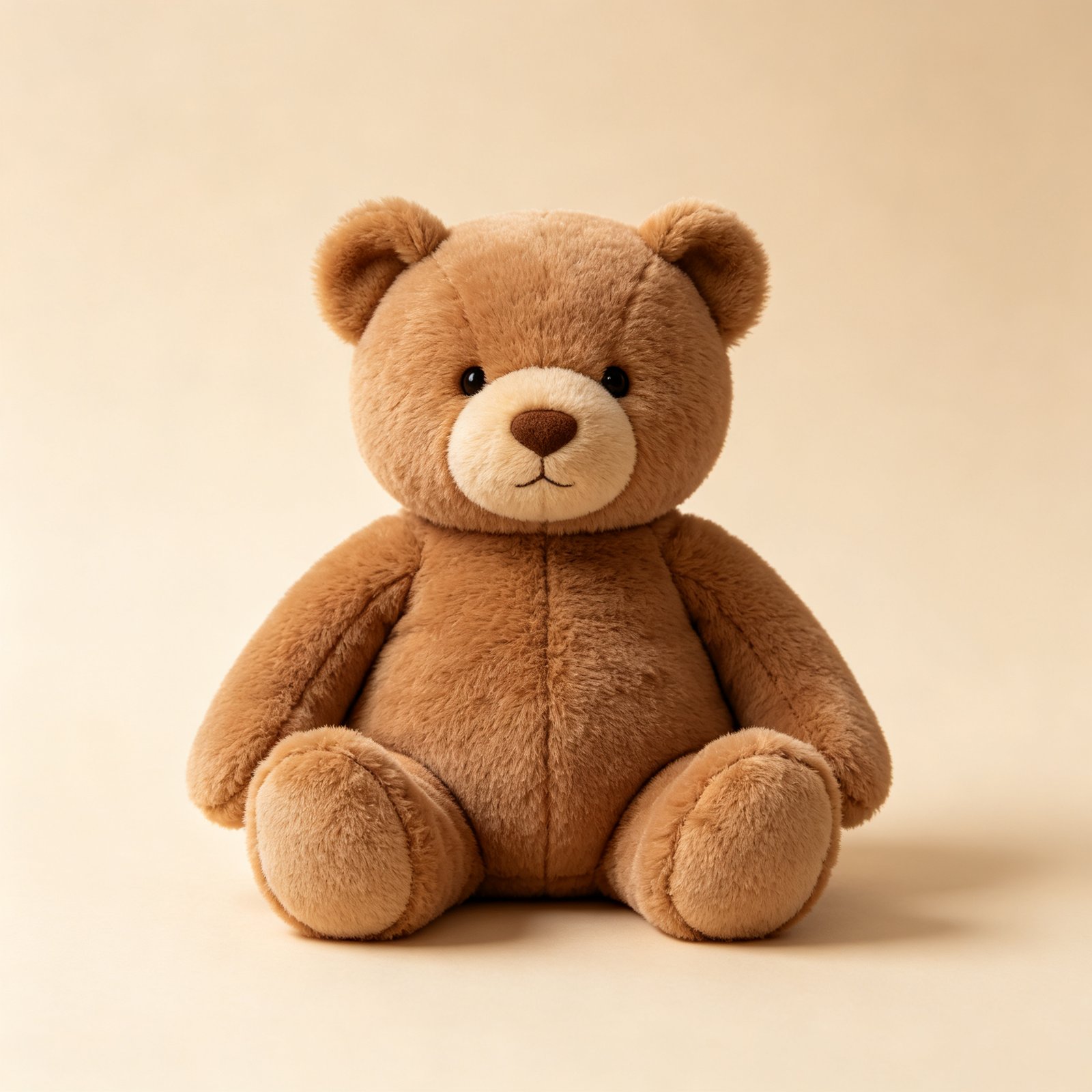
For years, weighted stuffed animals were a niche product known mainly to occupational therapists and families raising children with sensory processing differences. That changed quickly. Today, weighted and sensory plush is one of the fastest-growing segments in the entire plush toy industry, pulled forward by three converging forces: rising awareness of autism and ADHD, the mainstreaming of anxiety and wellness products, and a growing group of parents and therapists who want tools that feel like comfort, not treatment.
This guide covers what weighted plush is, why the demand is accelerating, what the data says about the market, how real buyers describe the experience, and what B2B buyers should know before sourcing their first order.
What Is a Weighted Plush Toy, and Why Does It Work?
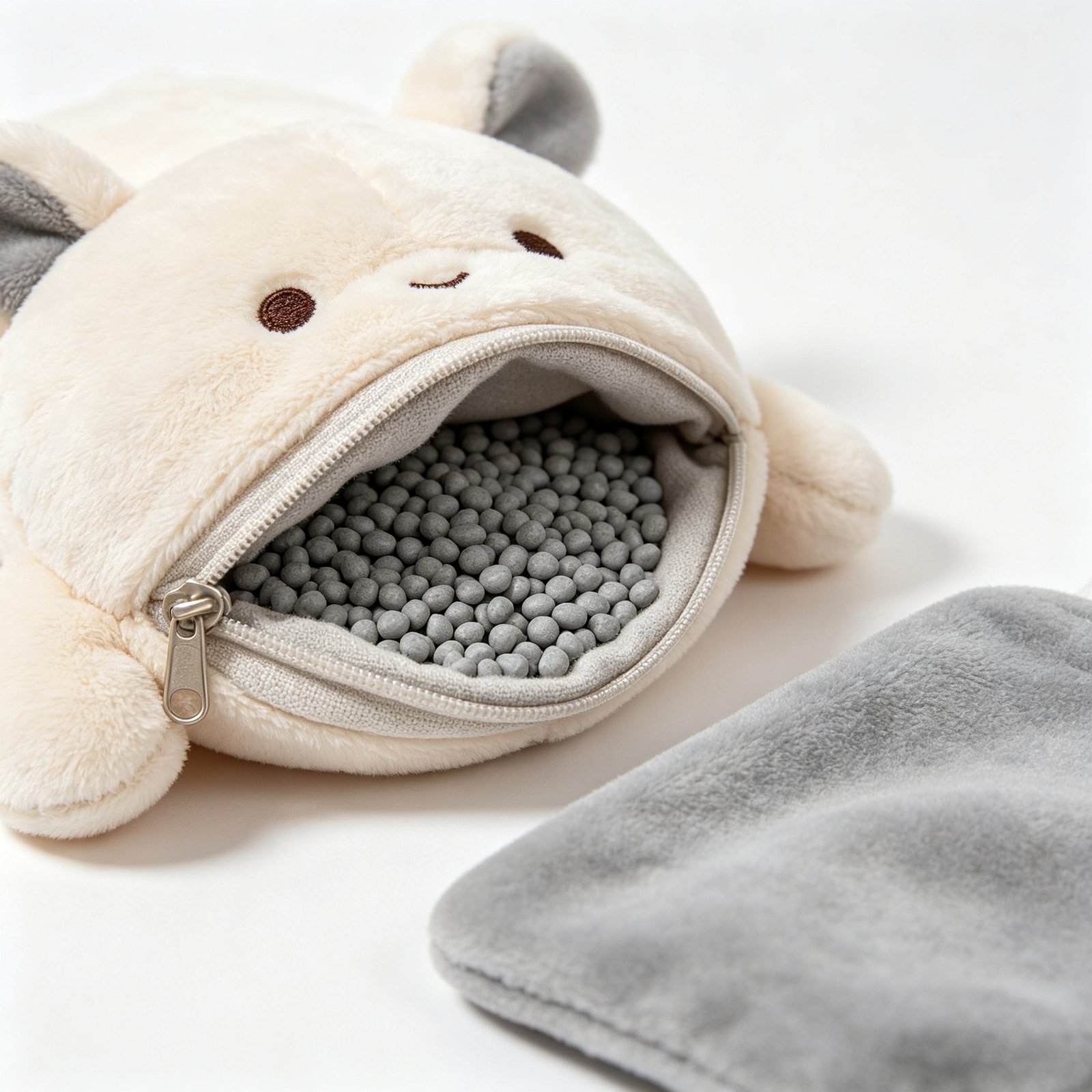
A weighted plush toy is a stuffed animal with a proportionally heavier filling, typically plastic pellets or glass beads sewn into an inner pouch, so the toy delivers firm, even pressure when held, hugged or rested against the body.
That pressure has a name in occupational therapy: deep pressure stimulation (DPS). The same principle underlies weighted blankets and weighted vests. When firm, even pressure is applied to the body, the nervous system responds by shifting toward a calmer "rest" state. Practitioners and researchers report that deep pressure can slow heart rate and breathing, and support the release of calming neurochemicals. This is why a heavy, steady hug can feel so different from a light one.
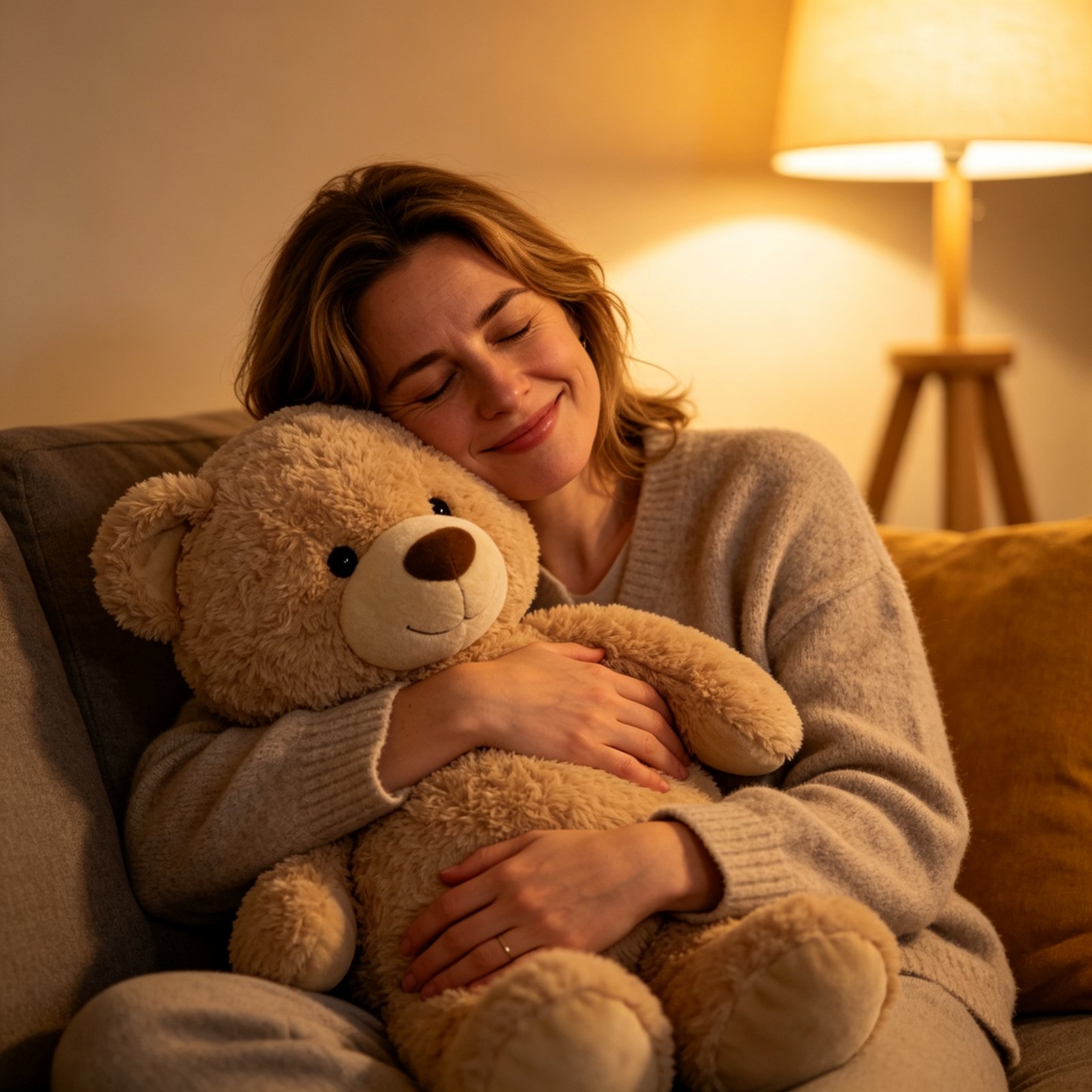
For an exhausted adult after a long day, the effect is immediate and physical: the steady weight presses against the chest, breathing slows, shoulders drop, and the relief shows on the face. The same mechanism that calms a child with sensory sensitivities is what an anxious adult reaches for after work. This is why the category now sells to grown-ups as much as to parents shopping for their kids.
The evidence is strongest for children with autism spectrum disorder (ASD), sensory processing difficulties, and ADHD, where deep pressure is associated with reduced anxiety and easier sleep onset. Published research includes a 2008 American Journal of Occupational Therapy study reporting reduced anxiety behaviors of roughly 18 to 25 percent in children with ASD using weighted interventions, and a 2015 study reporting average anxiety-score reductions of about 33 percent in adults with ASD over four weeks of deep-pressure use. The general recommendation for children is roughly 2 to 5 pounds, with the weight distributed so the toy remains soft and safe to hug.
The key design point for buyers: the toy should feel like a normal stuffed animal, not a medical device. The weight is subtle, but the nervous system can feel it working.

The Market Is Growing Fast
Multiple independent forecasts point in the same direction. The global weighted stuffed animals market for kids was valued at about $1.4 billion in 2025 and is projected to reach $2.9 billion by 2034, roughly an 8.4 percent CAGR, according to industry market research. Broader weighted-plush estimates run higher, with some analysts citing an 18 to 22 percent CAGR for the weighted plush segment specifically, driven by anxiety awareness and the general wellness movement. The wider sensory toy market is forecast to grow from $2.4 billion in 2026 toward $4.9 billion by 2033.
The demand signal is visible in search and in factory order books. Search volume for "weighted sensory stuffed animals" rose about 28 percent in mid-2025 and peaked in December of that year. At least one major plush manufacturer reports weighted orders growing from under 5 percent of production volume in 2021 to nearly 30 percent in 2026. This is not a seasonal spike; it is a category that has crossed from wellness niche to retail mainstream.
Who Is Buying, and Why
The buyer base is broader than many people assume.
Parents of neurodivergent children. The largest and most urgent demand group. Parents of children with autism, ADHD and sensory processing disorder buy weighted plush for bedtime, for meltdowns, for car rides, and for school. Many describe it as the one tool that their child reaches for voluntarily.
Occupational therapists and clinics. Therapists use weighted and sensory plush as portable tools that travel between clinic, home and classroom. Clinics buy in volume and reorder, which makes them attractive B2B accounts.
Schools and early-education groups. Weighted plush now appears in calm corners and sensory rooms in mainstream and special-education classrooms. School districts and early-learning chains are a reliable institutional channel.
Adults. Adult self-care is the fastest-growing emotional angle. Weighted plush for adults, including heavier pieces, is positioned as an anxiety and sleep tool. Purchasing comfort objects is no longer stigmatised; it is normalised and even celebrated.
Gift buyers. Because the products carry a wellness meaning, they command premium gift pricing.
What Real Buyers Say
The qualitative picture matches the quantitative one. Across Amazon, specialist retailers and editorial testing, parents describe the products in strikingly consistent terms.
One parent of a child with sensory processing disorder wrote that her daughter "squeezes it, presses it against her chest, uses it as a pillow. The weight is subtle enough that it doesn't feel medicinal, but you can feel it working." Another described weighted tools as "the steady, even weight that tells her nervous system to slow down."
Editorial testing has produced the same stories. A parent tester at Reviewed described how both she and her son "felt instantly soothed by the weighted feel" and how putting the plush on his chest "made him feel calmer when he was agitated," even helping him learn diaphragmatic breathing. In a Best Products panel, the weighted plush was "the favorite of the two autistic teens who tested," who praised the way the design wrapped around the body. One grown-up buyer summed up the adult use case simply: "Its weight is so comforting. I took it with me for my hospital stay."
The most common praise points are improved sleep onset, calmer meltdowns, and a child who actually chooses to use the tool. Some buyers note the product becomes a daily companion, "my best friend" used as a pillow every night. One parent reported that her daughter "can't get enough" of the smaller sizes and that they "really help her focus during homework time."
The most common complaints are about quality, not concept: toys that lose their weight distribution after washing, fragile seams that split under the strain of the heavier filling, and unclear washing instructions. Buyers also value features such as removable weighted inserts, machine-washable covers, and soft hypoallergenic materials. For a parent, a comfort item that cannot be cleaned easily is a deal-breaker, because it will need washing often.
Product Design and Compliance Essentials
Weighted and sensory plush sits at the intersection of toys and wellness products, which raises the design and compliance bar.
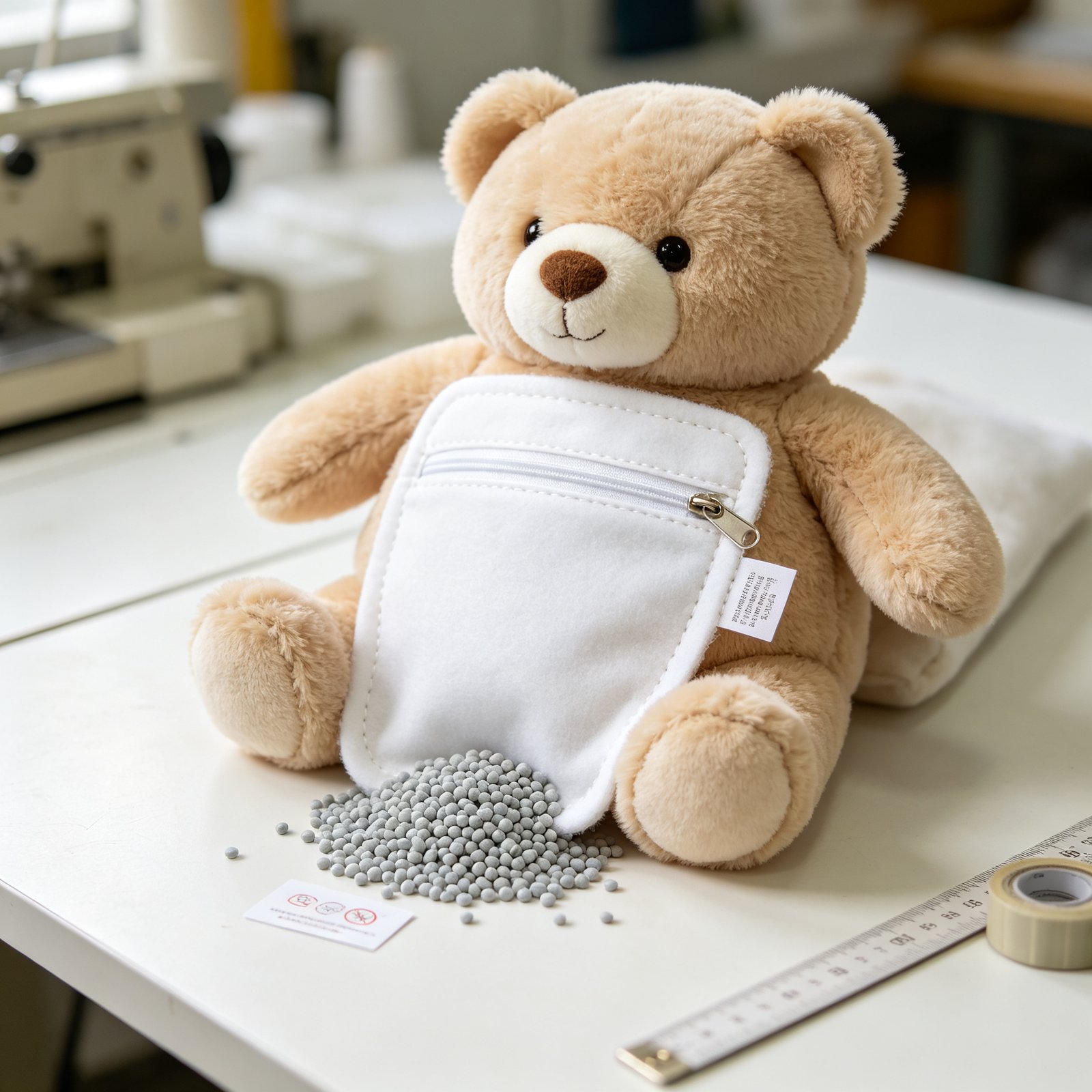
Safety of the filling. The internal weight pouch must be double-sewn and secure so pellets cannot escape. Non-toxic, food-grade plastic pellets or glass beads are the standard. Seams must be reinforced because the heavier filling puts more stress on the construction.
Washability. A removable weighted insert with a machine-washable outer cover is now the expectation, not a luxury. Weighted filling that cannot be removed makes cleaning difficult, and a child's comfort item will need washing frequently.
Material safety. Hypoallergenic, low-shed fabrics matter for children with sensory sensitivities. Compliance requires CE and EN71 (EU) and FCC, CPC and CPSIA (US), plus RoHS and REACH for chemical safety. A product sold as therapeutic or sensory should carry the same certification as any children's toy, because that is what retailers and schools will check.
Weight range and sizing. The standard commercial range is roughly 2 to 5 pounds for children. The weight must remain proportionate to the toy's size so the plush stays soft, huggable and safe.
Added sensory features. Textured fabrics, gentle breathing or heartbeat simulation, and light-up options are growing differentiators. These add cost and compliance complexity, but they also lift perceived value and price.
A Sourcing Checklist for B2B Buyers
Before placing your first order, confirm these five points with any supplier:
1. Does the factory own in-house plush and filling capability? Weighted plush needs precision in both stuffing and weight distribution. A factory with in-house tooling and sewing can control both.
2. Can they document the full safety file? Ask for EN71, CE, FCC, CPC/CPSIA, RoHS and REACH test reports with your sample, not after your first container is ready.
3. Is the weighted insert removable and the cover washable? This is the single most common consumer expectation, and it affects construction, not just materials.
4. What is the sample and production timeline? A responsive factory should deliver a custom sample in 7 to 10 days and mass production in 25 to 35 days.
5. Can they add sensory features such as gentle heartbeat or breathing simulation? Electronic features open a higher price tier, but require firmware and certification depth that not every plush factory has.
Conclusion
Weighted and sensory plush for autism, ADHD and sensory needs is not a passing wellness fad. The market data, the therapy evidence, and the voices of parents and therapists all point to a category with durable, structural demand. It also carries premium pricing, a growing institutional buyer base, and relatively low competition at the quality end of the market.
For B2B buyers, the window is open now. The brands that ship safe, well-made, genuinely comforting weighted plush in the next 6 to 12 months will define the category's premium tier. The brands that wait will be competing on price in a crowded field.
The science is established. The parents are asking. The data is clear. The only question is who gets to market first with a product that deserves the trust the demand implies.
Ready to build a weighted or sensory plush line for your market? Niokyar is a one-stop plush OEM/ODM partner with in-house tooling, reinforced sewing for weighted filling, removable-insert construction, optional heartbeat and breathing simulation, and full CE, EN71, FCC, CPC and RoHS compliance from sample to mass production. Explore our wholesale plush manufacturing capabilities.
Comments
No comments yet — be the first to share your thoughts.