2026-08-25
How a Tiny ESP32 Chip Reinvented the Plush Toy: A Plain-English Guide
You probably have a plush bear at home that just lies quietly on the bed — soft, warm, but silent.
In the last few years, more and more plush toys have started to talk: they tell stories, practise English, and hum a lullaby at bedtime. The secret behind almost all of them sits inside one tiny chip — the ESP32.
In this plain-English guide, we will explain what the ESP32 is, how it brings a stuffed toy to life, how to pick the right variant, and why it is quietly reshaping the whole toy industry.
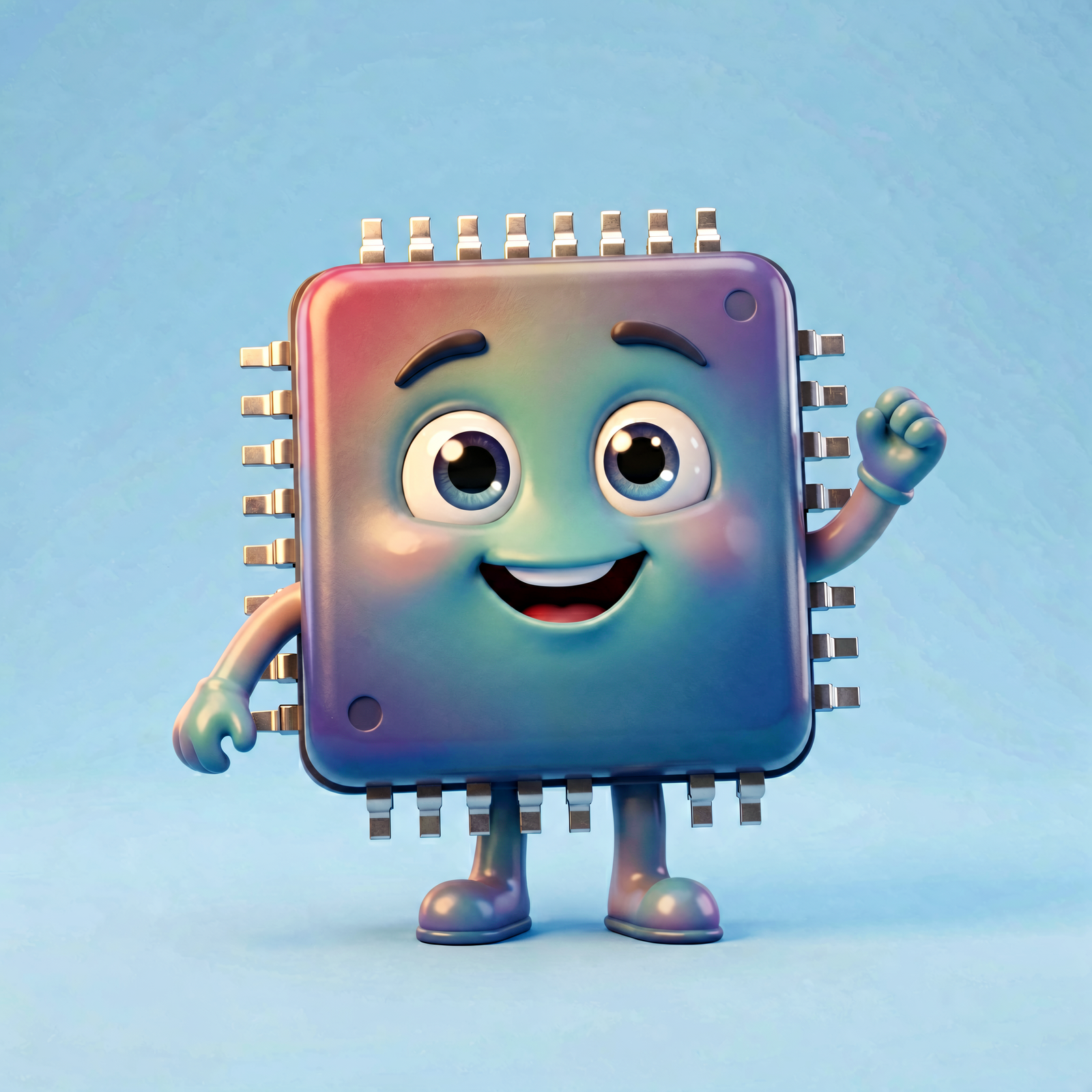
What exactly is the ESP32? (Not just a "Wi-Fi chip")
In the simplest terms, the ESP32 is a tiny "brain" with built-in wireless connection.
A normal phone or computer has a processor, but to put a toy online you traditionally needed a separate, expensive communication module. The clever part of the ESP32 is that it packs a microcontroller (MCU) together with Wi-Fi and Bluetooth onto a single chip that costs only a few dollars.
That means a plush toy needs only this one small chip to gain three things: computing power to run voice recognition and generate replies; connectivity to join your home Wi-Fi or pair with a phone over Bluetooth; and low power so a small battery keeps it running for a long time. In short, the ESP32 gives a plush toy a heart that can think and connect.
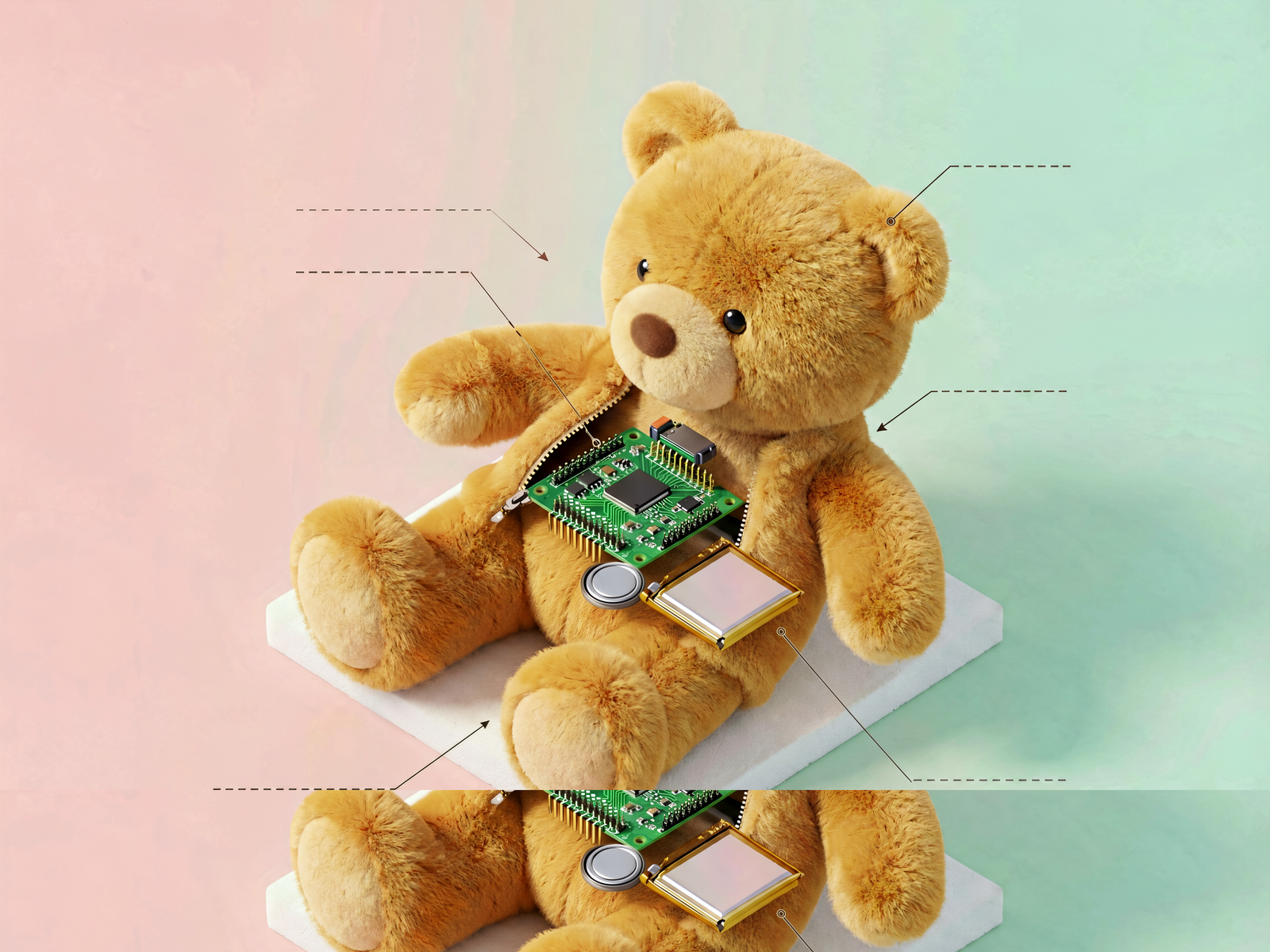
How does it actually make a plush toy "alive"?
A chip cannot speak by itself. What brings it to life is a simple voice loop.
- Listen — a tiny microphone inside the toy hears the child say its name.
- Think — the sound goes to the ESP32, which turns speech into text and asks a conversation model for an answer.
- Speak — the ESP32 plays the reply through a small speaker, and the bear talks.
The whole process runs locally or nearby — no camera, no location tracking. That is exactly why more parents in Europe and the US trust these screen-free companions. To a child it is a friend that chats; to a factory it is just one chip plus a few dollars of components.
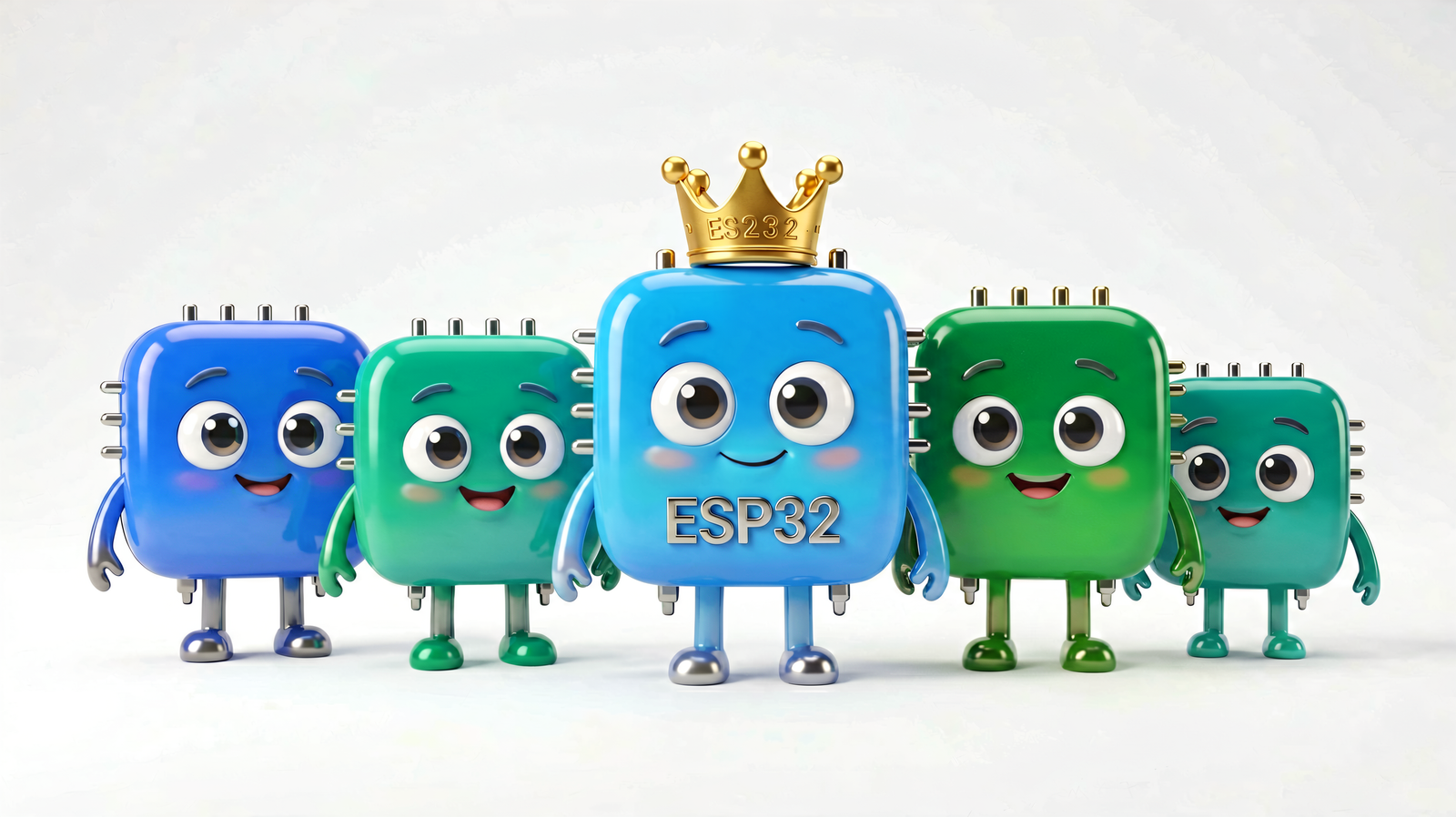
The ESP32 family: which one for which toy?
The ESP32 is not a single model but a whole family. When specifying a plush toy, the three common members are:
- ESP32 (classic) — balanced Wi-Fi plus dual-mode Bluetooth. Best for general-purpose talking companions.
- ESP32-S3 — more compute, on-chip AI acceleration and excellent offline voice. Best for premium models that need faster, offline responses.
- ESP32-C3 — lower cost, RISC-V core. Best for high-volume, price-sensitive orders.
Rule of thumb: pick C3 to scale cheaply, S3 to feel smarter, and the classic for a safe all-rounder. For an OEM/ODM factory, the same outer mould with a different chip becomes an entire product line at different price points.
Why the ESP32? Four real product advantages
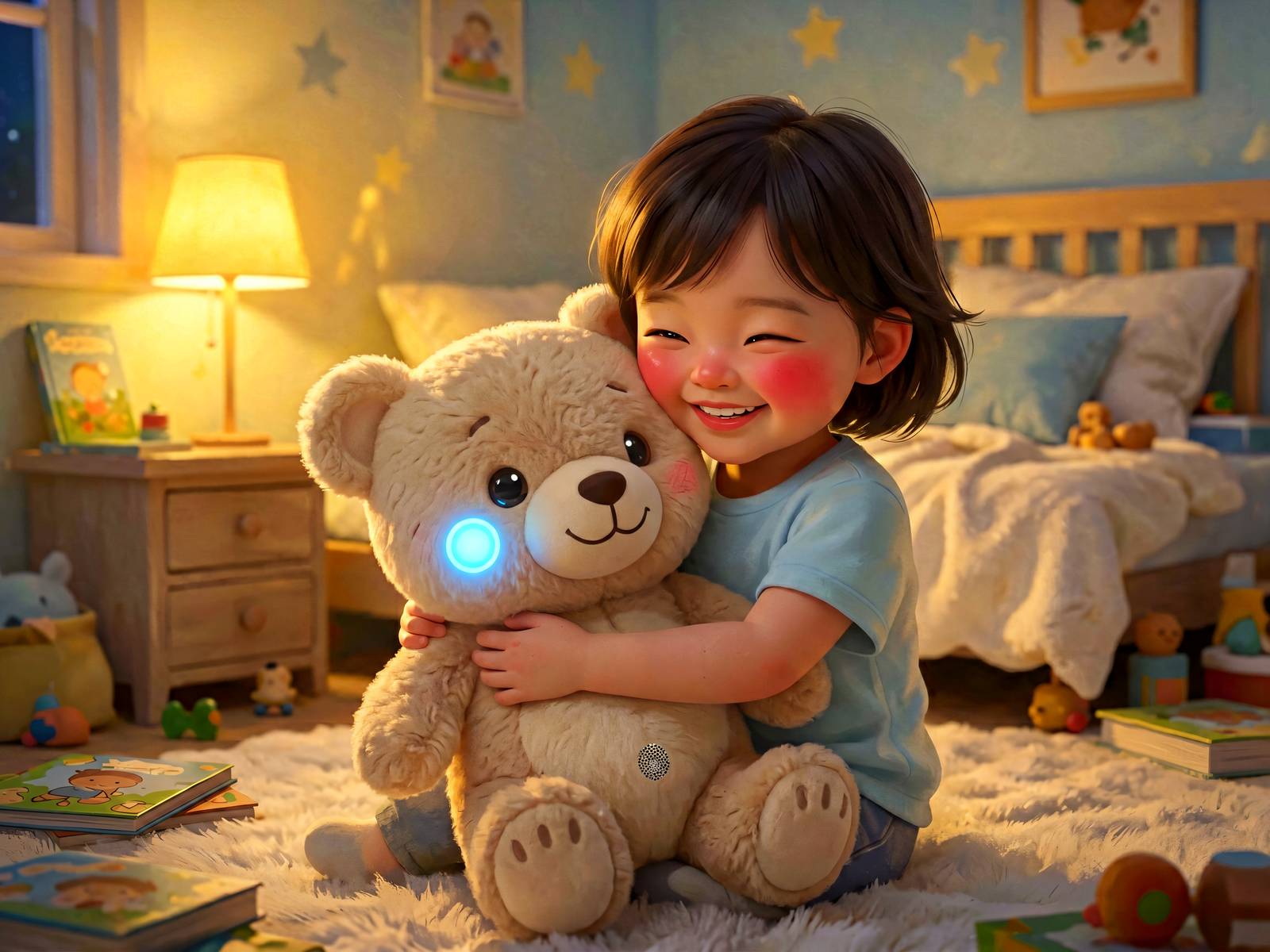
- Low cost — a few-dollar chip upgrades a traditional plush into a smart device, with far higher margin.
- Low power — a small battery lasts a long time; no daily charging, so children actually use it.
- Upgradable — push new stories and lessons over Wi-Fi; the toy gets smarter the longer you own it.
- Fast to develop — a mature open-source ecosystem lets factories prototype quickly, change firmware, and ship multiple languages.
For parents it is a screen-free, eye-friendly, comforting companion. For brands it is a product line they can iterate rapidly.
From toy to industry: the value the ESP32 unlocks
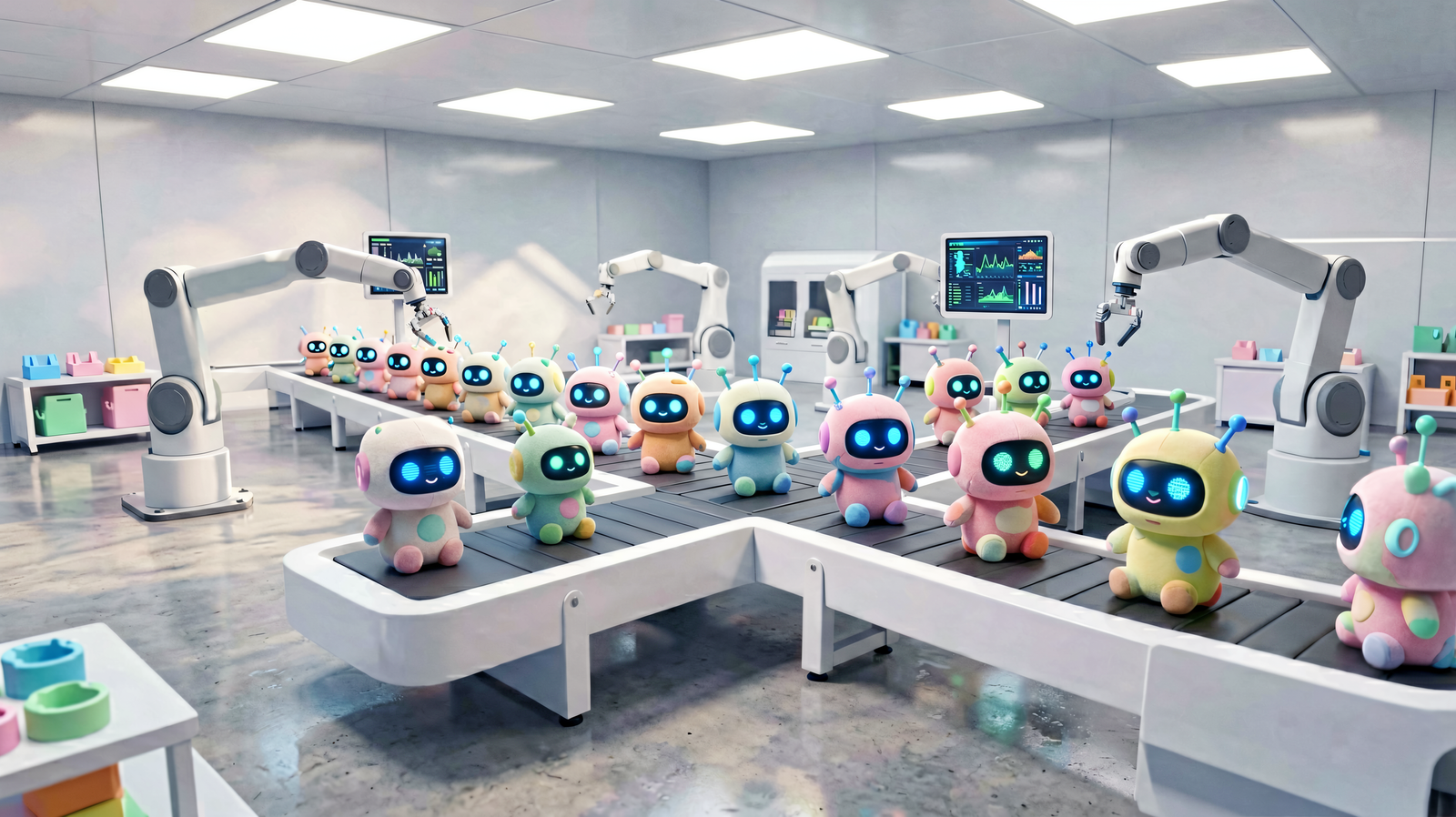
- Easier OEM/ODM — once a factory owns the firmware, appearance, voice content, packaging and languages can be delivered in one place instead of three separate suppliers.
- Education opens up — conversational companions fit naturally with language learning for ages 3 to 8; kindergartens and education groups become new customers.
- Clear compliance path — no GPS, no camera, local data handling make it easier to pass CE, EN71, FCC, CPC/CPSIA, RoHS, REACH and GDPR.
- Flexible supply — even small batches (for example a 300-piece MOQ) can be customised, lowering the risk of trial orders for importers and distributors.
In a sense, the ESP32 turned the "talking plush toy" from an expensive electronic gadget into a standard smart device that an ordinary factory can mass-produce.
Conclusion: the plush toy's next evolution
From a silent cotton companion to an AI friend that tells stories, practises language and updates over the air, the only thing in between is one ESP32.
For families it is warmer companionship; for factories it is lower cost and higher value. Next time you see a talking plush bear, remember — the voice may come from that little chip.
Want a custom AI plush companion for your brand? Contact niokyar for one-stop OEM/ODM — from appearance and firmware to multilingual content.
Comments
No comments yet — be the first to share your thoughts.