2026-09-02
AI Toy Subscription Models: How to Build Recurring Revenue in 2026
September 2026 · Business Analysis for B2B Buyers
AI Toy Subscription Models: How to Build Recurring Revenue in 2026
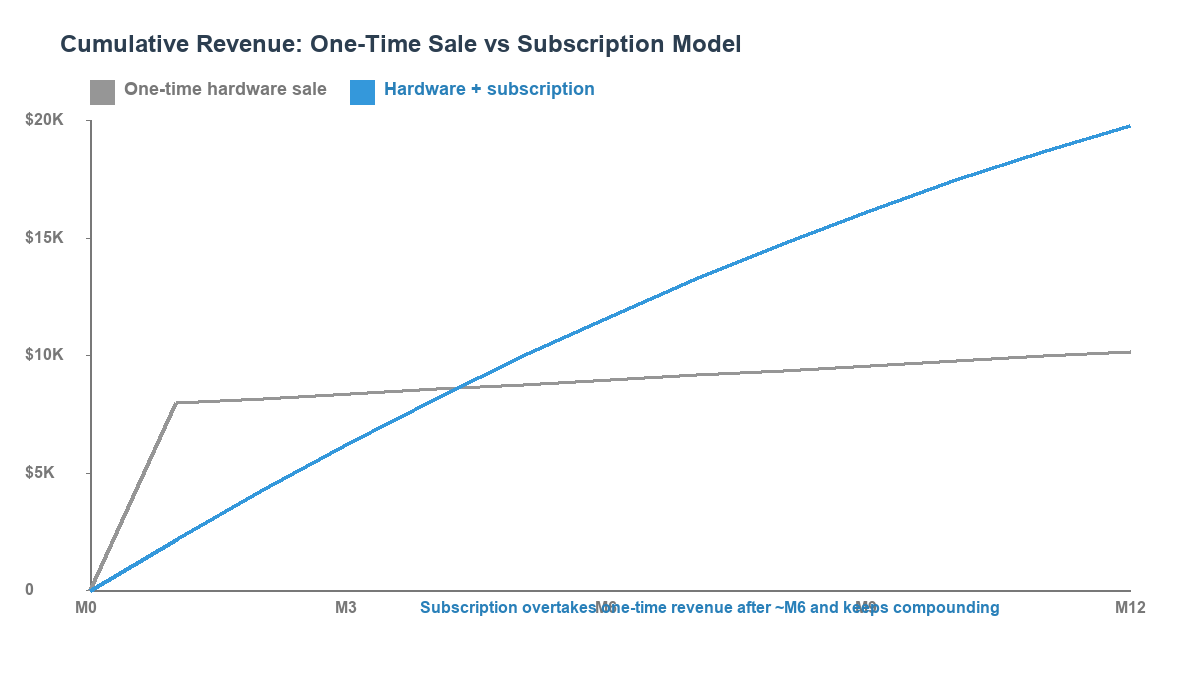
The AI toy business has quietly changed how the category makes money. A few years ago, a toy was a one-time purchase: the customer paid once and the brand moved on. Today, most successful AI toy brands do not sell a product at all in the traditional sense. They sell a connected companion plus a recurring subscription, and the subscription is where the real profit lives.

For B2B buyers, this changes everything about product selection, pricing and supplier choice. This guide explains why subscription is the natural business model for AI toys, which monetisation models are already working, what content customers actually pay for, and how a buyer can design a subscription that is profitable without alienating customers.
Why Subscription Is the Natural Model for AI Toys
There are three structural reasons why AI toys cannot be sold profitably as one-time hardware alone.
AI compute has a recurring cost. A connected AI toy that uses cloud language models pays for every conversation. Each interaction consumes tokens, and the cost scales with usage. Industry analysis suggests that roughly 70 percent of the hidden cost of an AI toy can sit in cloud interaction design. A one-time hardware price cannot cover an ongoing compute bill, so the model has to shift to recurring revenue.
Content needs to keep improving. An AI toy that tells the same stories forever loses its value within months. The products that stay relevant ship new stories, new languages, new skills and new seasonal content over time. That content pipeline has to be funded, and subscription is the mechanism that funds it.
Retention beats acquisition. The industry pattern is well established: subscription-based content models capture up to about 20 percent of total revenue for leading players who bundle monthly content updates. In the most successful cases, subscriptions drive the large majority of customer lifetime value. A brand that owns the monthly relationship owns the customer.
Subscription Models That Are Already Working
Several monetisation patterns have been validated in the market, and they differ by price point and audience.
The high-margin content subscription. This is the strongest proven pattern. One children's audio toy company reported that its recurring subscription drives roughly 80 percent of customer lifetime value with an 85 percent gross margin on that recurring revenue. The hardware is the entry point; the subscription is the profit centre.
The premium all-access subscription. Educational AI robots commonly bundle a monthly content plan. A leading example charges about 15 dollars per month or 99 dollars per year for full access to stories, games, STEM modules and progress reports. This pattern works when the content library is deep enough to justify the ongoing fee.
The layered ecosystem subscription. Some brands combine hardware, periodic physical drops, subscription content and monthly boxes into one offering. The customer buys the toy once, then receives a flow of new characters and content on a recurring cadence. This turns a toy brand into a service with predictable revenue, a shift that industry research on smart toys identifies as the Toy-as-a-Service transition.
The family-tier subscription. European AI story-toy brands often price a personal plan around 7 to 9 euros per month and a family plan around 10 to 12 euros per month, with hardware margins in the 35 to 50 percent range. The family tier increases revenue per household without doubling content cost.
Five Types of Subscription Content That Sell
Not all content is worth charging for. The five categories below have the strongest proven willingness to pay.
Monthly story and learning packs. Fresh stories, vocabulary sets and learning modules delivered monthly. This is the backbone of most AI toy subscriptions.
Language and multilingual packs. Additional languages, regional accents and curriculum-aligned language content. This is particularly strong for European markets where parents want bilingual learning.
Personality and voice packs. New character voices, personalities and dialogue styles. Buyers pay to refresh the companion experience without buying new hardware.
Seasonal and themed content. Holiday stories, seasonal activities and limited-time content that keep the product relevant through the year and drive holiday re-engagement.
Parent progress reports and insights. For educational toys, parents will pay for visibility into their child's learning milestones. This converts a toy into a tool that parents value and trust.
How a B2B Buyer Can Design a Profitable Subscription
The practical framework has three layers.
Price the hardware as an entry point, not the profit. A common working formula is hardware priced at roughly three to four times landed cost, kept affordable enough to drive adoption. The margin you do not take on hardware, you collect on the subscription instead.
Design two or three subscription tiers. A free basic tier with core stories keeps the product useful out of the box. A paid premium tier with fresh monthly content, additional languages and progress reports is where the profit lives. A family tier increases revenue per household.
Make cancellation and transparency easy. Parents distrust hidden fees, and the market has punished brands perceived as using cheap hardware to lock families into expensive subscriptions. Clear pricing, easy cancellation and visible value are not optional; they are the difference between a trusted brand and a short-lived one.
Four Subscription Pitfalls to Avoid
Overpricing the recurring fee. A subscription priced far above the perceived value of the content creates bad press and refund pressure. The market reaction to "cheap hardware, expensive subscription" models is consistently negative.
Letting cloud cost eat the margin. If the toy relies entirely on cloud models, every active user generates a monthly compute bill. Hybrid processing, with on-device models handling wake words and offline play, keeps the cloud bill under control. This is a design decision, not an accounting detail.
Failing to refresh content. A subscription that delivers nothing new for months will be cancelled. The content pipeline must be planned before launch, not improvised after.
Ignoring parental transparency. Parents want to know what is recorded, what is stored and how to cancel. The brands that disclose clearly build trust; the brands that do not become cautionary stories.
Frequently Asked Questions
Why do AI toys need subscriptions? Because AI toys have ongoing compute and content costs. A one-time hardware price cannot cover cloud model usage and continuous content updates, so the business model shifts to recurring revenue.
How much revenue can a subscription add? In proven cases, subscription content accounts for up to about 20 percent of total revenue for leading players, and in the strongest examples subscriptions drive roughly 80 percent of customer lifetime value at high margins.
What subscription content will customers pay for? The strongest willingness to pay is in monthly story and learning packs, multilingual packs, personality and voice packs, seasonal content, and parent progress reports.
How should an AI toy subscription be priced? Price hardware as an entry point at roughly three to four times landed cost, then offer a free basic tier, a paid premium tier with fresh content, and optionally a family tier. Keep cancellation easy and pricing transparent.
Conclusion
The AI toy business has moved from selling hardware to selling relationships. Subscription is not a pricing gimmick; it is the mechanism that pays for AI compute, funds content improvement and turns a one-time buyer into a recurring customer. For B2B buyers, this means the product decision is now a business-model decision. A toy that supports a subscription platform, on-device processing to control cloud cost, and a content pipeline is an asset. A toy that is a one-time box of electronics is a cost.
The buyers who treat AI toys as a service opportunity will build revenue that compounds month after month. The buyers who treat them as a one-time sale will compete on hardware price in a market that has already moved on.
Ready to build a subscription-ready AI toy line? Niokyar is an AI toy factory with its own AI Core, hybrid on-device and cloud processing to control running costs, firmware and content customisation, OTA update support and a full compliance file from sample to mass production. Explore our AI toy OEM and ODM capabilities.
Comments
No comments yet — be the first to share your thoughts.