2026-09-06
AI Bedtime Companions: Toys for the Sleep Economy
September 2026 · Market Opportunity Guide for B2B Buyers
AI Bedtime Companions: Toys for the Sleep Economy
Bedtime is the hardest moment of the parenting day and the most valuable moment in the toy calendar. A child who resists sleep, a parent exhausted after a long day, a room that needs to go quiet. For generations the answer was a teddy bear and a story. In 2026, the teddy bear can tell the story itself.
AI bedtime companions are emerging as one of the most commercially interesting niches in the AI toy category. They are used every single night, they replace screens at the exact moment parents most want them gone, and they turn a one-time toy purchase into a long-term content relationship. This guide explains why bedtime is the golden scenario for AI toys, which products are already winning, what buyers should look for, and how to build a sleep-focused AI toy line profitably.
Why Bedtime Is the Golden Scenario for AI Toys
Three factors make bedtime the strongest use case in the category.
It is daily and high-frequency. Most AI toys compete for attention during the day, against hundreds of other options. A bedtime companion is used every night, which makes it the most reliable usage moment in a child's day. Frequency is what builds attachment, and attachment is what builds a brand.
It replaces a screen. The most consistent anxiety among modern parents is screen time, and bedtime is where screens most often creep in. A companion that tells stories, plays lullabies and keeps a child company without a glowing display answers the exact fear parents already have.
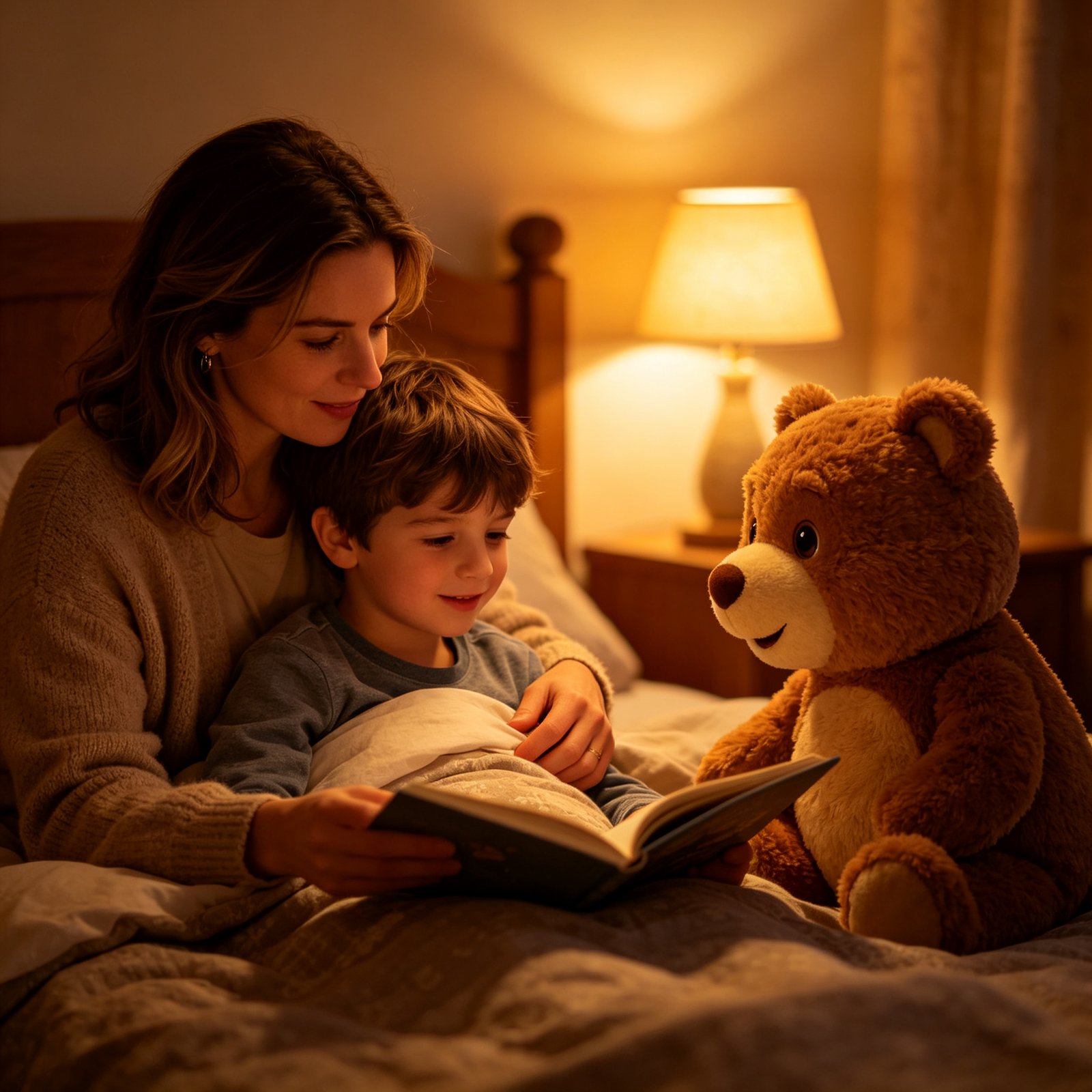
Parents pay for calm. The willingness to pay for a quieter bedtime is high, and it is emotional rather than rational. A product that reliably helps a child settle is not compared on price the way a daytime toy is. This is the difference between a commodity and a trusted bedtime ritual.
Product Forms Already Winning the Category
The market already contains working examples, and they cluster into three forms.
The AI story bear. The clearest winner is the connected plush bear that creates original stories from a child's chosen ideas, powered by conversational AI and a natural voice engine. One of the best-known examples, Poe the AI Story Bear on Amazon, sells around 50 dollars, tells stories in over 30 languages, saves favorites for offline listening, and is built with no camera, no active microphone and no direct internet access, with family content monitoring as an extra layer of protection.
The screen-free story projector. A newer form projects generated stories onto walls and ceilings, driven by the child's voice, with no screen required. These devices emphasise GDPR and COPPA compliance, no voice storage and parental controls, positioning the bedtime moment as both magical and private.
The soothing plush companion. Simpler AI plush toys that tell gentle bedtime stories, play lullabies and respond to touch, aimed at younger children who need comfort more than narrative.
The Four Selling Points That Work
Across all forms, four features consistently justify the price.
Soothing delivery. A bedtime companion must sound calm: gentle pacing, soft volume, warm tone, and content designed to slow a child down rather than excite them. The voice is the product.
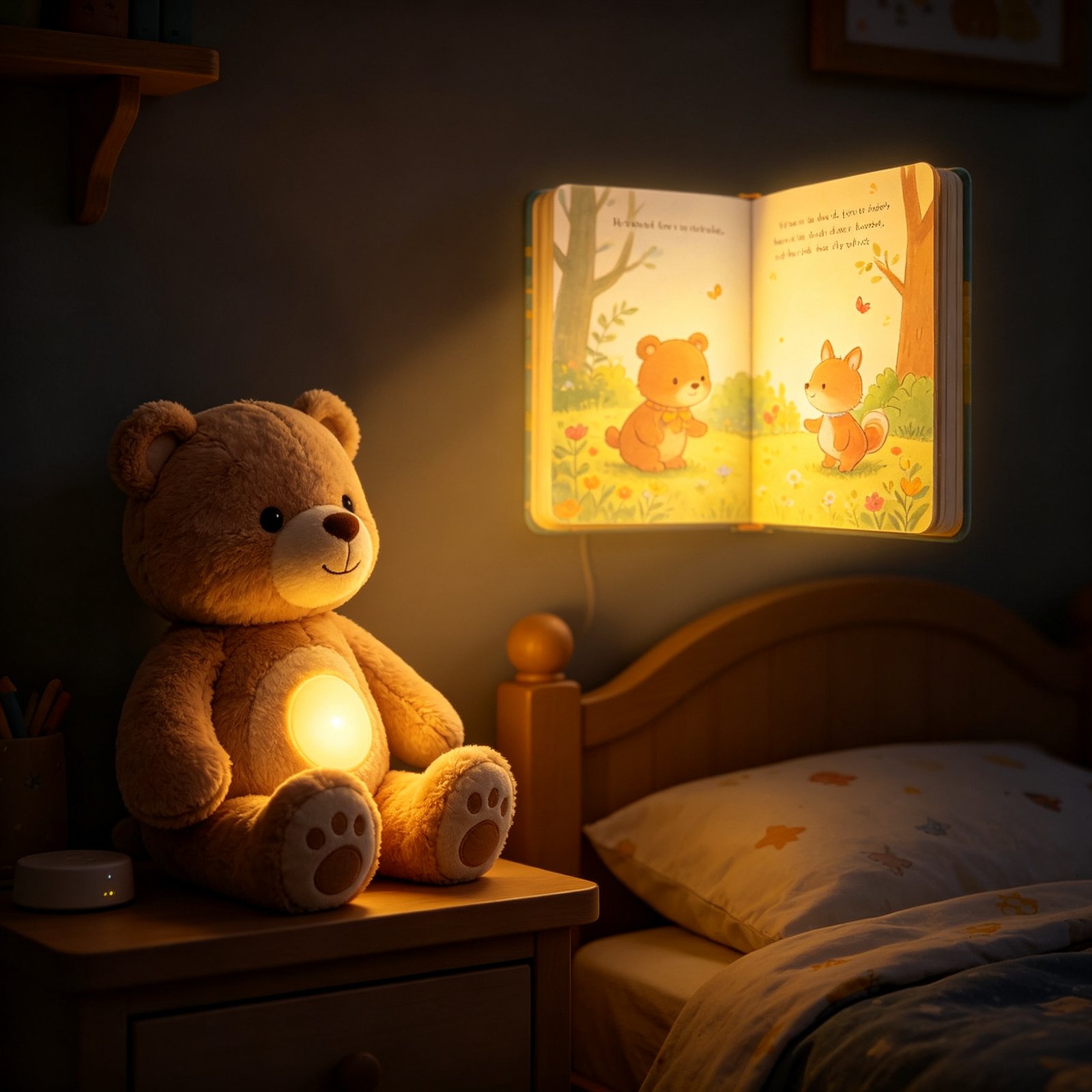
Screen-free by design. No glowing display, no app required at the moment of use. The strongest products work from a squeeze or a button in the dark.
A sense of security. The companion is a bedtime friend, not a gadget. Plush materials, familiar characters and consistent behaviour build the emotional anchor a child needs at night.
Stories that keep coming. The toy must feel fresh, not repetitive. New stories delivered over time are what keep a child coming back night after night, and what keeps parents paying.
What a B2B Buyer Should Look For
When evaluating a sleep-focused AI toy line, five points matter most.
Audio quality and control. Confirm the speaker quality, volume limits and the ability to play softly. A bedtime toy that sounds harsh or loud is a non-starter.

Privacy by architecture. Ask what is recorded, what is stored and what leaves the device. The winning products in this category advertise no voice storage and no active microphones, and any serious buyer should demand the same standard.
Offline reliability. Bedtime cannot depend on a home network. Confirm that stories and lullabies work fully offline, with cloud only as an optional extra.
Content pipeline. Ask how new stories are delivered and whether the content library grows. A bedtime companion without fresh content dies within weeks.
Safety and materials. The product sits in a bed with a child. Confirm fabric safety, battery safety and compliance with the applicable children's product standards, including the requirements the CPSC enforces for toys sold in the United States.
The Business Opportunity: Sleep Economy Meets Subscription
The bedtime niche has a natural business model attached to it. Parents cancel subscriptions they do not use, but they do not cancel the subscription that their child asks for every single night.
This makes the bedtime companion one of the strongest vehicles for recurring revenue in the toy category. The hardware is the entry point, and a growing library of stories, lullabies, languages and seasonal content is the subscription that keeps the relationship alive. For a buyer, a bedtime companion is not a one-time product; it is a durable revenue stream with a built-in daily habit.
Risks and Honest Limits
The category is attractive, but a serious buyer should see the boundaries.
Voice data is sensitive. Bedtime is intimate. Any recording feature, even a microphone that is technically present, needs a clear and defensible privacy story. The safest design is no active microphone at all.
Attachment needs care. A bedtime companion becomes an emotional anchor. Design and marketing should frame it as a comfort tool, with honest limits, not as a replacement for parental presence.
Night-time safety. A toy that runs through the night needs battery discipline, gentle audio levels and safe materials. Compliance is not a formality in a product that sleeps with a child.
Frequently Asked Questions
Are AI bedtime companions safe for children? Safety depends on design. The strongest products have no camera, no active microphone, no direct internet access, family content monitoring, safe materials and full compliance with children's toy standards enforced by agencies like the CPSC.
Why is bedtime the best use case for AI toys? Because it is daily, it replaces screen time at the exact moment parents most want it gone, and parents pay emotionally rather than on price for a quieter bedtime.
What AI bedtime products already exist? The three winning forms are AI story bears, screen-free story projectors and soothing plush companions. Poe the AI Story Bear is a well-known example available on Amazon and major retailers.
Can a bedtime companion support a subscription? Yes. Parents rarely cancel a subscription their child asks for nightly, which makes bedtime companions one of the strongest recurring-revenue products in the toy category.
Conclusion
Bedtime is where AI toys stop being gadgets and become rituals. The category combines everything a toy business wants: daily usage, emotional purchase decisions, a screen-free story that parents already want to hear, and a natural subscription model that compounds with habit. The products already on the market prove the demand, and the design rules are clear: soothing by design, private by architecture, offline by default and safe without compromise.
For B2B buyers, the window is open now. The bedtime companion is the AI toy category's most reliable customer relationship, and the sleep economy is only growing. Build the product around calm, privacy and freshness, and the nightly habit will do the marketing for you.
Ready to build an AI bedtime companion line? Niokyar builds AI plush companions with soothing voice design, no active microphone by architecture, fully offline storytelling, growing content libraries and full CPSC, CE, EN71, FCC and GDPR compliance from sample to mass production. Explore our AI toy OEM and ODM capabilities.
Comments
No comments yet — be the first to share your thoughts.