2026-10-01
CPSC Recalls & AI Toys: What Importers Must Verify Before the Container Sails
A container of AI plush leaves Shenzhen on a Tuesday. Six weeks later, it lands at a distributor's warehouse — and the same week, CPSC announces a recall on a nearly identical product from another importer. The distributor's phone starts ringing.
In 2026, that call is not hypothetical. Recall actions this year include 124,560 light-up toys in a single CPSC action, a flashcard talking toy recalled for lead and phthalates, a children's speaker recalled twice for lithium battery fires, and a prank sound maker recalled the week after it violated the mandatory button-battery standard.
This guide walks importers through the real 2026 recall record, the five hazards that trigger AI toy recalls, and the verification checklist to run before the container sails — not after the first consumer complaint arrives.
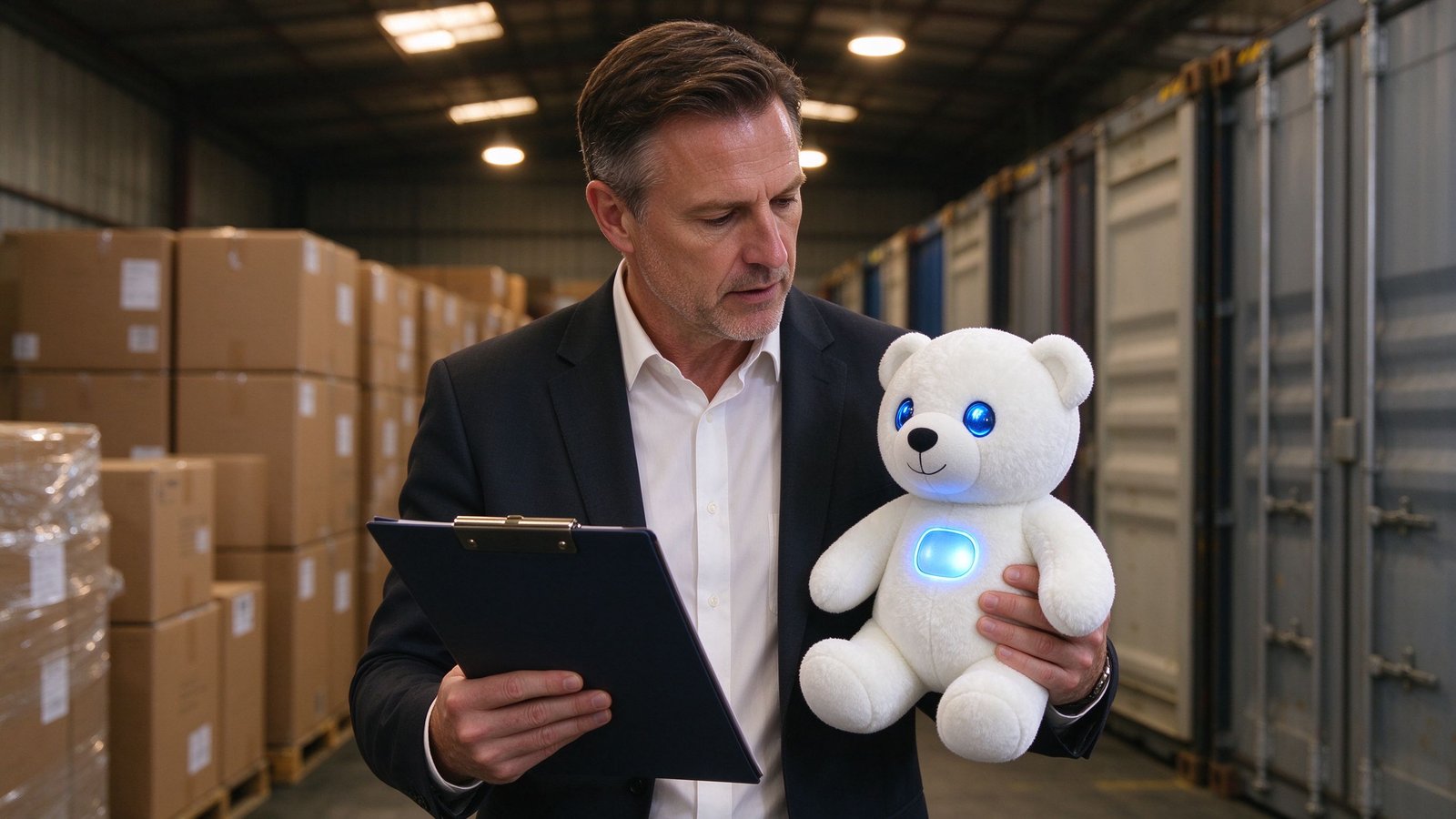
The 2026 Recall Record: A Pattern Importers Cannot Ignore
The individual recalls matter less than the pattern. Every one of these actions came from a hazard that was detectable before shipment — and every one was paid for in refunds, freight and reputation.
ZMC Group, multiple light-up toys — May 7, 2026. About 124,560 units recalled for battery ingestion risk: button cell batteries in compartments children could access. Refund remedy.
ABC Trading children's toys — May 21, 2026. About 84,000 units. Button cell batteries with easily accessible compartments, violating the mandatory standard for toys. Refund remedy.
TheKiddoSpace flashcard talking toys — February 26, 2026. About 4,000 units. Lead and phthalate exposure, plus a failure to comply with the short-circuit protection requirement for battery-operated toys. This is the closest analogue to a talking AI toy on the 2026 record.
Shengsen prank sound makers — August 13, 2026. About 667 units. Button cell and coin batteries, with packaging and product missing the warnings required under Reese's Law. Refund remedy. The official CPSC recall notice shows how narrow a violation can be.
Yoto Mini children's speaker — recalled again in September 2026. The lithium battery can overheat and catch fire, creating burn and fire hazards. Battery pack replacement offered.
The through-line: battery access, lithium safety, chemical content and electrical protection. Four of the five are electrical or chemical properties that AI toys carry by default — because an AI toy is, underneath the plush, a battery-powered electronic device with a microphone, a speaker and a charging circuit.
The Five Hazards That Actually Trigger Recalls in AI Toys
For an AI plush or companion toy, the recall risk concentrates in five places. Each one maps to a real 2026 action.
1. Button and coin battery ingestion. The single most common recall cause on the 2026 record. The hazard is not the battery itself — it is the compartment. If a child under three can open it with normal play force, the product fails the mandatory standard, and Reese's Law adds its own warning and packaging requirements on top.
2. Lithium battery thermal runaway. The Yoto Mini recall shows where this bites: an overheating lithium cell can burn a child's hand or start a fire in a bedroom. For any AI toy with a rechargeable cell and a charging cradle, cell certification and charge-circuit protection are not optional paperwork.
3. Small parts, sharp edges and accessible mechanisms. Plush seams, sewn-on eyes, and the plastic housing around speakers and PCBs all get tested. A detachable eye or a sharp edge around a speaker grille is a choking or laceration finding — see the busy board and activity board recalls of 2026.
4. Lead and phthalates in plastics and coatings. Flashcard talking toys were recalled for exactly this. Soft PVC, paints and printed materials must meet the 0.1 percent phthalate limit and the lead content ban — verified by third-party testing, not by the factory's own word.
5. Short-circuit protection and electrical safety. Battery-operated toys must tolerate the standard abuse tests without shorting, overheating or leaking. The 2026 flashcard recall cited a short-circuit protection failure — a direct preview of what an AI toy's PCB can be cited for.
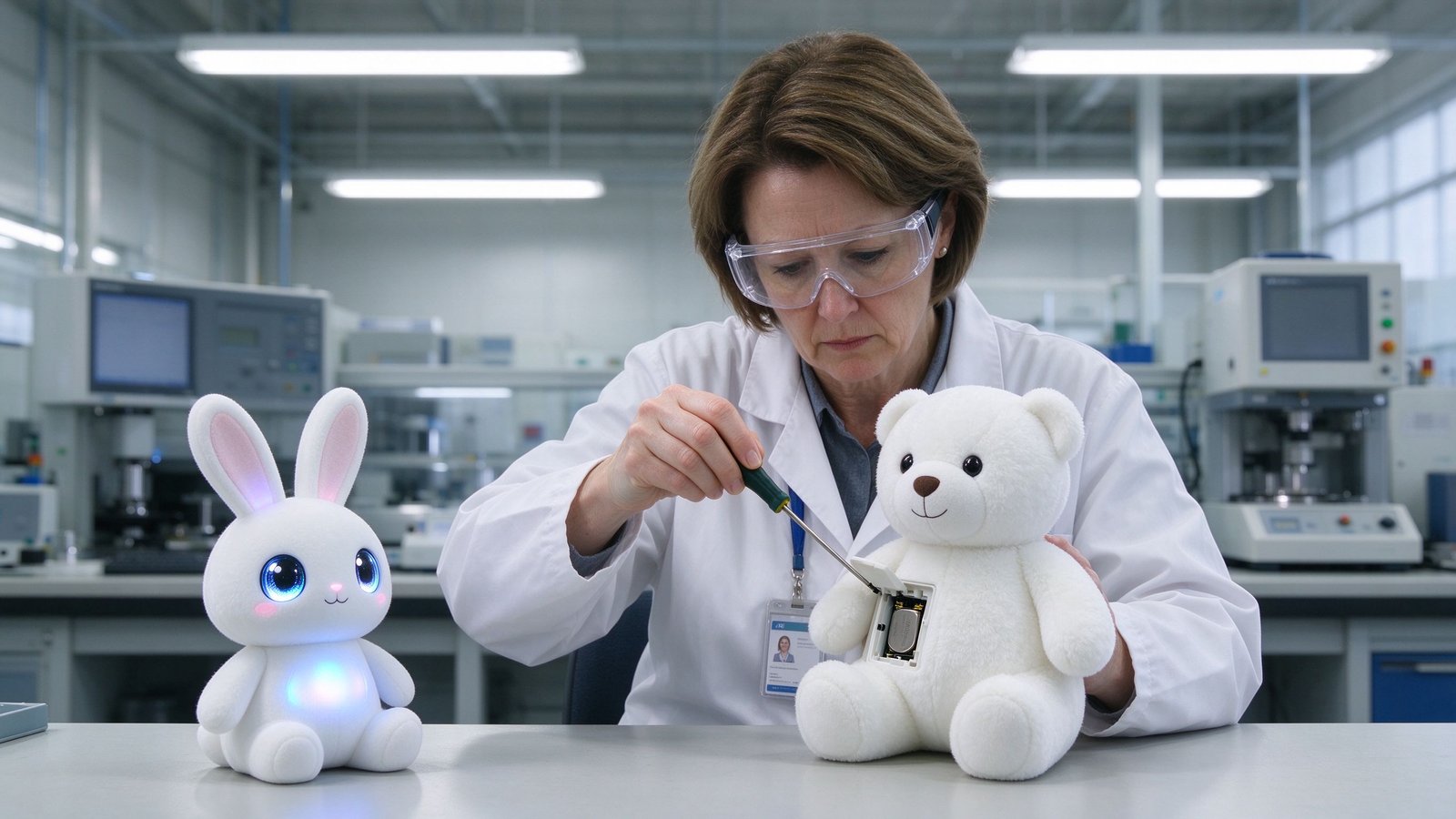
The Pre-Sailing Verification Checklist
Run this list before you book the container. Every item is verifiable in days, and every item maps to a 2026 recall.
1. Confirm the battery compartment is tool-secured. Screw-secured compartment or a two-step release that passes the torque and tension tests for the target age group. Ask for the test report page that covers it.
2. Confirm the cell is certified and the charge circuit is protected. The lithium cell should carry its own certification, and the charging circuit should have over-current, over-voltage and over-temperature protection. If the factory cannot name the protections, the design is not finished.
3. Check the third-party test reports — per SKU, not per factory. Ask for the EN71 or ASTM F963 report that matches your exact item number, age range, packaging and target market. A factory-level "we are certified" is not a report.
4. Verify lead and phthalate compliance on the actual materials. The accessible components — soft PVC parts, paint, printed fabric — must be covered by a third-party migration test. If the plush is custom, the fabric and print must be in the report too.
5. Review the short-circuit and electrical tests. For a battery-operated product, ask specifically about the short-circuit protection test and the charging tests. The 2026 flashcard recall shows exactly where a missing test becomes a recall.
6. Confirm Reese's Law labeling and packaging warnings. Button cell products need the mandatory warnings on both packaging and product. This cost an importer a recall in August 2026 on fewer than 700 units — the warning omission alone was the violation.
7. Check the tracking labels. CPSIA requires permanent tracking labels on children's products — manufacturer, date, batch and source. This is what makes a recall traceable to a batch instead of a whole inventory.
8. Read the factory's recall history. Ask which CPSC actions the factory's product categories have touched, and what changed after. A factory that has shipped tens of thousands of electronic toys without a recall action is a different supplier from one that has not.
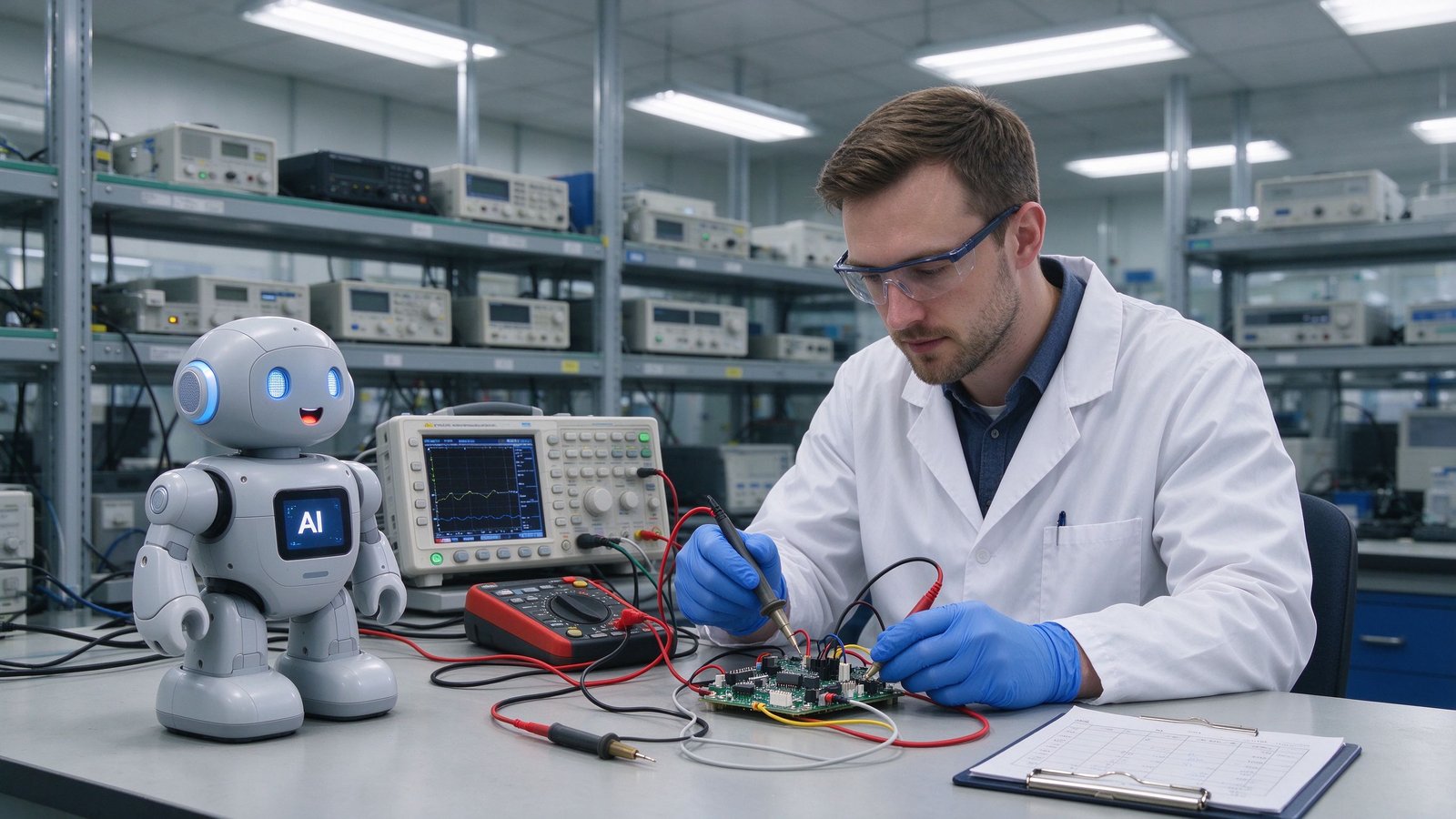
Certification: Your CPC Cannot Be the Factory's
The most misunderstood rule in the US import path: the importer of record must issue its own Children's Product Certificate. You cannot simply pass along the factory's CPC.
CPSC's own guidance for online sellers and importers is explicit: a foreign manufacturer's certificate cannot be forwarded as your own. What the regulation does allow — under 16 CFR Part 1109 — is using the foreign manufacturer's test results to issue your own CPC, provided you exercise due care that the results match your product, your item number and your market.
In practice, that means three things before you sail:
- The test reports must be third-party and CPSC-accepted. The factory's in-house lab does not count for CPSIA purposes.
- The report must match your SKU. Same item number, same age grading, same packaging — a report for a sibling product is not evidence for yours.
- You keep the due-care file. The correspondence, the report review, the factory audit record — that file is what turns a CPC from a signature into a defensible document.
For AI toys, add a fourth layer: the product is connected and often records voice, so the compliance stack includes the privacy and content layers that a static toy never touches — the territory covered by COPPA 2.0 and the content safety guardrails every responsible program now ships with.
The Voice and Data Layer: What AI Toys Add to the Compliance Stack
A plush bear that talks is a toy. A plush bear that listens, remembers and answers is an electronic product with a microphone, a data path and a content pipeline. That difference is where the next recall or privacy action will come from.
Three things to verify that a non-connected toy never required:
Voice data handling. Where does the audio go — on-device, or to a server? What is recorded, how long is it kept, and what can a parent delete? The answers must be documented, because they determine whether the product sits inside COPPA's framework and what the privacy compliance story looks like for your retail buyer.
Content filtering. AI toys generate responses in real time. The response pipeline needs guardrails that keep output age-appropriate — the same layer that makes a toy's 27 percent of raw model output unsuitable for kids a solved engineering problem rather than a headline.
Update and recall readiness. An AI toy's firmware can be patched over the air. That is a blessing — until a safety fix has to reach tens of thousands of units. Confirm the OTA mechanism and the batch-tracking labels before the product ships, so a future correction is a software update, not a full recall.
How Niokyar Builds Recall-Proof AI Toys
The reason the pre-sailing checklist matters is that every item on it is cheaper to fix in design than in a recall. At Niokyar, we build AI toys — plush and companion robots — with the electrical reality of the product designed in from the start, not bolted on at the end.
- Battery safety by design. Screw-secured compartments and certified cells with protected charging circuits are standard engineering practice in our builds, not a premium option.
- Third-party reports per SKU. We test through accredited labs against the exact item number, age range and target market, and we hand importers the documentation needed to issue their own CPC under 16 CFR 1109.
- Voice and content guardrails built into firmware. On-device processing where the product needs it, age-appropriate response filtering, and parental controls — the layer that keeps your retail buyer's privacy questions answerable.
- One accountable team. Design, edge-AI software, firmware, certification and production are owned by one group, so the compliance file and the product ship from the same room.
If you are sourcing AI toys now, start with the product catalogue to see the build options, and review our Reese's Law and button-battery compliance guide for the battery layer in depth. Then send your drawing and target markets — we will return the compliance map for your exact SKU, so the container that sails is the container that stays on shelves.
Frequently Asked Questions
What is the most common CPSC recall cause in AI toys in 2026? Battery ingestion risk — accessible button cell or coin battery compartments — is the most frequent cause in the 2026 record, with one action covering 124,560 light-up toys and another roughly 84,000 children's toys. For rechargeable AI toys, lithium battery thermal risk is the second major category.
Can I use the factory's Children's Product Certificate for my import? No. CPSC requires the importer of record to issue its own CPC. Under 16 CFR Part 1109 you may rely on the factory's third-party test results to support your CPC, but you must exercise due care that the results match your exact SKU, age grading and market.
Do AI toys need different certifications than regular electronic toys? The toy safety base is the same — EN71 or ASTM F963, plus CPSIA lead and phthalate rules — but AI toys add electrical (short-circuit, charging), battery (Reese's Law, lithium) and, for connected products, privacy and content-safety layers. The certification map is wider, not different.
What should I ask the factory before shipping my first AI toy order? Ask for the third-party test report matching your exact SKU, the battery compartment and charging protection details, the Reese's Law labeling, the tracking label plan, and the factory's recall history in electronic toys. Each maps to a 2026 recall action.
What does Reese's Law require for AI toys with button batteries? Mandatory warning labels on both the packaging and the product, plus a battery compartment that meets the child-resistant requirements. A 2026 recall of prank sound makers was issued for the warning omission alone, on fewer than 700 units.
Comments
No comments yet — be the first to share your thoughts.