2026-10-09
The Hidden Cost of AI Toy Returns: Cross-Border After-Sales That Sinks Brands
The Hidden Cost of AI Toy Returns: Cross-Border After-Sales That Sinks Brands
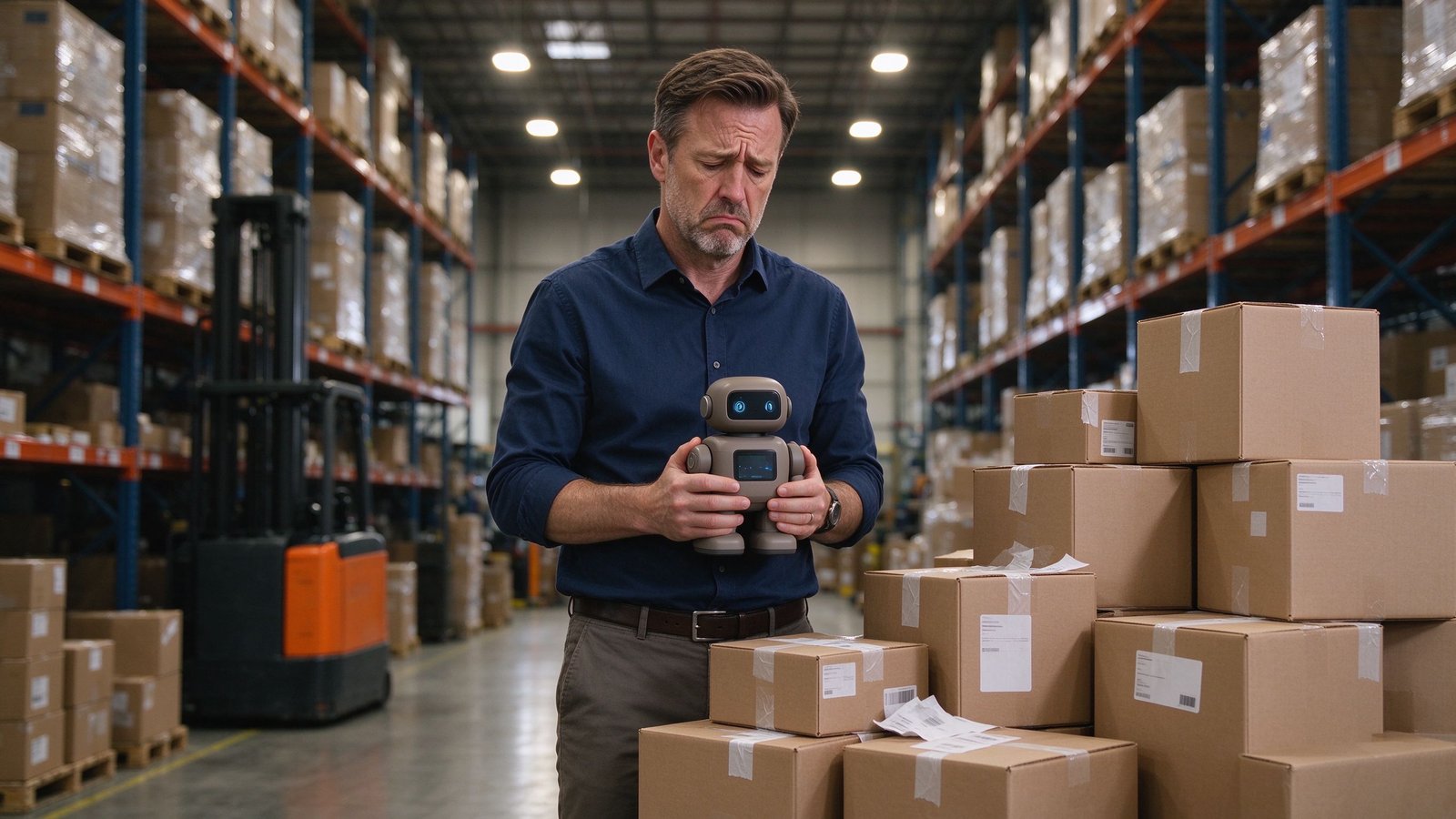
In early 2026, a consumer bought an AI robot puppy for roughly the price of a mid-range toy. When the novelty wore off and the promised "smart companion" failed to hold a conversation, she asked for a refund. The seller's instructions were simple: ship the toy back to a warehouse in China, tracked, at her own cost. The shipping quote came back nearly equal to the price she had paid. She kept the toy, left a one-star review, and disputed the charge with her bank.
That single story contains the whole problem in miniature. AI toy return rates on major marketplaces run at 30–40 percent, against roughly 15 percent for traditional toys. And unlike a plush bear or a building block set, a returned AI toy cannot be easily resold: it has software, a battery, and a customer who has already been disappointed once.
A return is not a customer problem. It is a supply chain decision you made a year earlier.
Why AI Toys Come Back at Three Times the Category Rate
The return problem is not a logistics accident. It is baked into how the category is being built.
Expectation mismatch. Many brands design AI companions like collectible toys: they sell an adorable shell with preset dialogue loops and call it intelligence. Consumers pay for a "relationship." What arrives is a function. When a child asks the same question twice and gets the same canned answer, the box goes back within the week.
Overstated features. Marketplace listings promise "accurate voice recognition," "AI self-learning," and "full-scenario conversation." In practice, recognition rates fall sharply in noisy rooms, and "learning" is often no more than a name stored in memory. The gap between the ad and the unboxing experience is where returns are born.
Short attention cycles. A significant share of AI companion purchases are driven by hype, not need. The industry itself reports that many buyers shelve the toy after a few days, and "shelved" quickly becomes "returned" under seven-day no-reason policies.
For B2B buyers, the pattern matters more than the anecdotes: high return rates do not just hurt the retailer's margin, they poison the product's rating, kill reorders, and burn the relationship with the retail channel that trusted you.
The Cross-Border Return Trap: When "Money-Back Guarantee" Is Just Marketing
The Waggy AI robot puppy case, documented by consumer-safety researchers at MalwareTips, shows what happens when after-sales is an afterthought. Buyers who requested refunds were directed to ship the toy to a warehouse in China with tracked shipping costing nearly as much as the toy. Some returns were ignored or rejected outright, making the advertised "money back guarantee" practically useless.
This is not an exotic edge case. It is the structural outcome of a supply chain where the factory ships finished goods and disappears. When the seller has no spare parts, no firmware channel, no local repair point, and no shared cost model for returns, the only available "solution" is to push the cost onto the consumer — and the consumer pushes back with chargebacks and reviews.
For an importer or distributor, the lesson is uncomfortable: a supplier with no after-sales capability does not save you money on day one. It hands you a liability that matures in month four.

The Math That Sinks Brands: What One Return Really Costs
Run the arithmetic the way a distributor would, before signing the PO.
A single returned AI toy triggers, at minimum: the original outbound freight, the inbound return freight from the end customer, repackaging and testing labor, and a restocking decision. If the unit is a data-collecting electronic device, there is also the question of whether the returned unit can legally be resold at all.
Cross-border returns amplify every line item. International shipping for a small robot can exceed the wholesale value of the toy. There is no "open-box, resell locally" channel for most AI companions: their value lives in the software, the pairing, and the promise that nobody else's voice profile is inside.
Now add the channel dimension. When a retail chain orders 2,000 units and 15 percent come back defective, the chain does not quietly absorb it. It withholds payment, demands credit notes, or cancels the next season. One bad batch converts a profitable account into a dead one.
The honest framing for buyers: your real cost per unit is not the FOB price. It is the FOB price plus the defect rate times the full return cost, plus the probability that a bad experience ends the account.
What "After-Sales-Capable Factory" Actually Means
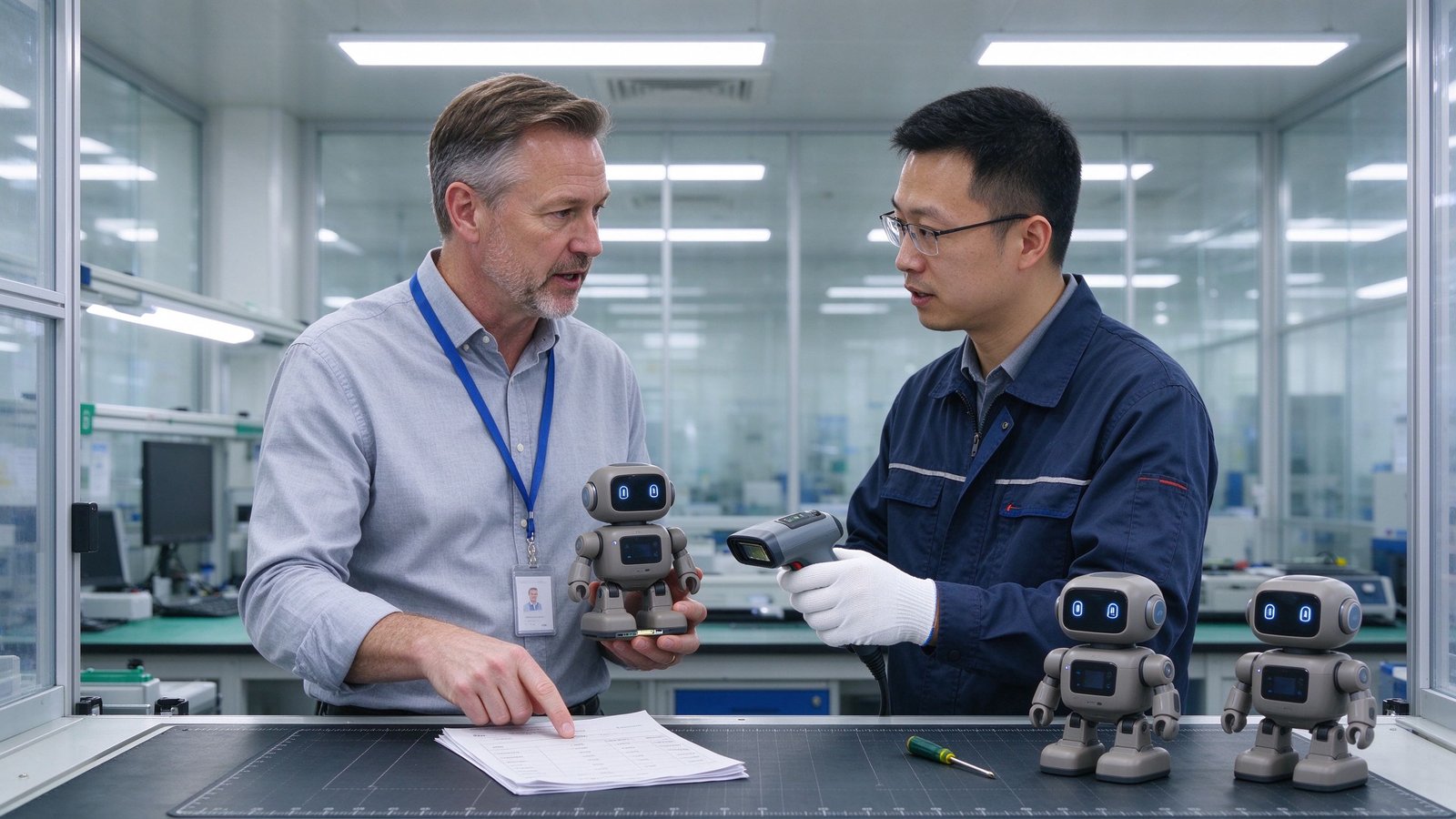
Not every factory can support cross-border AI toys. Here is what separates a supplier you can build a business on from one you are gambling on.
1. Quality stability measured in data, not slogans. Ask for the field defect rate, the outgoing inspection (OQC) pass rate, and the failure categories by component. A factory that cannot produce a defect Pareto chart cannot improve anything.
2. Batch traceability. When a unit fails in Ohio, the factory should be able to trace it back to a production batch, a component lot, and a test record. Traceability is what turns a recall into a targeted fix instead of a full-season write-off.
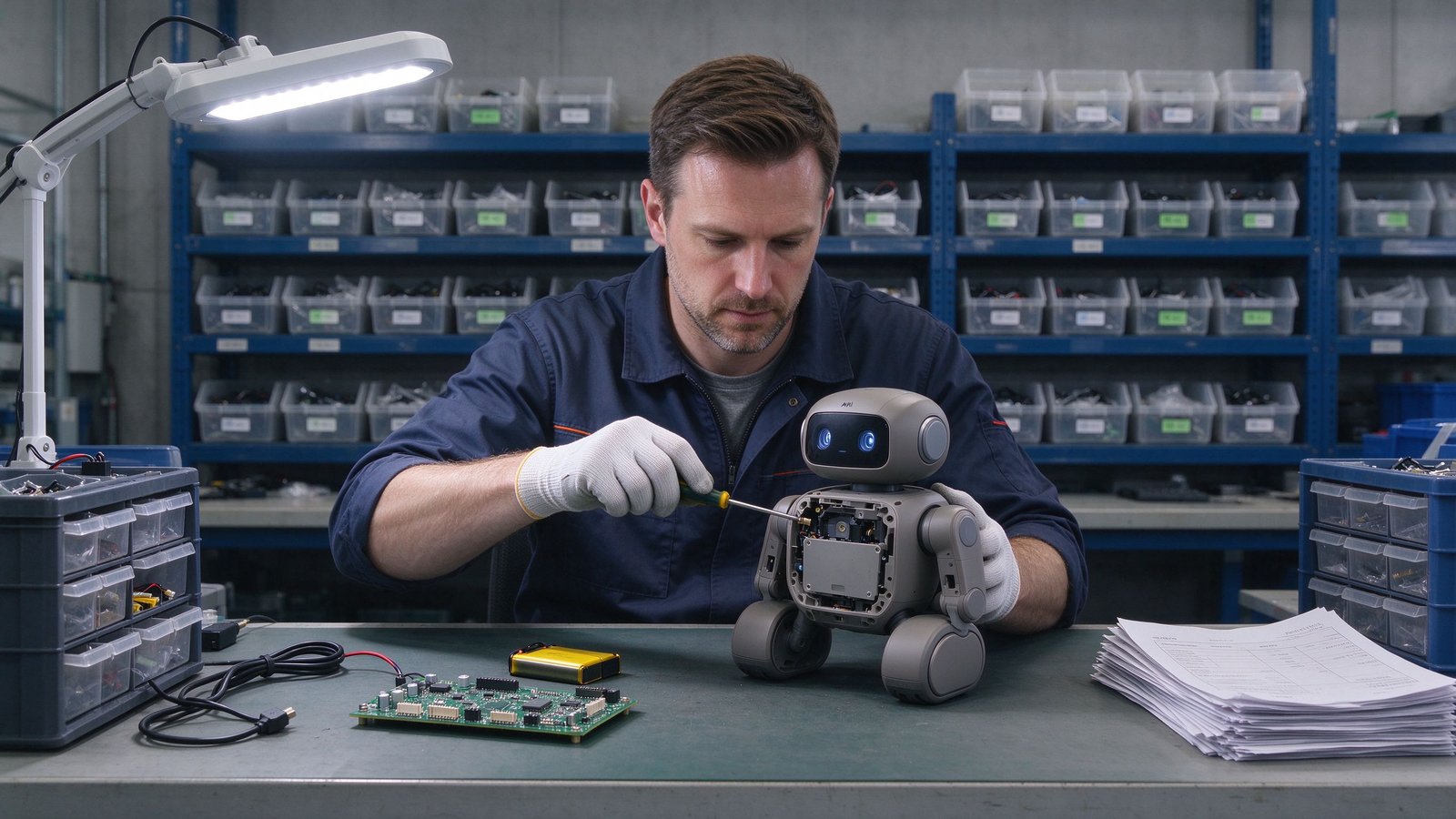
3. Spare parts and service stock. An AI toy is a small computer. Screens, batteries, speakers, mainboards, and charging ports fail. A factory that keeps service stock for 18 months past shipment can support RMAs; one that does not will simply stop answering emails.
4. Firmware ownership and updates. Bugs in voice interaction and battery management are fixed in software. Know who owns the firmware, who pushes updates, and how an update reaches the consumer's device without breaking certification.
5. One accountable party. The worst structure in this category is a brand that buys shells from one vendor, electronics from a second, and software from a third. When the product fails, every party blames the next. A single factory accountable for the finished product is the only structure that guarantees a single answer when things go wrong.
Five Questions Every Buyer Should Ask Before Placing an Order
Use this checklist in your next factory call. Write down the answers, then compare suppliers on facts rather than salesmanship.
- What is your field defect rate, and how is it measured? Who defines a "defective unit"?
- Can you trace a returned unit to its production batch, component lot, and test record?
- What spare parts do you keep for at least 18 months after shipment, and what is the lead time?
- Who owns the firmware and over-the-air updates, and what happens when a software bug is found?
- What is the RMA path when a channel customer returns units — who pays the freight, and who makes the decision?
If a supplier cannot answer these five questions in concrete terms, the "after-sales support" on their website is not a capability. It is a promise nobody has tested.
Why After-Sales Should Decide Which Factory You Choose
The brands that survive the AI toy shakeout will not be the ones with the best industrial design alone. They will be the ones whose factories can absorb a defect, ship a spare, push a firmware fix, and answer for the finished product. Everything else — the shelf appeal, the launch window, the margin — gets destroyed by an unmanaged return.
At Niokyar, we build AI toys and companion devices with the finished product as a single point of accountability: hardware, software, and firmware under one roof, with batch traceability, service stock, and a documented RMA process for our B2B customers. If you are evaluating suppliers for your first or next AI toy line, start with our guide on how to choose an AI plush toy manufacturer — then ask the five questions above on your call.
A return is not a customer problem. It is a supply chain decision you made a year earlier. Decide before the order, not after the chargeback.
Buyers: what was the most expensive return problem you have absorbed in a first order? Factory engineers: which after-sales capability do buyers most often underestimate?
Comments
No comments yet — be the first to share your thoughts.