2026-11-16
Mains-Powered Toys: 5 Rules That Put Your Adapter in Scope
slug: mains-powered-toys-16-cfr-1505-adapter-compliance-2027 title: "Mains-Powered Toys: 5 Rules That Put Your Adapter in Scope" description: "16 CFR 1505.1(a)(1) reaches toys powered from 120 V branch circuits: an enclosure that admits a 0.010-inch wire is nonconforming, a 6-hour run and four 3-foot live drops must pass, and the EU battery rule applies from 18 February 2027." date: 2026-11-16 status: published tags: - 16 CFR 1505 electrically operated toys - mains powered toy adapter compliance - toy enclosure 0.010 inch probe test - EN IEC 62115 electric toy standard - EU battery regulation article 11 toys 2027 image: /assets/img/blog/20261116-mainsplug01.webp seo_title: "Mains-Powered Toys: 5 Rules That Put Your Adapter in Scope" seo_desc: "Part 1505 in one page: 30 volt scope line, 0.010-inch enclosure probe, 6-hour endurance, 3-foot live drop, EU 24 V limit and the 18 Feb 2027 battery rule."
November 2026 · Mains Powered Toys, AC Adapters and the 16 CFR Part 1505 Route for B2B Toy Buyers
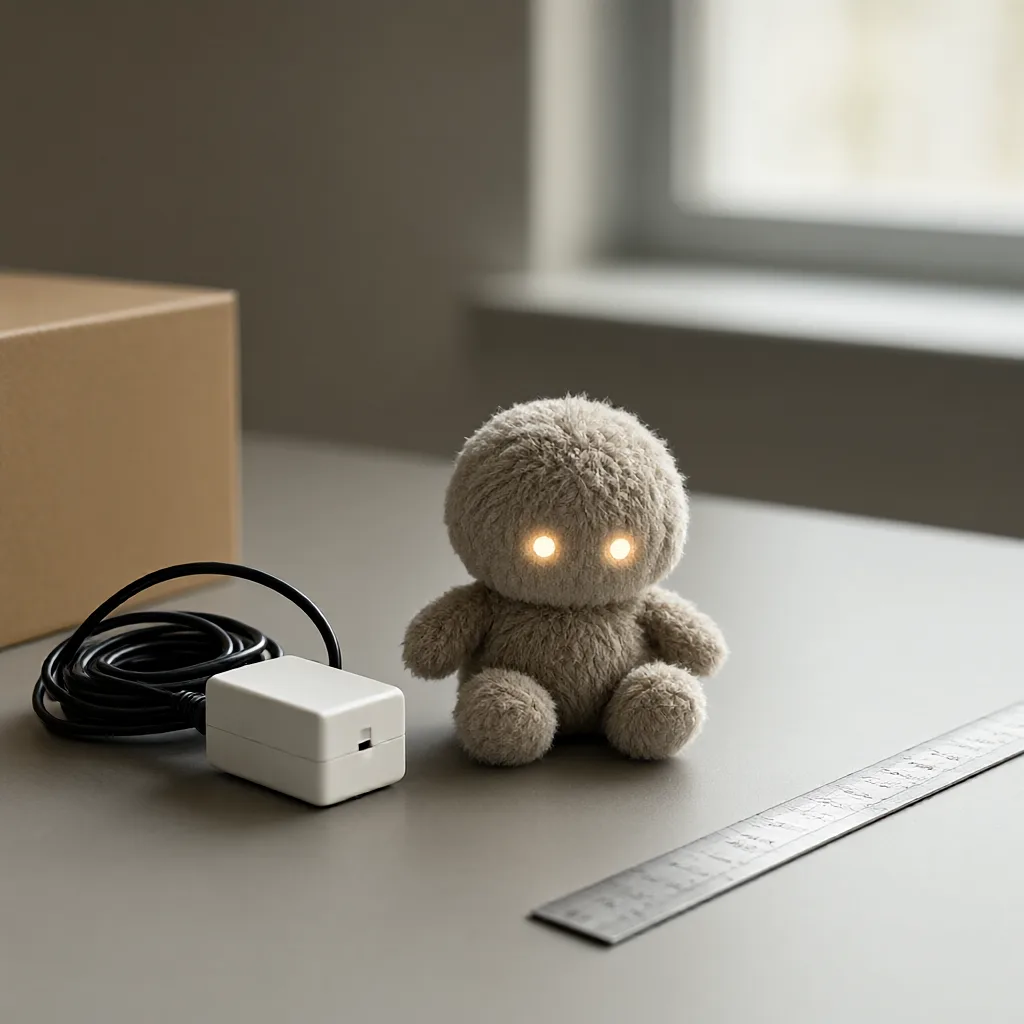
Every toy that ships with a mains adapter has two identities. To the retailer it is a toy. To the electrical safety officer of the importing country it is an appliance, and appliances are judged on a different rule set, by different tests, with different markings. Buyers who only ask the factory for a toy certificate therefore sign a file that is complete for the fabric and the plastic, and silent on the cable, the plug and the adapter nameplate.
This article is for importers, brand owners, IP licensors, educational toy companies and channel buyers who order mains-powered or rechargeable toys for the 2027 season: light-up plush, talking dolls with a USB brick, bedside night projectors, classroom charging stations for toy tablets. It covers what 16 CFR Part 1505 actually asks for, how the EU route differs under Annex II of the Toy Safety Directive, where the adapter sits outside the toy rule, how the EU battery removability date of 18 February 2027 collides with Chinese New Year tooling cut-offs, and the specific questions that catch a mains-powered toy that was only tested as a toy.
The 30 volt line that decides whether a toy is in scope at all
Start with the definition, because it splits the product range into two commercial regimes.
Definition: 16 CFR 1505.1(a)(1) defines an electrically operated toy as any toy or article intended for use by children that is intended to be powered from nominal 120 volt (110-125 V) branch circuits.
The same definition excludes three things, and the first exclusion drives the sourcing decision:
- Components powered by circuits of 30 volts r.m.s. (42.4 volts peak) or less are outside the definition.
- Articles designed primarily for adult use which may be used incidentally by children are outside it.
- Video games, as defined in 1505.1(a)(2), are outside it.
Read that first exclusion with a hard eye. An AI plush toy that carries a rechargeable lithium pack, charged by a USB adapter, is internally a low voltage device. Its power train is inside the 30 volt line, and 16 CFR Part 1505 does not reach it on that basis. The moment the same toy ships with a wall adapter that turns 120 volt mains into 5 or 6 volts, the article is being offered as a mains-powered children's toy, and the adapter becomes the part of the shipment that most needs papers.
Then read the ban. Under 16 CFR 1500.18(b)(1), any electrically operated toy covered by 1505.1(a)(1) that does not comply with Part 1505 is a banned hazardous substance. This is not a labeling notice and not a warning letter. A non-compliant mains-powered toy is banned merchandise, and the Commission's stated position on the electrical route is set out in 1500.18(b): the classification exists because in normal use, or under reasonably foreseeable damage or abuse, the design may cause injury or illness by electric shock, by heat, or by certain mechanical hazards. Gear up and electronics share the same enforcement fate.
If you have just moved a product line from battery-only to mains or rechargeable, the model side of the file changes at the same time; the process is set out in the AI toy supply agreement clause guide and in the EU Toy Regulation digital product passport guide.
The zero-centimeter probe: 1505.5(f)(2) and the toy safety screw of 2026
The single most expensive detail on a mains-powered toy is a hole nobody sees. 16 CFR 1505.5(f)(2) governs enclosures that contain a wire, a splice, a connection, an electrical component, or an uninsulated live part at a potential above 30 volts r.m.s. to any other part or to ground. Two duties follow.
- The enclosure must be sealed by welding, riveting, adhesive bonding, or by special screws or other fasteners not removable with a common household tool.
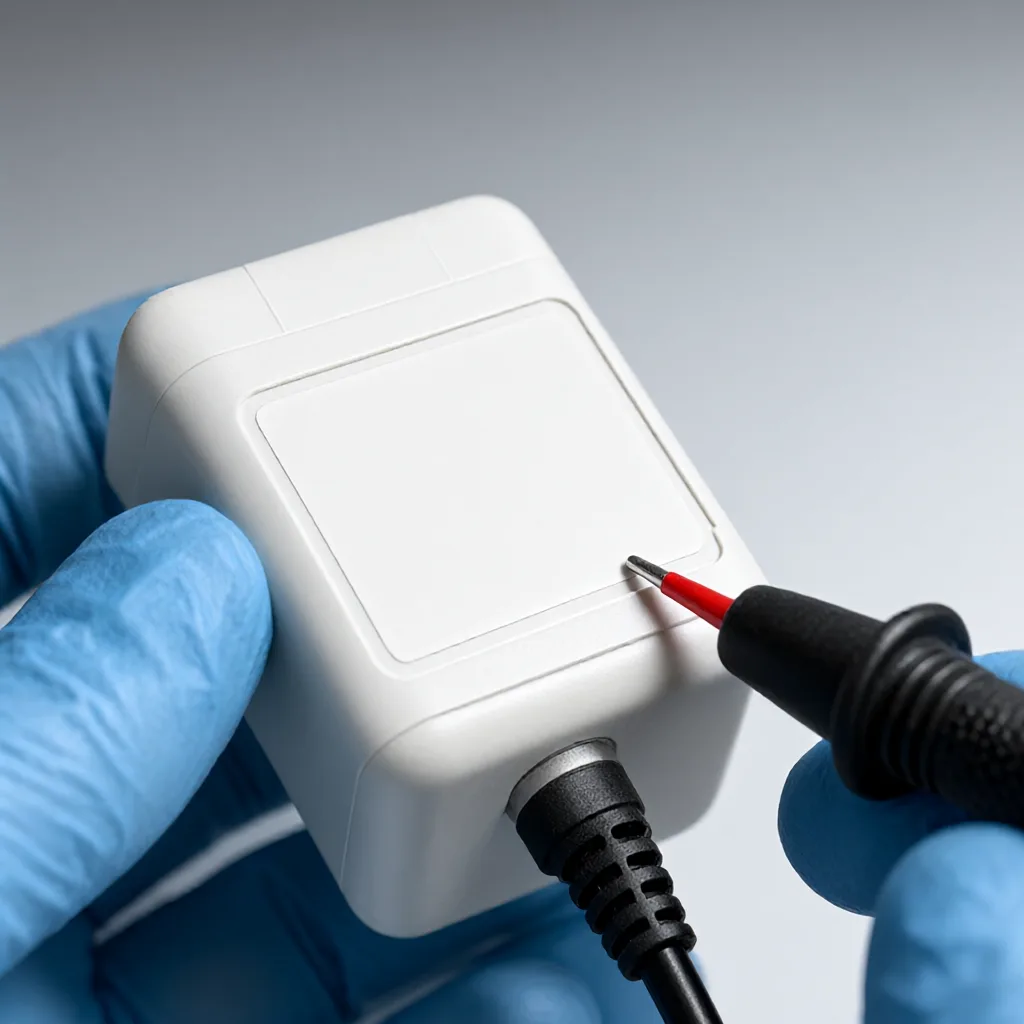
- The enclosure must have no opening permitting entry of a 0.010-inch-diameter music wire that could contact a live part.
The regulation also names what does not count as sealing: cross-notch-head screws, spring clips, bent tabs and similar fasteners, because they are easy to remove with common household tools.
Now translate that into a purchase order. A 0.010-inch aperture is 0.25 mm. The common decorative hole in a speaker grille, the gap where two moulded halves meet with a 0.3 mm witness line, the slot around a slide switch, and the hole for a status LED are all in the same size class. Each of them is acceptable if it cannot reach a live part, and each is a nonconformity if a probe strand can.
Practical consequence for the BOM review:
- Any P1 or P2 head (cross recess) on a housing that covers mains-level parts is a finding on paper alone, before the lab sees the sample.
- A "toy safety screw" package, tri-wing, square drive or Torx with a pin, has an added tooling cost, an added driver cost at assembly, and an added service problem, because the consumer cannot open the toy. Decide this in the mechanical design review, not in the lab report.
- Glue joints used to avoid screws have their own life: 1505.4(d)(1) requires a toy to keep the strength and rigidity to withstand reasonably foreseeable damage and abuse without producing or increasing a shock, fire or other accident hazard. A glued seam that opens on drop becomes a live-part access problem.
What the nameplate must say, and where the factory usually gets it wrong
16 CFR 1505.5(c) is short and absolute: a toy shall be marked to indicate its rating in volts and also in amperes and or watts. Paragraph (c)(3) requires the toy to be rated for alternating current only, direct current only, or both. Paragraph (c)(4) requires the alternating current rating to include the frequency, or the frequency range, where that is necessary because of a special design.
Add the rest of the labeling stack from 1505.3(b):
- The toy itself must carry the electrical ratings, any precautionary statement required by 1505.3(e), and the date of manufacture in month and year, or appropriate codes. The date may sit in the instructions instead of on the toy.
- The shelf pack or package must carry the date of manufacture, the ratings and the precautionary statements.
- Every toy must come with instructions that are easily understood by children of the intended age, covering installation, assembly, use, cleaning and maintenance, plus a statement addressed to parents recommending periodic examination of the toy for potential hazards and repair or replacement of hazardous parts.
- Where the same toy is produced or assembled at more than one establishment, the toy and its pack must carry a distinctive mark, which may be a code, identifying that establishment.
Three failure patterns repeat in factory files.
First, the adapters are sourced separately from the toy. The adapter is an interchangeable component from an electronics vendor, ordered in the design phase, changed in production when the vendor runs out of a chip, and never re-declared on the toy's label. The toy label then states a current that no longer matches the input the adapter can draw.
Second, the multi-site production mark is missing. A plush line sewn in one province and completed in another, the two halves of the same order, will not carry the establishment code that 1505.3(b)(4) requires. Retail compliance teams increasingly ask for both the toy label and the carton serial in the same photo set, because that is how they trace a shipment back to a line; the document discipline behind it is set out in the toy certification file traceability guide.
Third, the rating is printed in a size that was chosen by the packaging designer. 1505.3(a) requires labeling to be prominently and conspicuously displayed under customary conditions of purchase, storage and use, readily visible, noticeable and in legible English. A 4-point font inside a battery door fails that test in daylight.
The lab calendar: 6 hours, four drops of 3 feet, and an acrylic probe
Part 1505 is a performance part, so the cost of compliance is a lab booking, not a form. The tests a mains-powered toy runs through include:
- 1505.6(a): the toy must not present a fire, casualty or shock hazard when operated continuously for 6 hours under normal use and reasonably foreseeable damage or abuse, including the most hazardous position in which it can be left. This is an endurance test, and it is why a 2,000 mAh pack that runs 9 hours on a full charge defines the lab's overnight slot.
- 1505.6 impact: a toy weighing 10 pounds or less is dropped four times from a height of 3 feet onto a 2 1/2 inch concrete slab covered with 0.125 inch nominal vinyl tile. The test is conducted while the toy is energised and operating. Neither the electronics nor the plush may allow a shock hazard afterwards.
- Voltage and rating: under 1505.6, the toy is tested at the voltage indicated in the manufacturer's rating or at 120 volts, whichever is greater.
- Surface temperature: 1505.7 caps acceptable surface temperatures by surface type and thermal inertia. For a plastic surface with a thermal inertia of more than 0.0001 and not more than 0.0005 (Type 3), the cap is 60 °C on a Type A surface and 85 °C on a Type C surface. For a metal surface (Type 1), the Type A cap is 50 °C.
- Accessibility of heat: 1505.51(a) defines reachability for certain paragraphs with a 1/4-inch-diameter rod 3 inches long, which is inserted no more than 3 inches into any opening in the toy.
The 3 feet drop is roughly 0.91 m. It is lower than most EU retail transport drop protocols and lower than the 85 cm house drop many brands apply to a master carton, so a product that passes the shipping drop is not automatically a 1505 pass. The difference is that the 1505 drop is run live, and a unit that survives the drop with the housing cracked still has to show no shock hazard.
EU route: the toy rule, the LVD, and the adapter question
Europe splits the same toy across three instruments, and the split is what catches a US-centric file.
Requirement: the toy. Directive 2009/48/EC Annex II Part IV point 1 states that toys shall not be powered by electricity of a nominal voltage exceeding 24 volts direct current or the equivalent alternating current voltage, and that accessible parts of the toy shall not exceed 24 volts DC or equivalent AC. That is the clause that makes mains voltage inside a toy impermissible in the EU whatever the enclosure: the EU route requires a low voltage toy fed by a converter, not a mains-voltage toy.
Requirement: the converter. A plug-in adapter is not a toy unless it is designed for play, and the toy directive does not certify it. Manufactured for sale and use in the EU, it falls under the Low Voltage Directive 2014/35/EU, which covers electrical equipment rated 50 to 1 000 V AC, and its harmonised standards sit around EN 61558-2-7 for transformers for toys.
Requirement: the electronic toy. EN IEC 62115, electric toys, safety, is the harmonised standard under the toy directive that does the work that Part 1505 does in the United States. A lab report cited against EN 71 only does not cover the electrical part.
The commercial consequence is a packaging simplification that factories do not always volunteer: a wall-wart powered toy sold in the EU is a low voltage toy plus a separate converter, whereas the same SKU sold in the US is a 120 volt toy assessed under Part 1505. One tooling and one BOM, two electrical regimes, two sets of labels, two test reports. If your purchase agreement says the factory must supply "a toy safety report", you have bought one report, not two.
Note the practical filing consequence: the EU technical file under Annex II sits next to a converter declaration under the LVD, and until both exist the toy cannot be sold in the EU regardless of the CE mark on the carton. The German market adds its own expectations on packaging and instructions, covered in the TÜV and GS guide for AI plush imports.
18 February 2027 and the Chinese New Year tooling squeeze
The date that decides the 2027 mains-powered range is 18 February 2027, when Article 11 of Regulation (EU) 2023/1542 starts to apply, by virtue of Article 96(2)(a) of that regulation. Article 11(1) requires any person placing on the market products incorporating portable batteries to ensure the batteries are readily removable and replaceable by the end-user at any time during the lifetime of the product. A battery counts as readily removable where it can be removed with commercially available tools, without specialised tools, proprietary tools, thermal energy or solvents, and where a compatible replacement can be fitted without affecting the functioning, performance or safety of the product.
There are narrow derogations. Article 11(2) allows removal by independent professionals for appliances designed primarily to operate in environments regularly subject to splashing water or immersion and intended to be washable, and for medical devices. Article 11(3) disapplies the obligation where a permanent connection is needed to ensure the safety of the user and the appliance. That last route is the one a plush toy would argue, and it is an argument about the toy's tamper resistance, which is the same seam, screw and hinge question that 1505.5(f)(2) asks in the US. A battery behind a cross-recess screw is neither end-user removable nor tamper-resistant.
Chinese New Year 2027 falls on 17 February 2027, one day before the battery rule applies. Any style that needs new tooling to change its access route has to tool in December 2026 to be produced before the factory windows close, and the cut-offs for moulds and for lab samples are laid out in the Spielwarenmesse 2027 sample calendar, since the fair runs 2 to 6 February 2027, two weeks before the rule applies.
A comparison sheet you can hold against a quote
Use this as a line-by-line checklist on the factory's technical file. Each row is a decision, not a comment.
- Scope, motive power. USA: 16 CFR 1505.1(a)(1) reaches toys intended for nominal 120 V (110-125 V) branch circuits, and excludes circuits of 30 volts r.m.s. or less. EU: Directive 2009/48/EC Annex II Part IV caps the toy at 24 V DC or equivalent, so mains voltage inside the toy is not permitted at all.
- The adapter. USA: the adapter is the part that pulls the toy into Part 1505; ask for its own input and output nameplate, its certificate and the change log. EU: the adapter is LVD equipment under 2014/35/EU and needs its own conformity evidence, separate from the toy file.
- Enclosure openings. USA: 1505.5(f)(2) requires sealing by welding, riveting, adhesive, or special fasteners, and no opening that admits a 0.010-inch music wire to a live part. EU: EN IEC 62115 governs openings and probes, with its own smaller probe set.
- Fastener type on the electrical housing. USA: cross-notch or cross-recess head screws, spring clips and bent tabs are expressly not accepted as sealing devices. EU: the standard route requires tool access to be restricted by design and documented in the assessment.
- Rating label. USA: volts plus amperes or watts under 1505.5(c)(1), AC, DC or both under (c)(3), and frequency where needed under (c)(4), in legible English. EU: CE marking, the importer's name and address, and the toy warning statements.
- Date of manufacture. USA: month and year or a code, on the toy or in the instructions under 1505.3(b)(1)(iii), and on the pack under 1505.3(b)(2)(i). EU: no equivalent date obligation, but the batch identifier is needed for traceability.
- Multi-site production. USA: a distinctive establishment mark on the toy and pack under 1505.3(b)(4). EU: the manufacturer's identification and address on the toy or packaging.
- Drop test. USA: four drops from 3 feet onto vinyl tile over concrete, live, for toys of 10 pounds or less. EU: EN 71-1 drop heights by age group, followed by the electrical assessment under EN IEC 62115.
- Surface temperature. USA: 1505.7, per surface type and thermal inertia, for example 60 °C on a Type A surface of a Type 3 plastic. EU: EN IEC 62115 temperature limits with its own surface classification.
- Endurance. USA: no fire, casualty or shock hazard after 6 hours of continuous operation under 1505.6(a). EU: EN IEC 62115 abnormal operation clauses.
- Battery access. USA: covered by the main battery rules, notably Reese's Law (15 U.S.C. 2056e) for button and coin cells, and by abuse testing under 1505 and 1500.51 to 1500.53. EU: Article 11 of Regulation (EU) 2023/1542 applies from 18 February 2027 and requires ready removal and replacement by the end-user.
- Records. USA: 1505.4(a)(3) requires the manufacturer or importer to keep material and production specifications, the quality assurance programme description, all inspection and test results, and records of sale and distribution for 3 years after production or importation of each lot, and to make them available to Commission staff on request. EU: technical documentation retention under the toy directive.
Five questions that expose an untested power train
Ask these before a sample is booked, not after.
- Show me the adapter's nameplate and the toy's rating label side by side, and tell me which of the two changed in the last twelve months. If the adapter was re-sourced and the toy label was not re-printed, the file is out of date in a way that no lab can see from the sample.
- Which screws hold the housing that contains mains-level parts, and are they removable with a common household screwdriver? A photograph of the tool used at the line is enough to answer it.
- Was the drop test run with the toy energised? If the lab report does not say so, it is not a 1505.6 impact result.
- How many establishments produced this order, and where is the establishment code? Ask for the label artwork for each site.
- What is the highest accessible surface temperature at the end of the 6-hour run, and which surface type number was used? The answer tells you whether the lab worked to 1505.7 or to an internal margin.

Cost arithmetic without invented numbers
The useful way to price this is to count the items a mains route adds, not to quote a rounded cost per unit.
- One extra test scope. A toy report against EN 71 or under the CPSC testing rules does not include the electrical clauses. A second scope adds a lab booking, and may add a second sample set.
- One extra conformity route. The adapter needs its own file, which in practice means a supplier declaration plus a test report for the specific adapter model, not for the family.
- One extra label version. Every adapter change can force a toy label change, and a label change forces a carton change, a photoshoot change and an artwork approval round.
- One extra fastener category. A special-drive screw adds a driver, a bit and a traceable torque step at the line, and it blocks consumer access, which creates a service path.
- One extra season of engineering. Deciding the battery access route for the EU now, instead of in January 2027, is the difference between reusing the existing mould and paying for a tool insert inside the factory holiday window.
Budget in those five lines and the cost question becomes a schedule question. A mains-powered toy ordered in week 46 for a spring 2027 launch has a lab slot in December, a tool trial in January and a Chinese New Year break in the middle, which is the calendar laid out for general SKUs in the sourcing window 2027 guide.
What to put in the purchase order this month
- Write the power configuration into the specification, not the catalogue: adapter model, adapter certificate number, output rating, and the rule set the toy is claimed against, 16 CFR Part 1505 or EN IEC 62115.
- Require the adapter and the toy to be re-declared together. Any component change on either side triggers a label review, not only a production change note.
- Require a photograph set with every shipment: toy label, pack label, establishment code, adapter nameplate and the tool used to open the housing.
- Make the battery access route a design decision in the December tooling window, with the 18 February 2027 date and the Chinese New Year break on the same page.
- Keep the 3-year record promise outside the factory's discretion, because 1505.4(a)(3) puts the duty on the manufacturer or importer, and the factory is not the importer.

Sources
- eCFR, 16 CFR 1505.1, Definitions, including the nominal 120 volt (110-125 V) test and the 30 volts r.m.s. exclusion. https://www.ecfr.gov/current/title-16/chapter-II/subchapter-B/part-1505/section-1505.1
- eCFR, 16 CFR 1505.2, Scope of part, tying non-compliance to banned toys under 1500.18(b)(1). https://www.ecfr.gov/current/title-16/chapter-II/subchapter-B/part-1505/section-1505.2
- eCFR, 16 CFR 1505.3, Labeling, paragraphs (b)(1) to (b)(4) on the toy marking, the pack label, the instructions and the establishment mark. https://www.ecfr.gov/current/title-16/chapter-II/subchapter-B/part-1505/section-1505.3
- eCFR, 16 CFR 1505.4, Manufacturing requirements, including 1505.4(a)(3) on 3-year records and 1505.4(d)(1) on strength and rigidity. https://www.ecfr.gov/current/title-16/chapter-II/subchapter-B/part-1505/section-1505.4
- eCFR, 16 CFR 1505.5, Electrical design and construction, including (c) rating, (c)(3), (c)(4), and (f)(2) on enclosure sealing and the 0.010-inch music wire. https://www.ecfr.gov/current/title-16/chapter-II/subchapter-B/part-1505/section-1505.5
- eCFR, 16 CFR 1505.6, Performance, including (a) the 6-hour endurance condition, the impact test at 3 feet onto vinyl tile, and the 120 volt test voltage provision. https://www.ecfr.gov/current/title-16/chapter-II/subchapter-B/part-1505/section-1505.6
- eCFR, 16 CFR 1505.7, Maximum acceptable surface temperatures by surface type and thermal inertia. https://www.ecfr.gov/current/title-16/chapter-II/subchapter-B/part-1505/section-1505.7
- eCFR, 16 CFR 1505.51, Hot surfaces, including the 1/4-inch-diameter rod 3 inches long test probe. https://www.ecfr.gov/current/title-16/chapter-II/subchapter-B/part-1505/section-1505.51
- eCFR, 16 CFR 1500.18, Banned toys and other banned articles intended for use by children, including (b)(1) on electrically operated toys that do not comply with Part 1505. https://www.ecfr.gov/current/title-16/chapter-II/subchapter-B/part-1500/section-1500.18
- eCFR, 16 CFR 1500.50, 1500.51, 1500.52 and 1500.53, use and abuse test methods for children of 18 months or less, over 18 to 36 months and over 36 to 96 months. https://www.ecfr.gov/current/title-16/chapter-II/subchapter-B/part-1500
- eCFR, 16 CFR Part 1501, Method for identifying toys and other articles intended for use by children under 3 years of age which present choking, aspiration or ingestion hazards, sections 1501.2, 1501.3 and 1501.4. https://www.ecfr.gov/current/title-16/chapter-II/subchapter-B/part-1501
- eCFR, 16 CFR Part 1610, Standard for the flammability of clothing textiles, with 1610.4 class criteria for plain and raised surface fabrics. https://www.ecfr.gov/current/title-16/chapter-II/subchapter-B/part-1610
- eCFR, 16 CFR Part 1107, Testing and labeling pertaining to product certification, and 16 CFR Part 1112, Requirements pertaining to third party conformity assessment bodies. https://www.ecfr.gov/current/title-16/chapter-II/subchapter-B/part-1112
- eCFR, 16 CFR Part 1109, Conditions and requirements for relying on component part testing or certification to meet testing and certification requirements, which governs whether an adapter supplier's component report can support the toy's certificate. https://www.ecfr.gov/current/title-16/chapter-II/subchapter-B/part-1109
- U.S. Code, 15 U.S.C. 2056e, on button or coin cell batteries, known as Reese's Law. https://uscode.house.gov/view.xhtml?req=granuleid:USC-prelim-title15-section2056e
- EUR-Lex, Directive 2009/48/EC on the safety of toys, Annex II Part IV Electrical Properties, points 1 to 2 on the 24 volt DC limit and insulation. https://eur-lex.europa.eu/eli/dir/2009/48/oj
- EUR-Lex, Directive 2014/35/EU on the harmonisation of the laws of the Member States relating to the making available on the market of electrical equipment designed for use within certain voltage limits. https://eur-lex.europa.eu/eli/dir/2014/35/oj
- EUR-Lex, Regulation (EU) 2023/1542 concerning batteries and waste batteries, Article 11 on removability and replaceability of portable batteries and Article 96(2)(a) on the 18 February 2027 application date. https://eur-lex.europa.eu/eli/reg/2023/1542/oj
- EUR-Lex, Regulation (EU) 2023/988 on general product safety, for consumer products outside the toy scope. https://eur-lex.europa.eu/eli/reg/2023/988/oj
Comments
No comments yet — be the first to share your thoughts.