2026-11-25
325 Micrograms: The Water Bead Rule Now Blocking 2027 Lines
November 2026 · A compliance and sourcing brief on water bead and expanding-material toys for importers, brand owners, IP licensors and channel buyers building 2027 lines for the United States and the European Union

If your 2027 line includes a sensory toy, a squishy stress item, a grow-in-water novelty, a plush with a gel-filled insert, or a bead-filled fidget pouch, one paragraph of federal regulation was rewritten in December 2025 and it decides whether that SKU ships.
The rule is short. Section 1250.4 of Title 16 of the Code of Federal Regulations, published as 90 FR 57820 on 12 December 2025, adds performance and labeling requirements for water bead toys and for toys that contain water beads. It became effective on 12 March 2026, and the upstream statutory trigger is section 14(a)(3) of the Consumer Product Safety Act, which requires that a notice of requirements be published no later than 90 days before third party testing obligations attach. The rule applies to all water bead toys manufactured after the effective date.
Note: the rule does not care that water beads are a component rather than the whole product. Section 1250.4(a) covers both "water bead toys" and "toys containing water beads." A plush companion with a small gel-bead calming insert is in scope. A cardboard sensory kit that ships a sachet of loose beads is in scope. The definition in section 1250.4(b) is deliberately broad: a "water bead" is a variously shaped liquid absorbent polymer, composed of materials such as polyacrylamide and polyacrylate, that expands when soaked in liquid. The word in the final rule is liquid, revised from the earlier draft language of water, so the substance the bead absorbs is not limited to water.
This matters commercially because the category is large and the compliance literature is thin. Sensory and fidget formats sit across early-learning, plush, novelty and gift channels, and the same factory that produces a bead-filled pouch for one buyer produces a gel insert for another. Nothing here is legal advice, and the test protocol in the rule is specific enough that your laboratory, not your supplier's sales sheet, is the authority. Every rule cited is linked at the end.
This brief covers what the rule actually requires, the four numbers a buyer should put in a specification sheet before January, how the labeling clause interacts with the warning label you already print, what the US and EU frameworks ask for side by side, what the rule's own regulatory analysis says the testing will cost, and the sourcing questions that separate a supplier who has read section 1250.4 from one who has not.
What section 1250.4 actually requires
The rule layers three obligations on top of the base toy standard. A water bead toy must already comply with all applicable provisions of ASTM F963-23 under section 1250.2, which is the mandatory toy safety standard incorporated by 16 CFR Part 1250. Section 1250.4 adds size and integrity performance, a chemical limit, and a labeling regime.
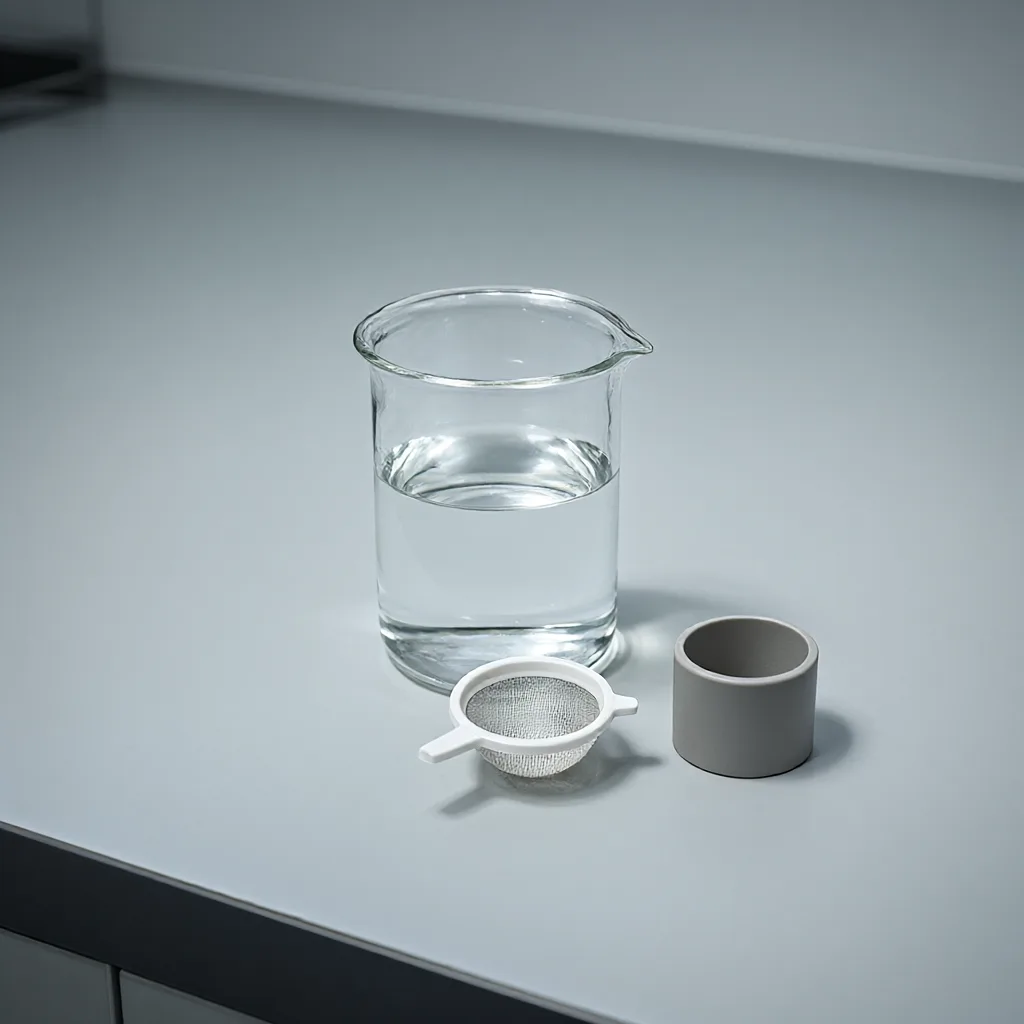
- Size limit and integrity. Water beads that fit entirely inside the small parts cylinder in their dehydrated, pre-expanded state, as shown in Figure 1 to paragraph (c)(1) and defined by reference to 16 CFR 1501.4, must after expansion remain whole while completely passing through the funnel test gauge in Figure 2 or the sieve test gauge in Figure 3, under their own weight. The final rule tightened the proposed funnel gauge from 9.0 mm to 5.0 mm, removed the proposed 50 percent expansion limit, and added the sieve gauge as an option for testing multiple beads at once.
- Extractable acrylamide limit. Water beads must not release more than 325 micrograms of extractable acrylamide, measured per 100 small water beads or per one large water bead, under the procedure in paragraphs (c)(2)(i) through (vi). A small water bead is defined as less than 4 mm in all dimensions prior to hydration; a large water bead is 4 mm or more in any dimension prior to hydration. The extraction is not a rough soak: the beads go into a container of pH-neutralized deionized water, into a shaker bath held at 37 degrees Celsius and shaken at 30 revolutions per minute, untouched for 24 hours, with three separate trials required, each in its own container. For large beads that means three trials of one bead each; for small beads, three trials of 100 beads each.
- Marking, labeling and instructional literature. Section 1250.4(d) sets out the warning content and formatting for the product, the packaging and the instructions.
Note: the acrylamide threshold in the final rule is 325 micrograms, which replaced the 65 microgram figure proposed in the 2024 notice of proposed rulemaking. The definitions of small and large beads were also changed, from measurement "across the smallest diameter" to measurement "in all dimensions" for small beads and "in any dimension" for large beads. If a supplier quotes you the 65 microgram number, they are working from the superseded proposal, not the final rule.
The gauge change is the detail most likely to be missed. The rule's preamble explains the reasoning: staff analysed the 20.0 mm gauge specified in section 4.40 of ASTM F963-23, which was originally sized against the pyloric sphincter of an 18-month-old child because that was thought to be the most likely site of a gastrointestinal blockage, and concluded from incident data that the gauge diameter needed to be smaller to reflect how ingestion hazards actually occur. The final rule uses a 5.0 mm funnel gauge. Tests run to the older, larger gauge geometry do not demonstrate compliance with section 1250.4.
The warning label clause in detail
Section 1250.4(d) is written with unusual specificity, and this is where most packaging artwork fails. The requirement is not "put a choking hazard warning on the box." It is a set of formatting rules that an experienced art department will recognise as an ANSI Z535 exercise.
- The warnings must be in English at a minimum.
- They must be conspicuous and permanent on the principal display panel as defined in section 3.1.62 of ASTM F963-23, and in a distinct colour contrasting with the background.
- They must conform to ANSI Z535.4-2023, sections 6.1 to 6.4, 7.2 to 7.6.3 and 8.1, with three modifications. In sections 6.2.2, 7.3, 7.5 and 8.1.2, the word "should" is replaced by "shall." In section 7.6.3, the phrase "should (when feasible)" is replaced by "shall." The word "safety" is struck when it appears immediately before a colour name, so "safety white" becomes "white."
- Text in the message panel must be bold and in capitals as shown in the example labels in Figure 4 for water bead toys and their packaging and Figure 5 for products with contained water beads. Lettering must be black on white or white on black.
- Message panel text must be sans serif and centre or left aligned. Precautionary, hazard-avoidance statements must be preceded by bullet points, and multiple precautionary statements must be separated by bullet points where paragraph formatting is used.
- The safety alert symbol and the signal word WARNING must be in sans serif and at least 1/8 inch, or 3.2 mm, high. The remainder of the text must have an uppercase height of at least 1/16 inch, or 1.6 mm.
- The safety alert symbol must precede the signal word, its base must sit on the same horizontal line as the base of the signal word letters, its height must equal or exceed the signal word letter height, and the exclamation mark must be at least half the size of the triangle.

Two further points govern physical products rather than artwork. Under paragraph (d)(1)(iii), products with contained water beads that have no packaging must carry a hangtag or sticker label with the full warnings, and multiple products sold together in a package or bin must be individually labelled with a hangtag or sticker. Under paragraph (d)(2), the instructional literature must carry the same warnings as the packaging, with similar formatting, though colour is not required, provided the signal word and safety alert symbol contrast with their backgrounds.
Important: the individual-labelling clause is the one that breaks gift sets, multipacks and polybag assortments. A six-piece sensory bundle in a single bin, where only the bin is labelled, does not meet paragraph (d)(1)(iii). The warning has to be attached to each unit in the assortment.
Four numbers to put in the specification sheet
Most sourcing failures in this category are specification failures that only surface at the testing lab. Put these four numbers in the specification sheet before you issue the purchase order, and require the supplier to confirm each in writing.
- Dehydrated bead dimension, in millimetres, in all dimensions, measured as received before any hydration. This number determines whether the bead is small or large under section 1250.4(c)(2), and therefore which acrylamide test protocol applies: 100 beads per trial or one bead per trial.
- Post-expansion gauge result, stated against the 5.0 mm funnel gauge of Figure 2 or the sieve gauge of Figure 3, with the statement that the bead remained whole. A report that states a diameter without stating integrity and pass-through has not answered the rule.
- Extractable acrylamide result in micrograms, reported per 100 small beads or per one large bead, against the 325 microgram limit, with the extraction conditions recorded: deionized water, pH neutralized, 37 degrees Celsius, 30 revolutions per minute, 24 hours, three trials.
- Whether water beads are contained or loose. Contained means a bead-filled insert, ball or pouch where the beads sit inside a product. Loose means the beads ship as a separately handled item in the box. The two cases trigger different warning label figures, and the contained case is the one that also triggers the hangtag or sticker rule when there is no packaging.
One practical consequence: if a supplier cannot tell you the dehydrated dimension of the bead they are buying from their own polymer vendor, they cannot tell you which test protocol they ran, and the certificate they issued is not traceable to a rule. That is the five-minute check described in our earlier brief on accepted laboratory scope, and it applies with unusual force here because the small-versus-large threshold is measured in millimetres on an item that swells by an order of magnitude.
US and EU requirements side by side
The two frameworks ask related questions in different languages, and a 2027 line intended for both markets has to satisfy each on its own terms. Read the following as four paired comparisons rather than as a single table.
Comparison 1: the expanding-materials standard.
Requirement, US: 16 CFR 1250.2 makes ASTM F963-23 mandatory for toys, and section 1250.4 adds water-bead-specific size, integrity, acrylamide and labeling duties on top of it. A water bead toy is tested to F963-23 plus section 1250.4.
Requirement, EU: the Toy Safety Directive 2009/48/EC sets the essential safety requirements, with the harmonised standard EN 71-1 covering mechanical and physical properties. Expanding materials are addressed within the EN 71-1 mechanical regime, and the standard's own gauge geometry applies.
What it means for a buyer: a report concluding "EN 71 compliant" does not answer the US question, and a report concluding "ASTM F963-23 compliant" does not by itself answer the section 1250.4 size question, because the US rule applies a specific 5.0 mm funnel gauge that differs from the F963-23 section 4.40 approach.
Comparison 2: the chemical limit.
Requirement, US: express numeric limit of 325 micrograms of extractable acrylamide per 100 small beads or per one large bead, under a defined 37 degrees Celsius, 30 RPM, 24-hour extraction with three trials.
Requirement, EU: chemical safety is governed by the essential requirements and by REACH, with entry 43 of Annex XVII restricting acrylamide as a substance and, more relevant to a finished toy, the CMR and migration provisions of the Toy Safety Directive applying to accessible substances. There is no EU numeric toy-specific limit expressed in micrograms per bead in the same form as section 1250.4(c)(2).
What it means for a buyer: you cannot use one acrylamide test report as evidence for both markets unless the laboratory states which protocol it ran and what limit it applied. Ask for the protocol, not the verdict.
Comparison 3: the conformity document.
Requirement, US: a Children's Product Certificate under 16 CFR Part 1110 based on testing by a CPSC-accepted third party conformity assessment body, with the certificate available to the Commission and to customs as required by 16 CFR 1110.13.
Requirement, EU: an EU Declaration of Conformity, CE marking, a technical file, and, as the Toy Safety Regulation phase-in proceeds, a product passport structure. Our earlier brief on the digital product passport traces that tooling question in detail.
Comparison 4: the product traceability structure.
Requirement, US: the certificate identifies the product, the rule or standard tested, the laboratory and the date, and it must be reachable at the moment of inspection.
Requirement, EU: the technical documentation and the traceability of the manufacturer or importer must survive a market surveillance request, with the identification of the economic operator on the product or packaging.
What it means for a buyer: the EU regime rewards a complete technical file; the US regime rewards a reachable certificate. Both reward one thing above all, which is that the item in the carton matches the item on the report, down to the bead specification.
What the rule's own analysis says this costs
Buyers asking for a cost number should use the Commission's own arithmetic rather than a supplier's estimate, because the analysis is public and the numbers are traceable.
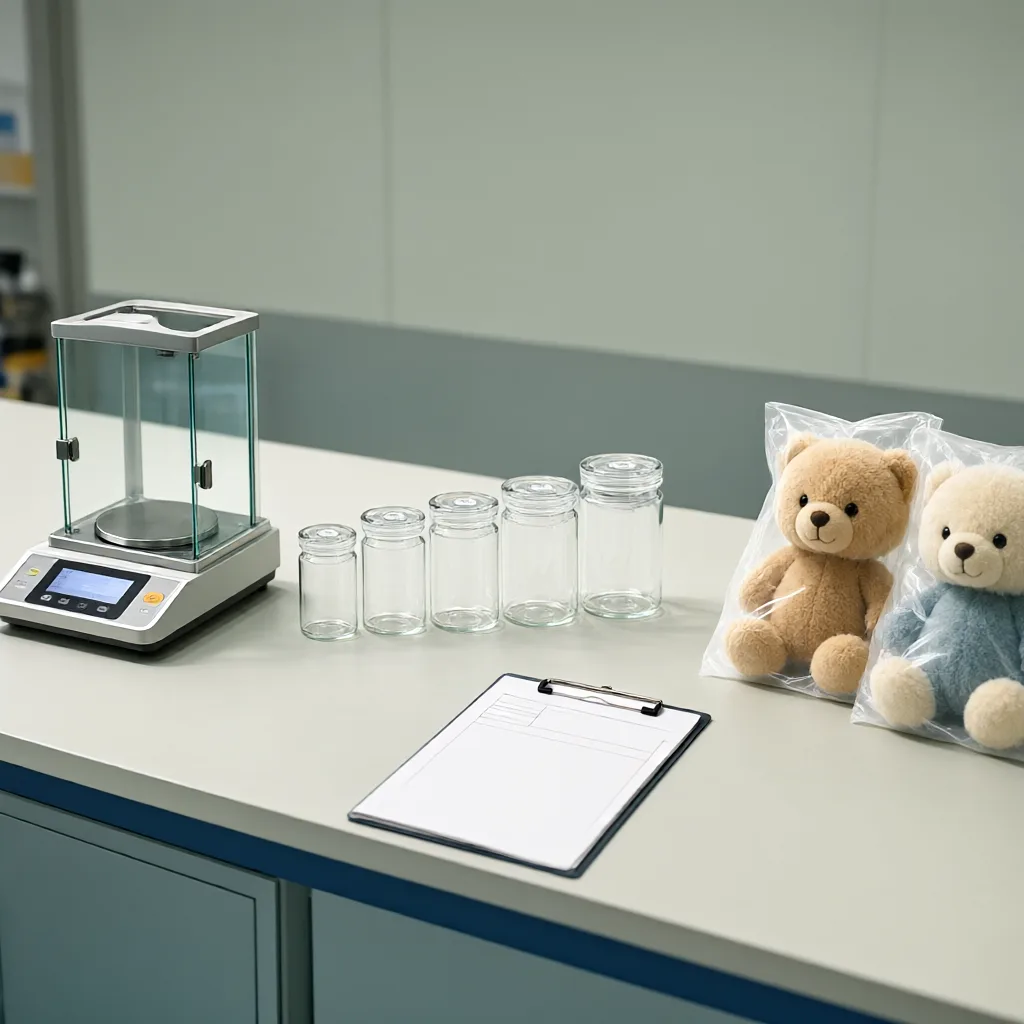
The regulatory analysis accompanying the final rule, at the third party testing costs section, states that certification testing based on quotes from testing laboratories for ASTM F963 mechanical services and chemistry testing services ranges from 300 to 500 US dollars per product sample. It further states that laboratories not currently performing acrylamide testing in other contexts may incur retooling costs, that testing laboratories would need to invest in new performance testing equipment to test to the new requirements, and that the Commission expects an incremental cost increase of 50 dollars in the cost of testing water bead toys to the rule. The stated basis for that incremental figure is approximately 200 dollars of new performance testing equipment per laboratory, spread across an assumed four product samples tested to the performance requirements.
The same section explains that manufacturers and importers are required to furnish certificates to retailers and distributors under section 14(g)(3) of the CPSA, and that importers who are not the original manufacturer may rely on the certificate of compliance provided by others, as specified in 16 CFR Part 1109.
Two consequences follow, and both are worth costing before the order is placed.
First, a per-product-sample cost is a per-SKU cost, not a per-factory cost. A sensory line with six colourways, or four characters sharing one bead fill, is a testing scope decision, and it needs to be made at the quotation stage rather than after the artwork is approved. The same logic is set out in our brief on factory audit questions and in the certification file traceability guide, which treats the file as a deliverable rather than as paperwork.
Second, the reliance provision under Part 1109 is what makes a supplier's existing report usable, but only if the report matches your bead, your construction and your artwork. Reliance on a report for a different bead dimension, or for a funnel gauge geometry the final rule no longer uses, is not reliance; it is an assumption.
The sourcing questions that separate the two kinds of supplier
Ask these before January, when 2027 tooling and artwork orders are being placed and changes are still cheap. The answers, not the certifications page, tell you which supplier you are dealing with.
- Which bead polymer is in this fill, and what is its dehydrated dimension in millimetres in all dimensions? The correct answer names a polymer and a number. The wrong answer is "standard water beads."
- Was the size and integrity test run against the 5.0 mm funnel gauge of section 1250.4(c)(1), or against the ASTM F963-23 section 4.40 gauge? A supplier who does not know there is a difference has not tested to the current rule.
- Does the acrylamide report state 325 micrograms per 100 small beads or per one large bead, and does it record 37 degrees Celsius, 30 RPM, 24 hours and three trials? If the number on the report is 65 micrograms, the report predates the final rule.
- For a contained-bead product with no outer packaging, how is the hangtag or sticker applied to each individual unit? Ask for a photo of a production unit, not a mock-up.
- Which figure applies to our packaging, Figure 4 for water bead toys and their packaging, or Figure 5 for products with contained water beads? These are different warning contents and the artwork cannot be reused across them.
- Has the artwork been checked against the 3.2 mm and 1.6 mm minimum letter heights, and against the black-on-white or white-on-black rule for the message panel? This is a print-proof question, not a design question.
- Who signs the Children's Product Certificate, and what is the unique identifier and URL under 16 CFR 1110.13? This is the item that decides whether a container is released or held.
A note on the seasonal window. For a 2027 line that ships for the autumn or holiday season, tooling and bead sourcing decisions land in the first quarter, the sample and testing cycle occupies the second, and the artworks and certificates are finalised before the first vessel booking. Because the effective date of section 1250.4 has already passed, there is no transition period left to use as buffer: a product manufactured after 12 March 2026 is subject to the rule as it stands, which means the 325 microgram limit and the 5.0 mm gauge apply to the samples your factory is building now. Our 2027 sample calendar and lab queue brief sets out how that testing queue interacts with show timing, and the Nuremberg sample calendar is the reference point most European buyers are already working to.
What to do this month
- Pull the sensory, fidget, gel-insert and bead-fill SKUs out of the 2027 plan and mark them, including the ones where beads are a component rather than the product.
- Request the dehydrated bead dimension and the bead's small-or-large classification from each supplier in writing.
- Request the acrylamide report and check the limit figure against 325 micrograms and the trial conditions against the four stated parameters.
- Confirm which warning figure applies to each packaging format, and confirm individual unit labelling for every multipack and assortment.
- Price the per-SKU testing scope, using the Commission's own 300 to 500 dollar per sample range, into the landed cost before the quotation is signed off.
- Record the certificate identifier and URL obligation in the purchase order, so that the supplier knows the certificate is a deliverable on a schedule rather than a file that appears when asked.
None of this is exotic. It is the ordinary work of specifying a component that happens to be regulated, and it is much cheaper in November than in June.
Sources
- 16 CFR Part 1250, Safety Standard for Toys, current text including sections 1250.1, 1250.2, 1250.4, 1250.5 and 1250.10. https://www.ecfr.gov/current/title-16/chapter-II/subchapter-C/part-1250
- 16 CFR 1250.2, Requirements for toy safety, incorporating ASTM F963-23 by reference and noting the CPSIA section 106(a) exclusions. https://www.ecfr.gov/current/title-16/chapter-II/subchapter-C/part-1250/section-1250.2
- 16 CFR 1250.4, Requirements for water beads, setting the size and integrity test, the 325 microgram extractable acrylamide limit and the labeling requirements. https://www.ecfr.gov/current/title-16/chapter-II/subchapter-C/part-1250/section-1250.4
- 16 CFR 1250.10, Incorporation by reference, listing ASTM F963-23 and ANSI Z535.4-2023 among the incorporated materials. https://www.ecfr.gov/current/title-16/chapter-II/subchapter-C/part-1250/section-1250.10
- Final rule, Safety Standard for Toys: Requirements for Water Beads, 90 FR 57820, published 12 December 2025, effective 12 March 2026. https://www.federalregister.gov/documents/2025/12/12/2025-22643/safety-standard-for-toys-requirements-for-water-beads
- Proposed rule, Safety Standard for Toys: Requirements for Water Beads, 89 FR 73024, published 9 September 2024, the source of the superseded 65 microgram figure and 9.0 mm gauge proposal. https://www.federalregister.gov/documents/2024/09/09/2024-19286/safety-standard-for-toys-requirements-for-water-beads
- 16 CFR 1501.4, the small parts cylinder referenced by section 1250.4(c)(1) for the dehydrated bead measurement. https://www.ecfr.gov/current/title-16/chapter-II/subchapter-C/part-1501/section-1501.4
- Consumer Product Safety Act section 14, 15 U.S.C. 2063, including the third party testing and certification requirements of subsection (a)(3). https://uscode.house.gov/view.xhtml?req=granuleid:USC-prelim-title15-section2063&num=0&edition=prelim
- 16 CFR Part 1109, Conditions under which a certificate of compliance may be relied upon by importers and other suppliers. https://www.ecfr.gov/current/title-16/chapter-II/subchapter-C/part-1109
- 16 CFR Part 1110, Certificates of Compliance, including the electronic certificate availability rule in section 1110.13. https://www.ecfr.gov/current/title-16/chapter-II/subchapter-C/part-1110
- 16 CFR Part 1112, Requirements pertaining to third party conformity assessment bodies, including CPSC acceptance, auditing and adverse action provisions. https://www.ecfr.gov/current/title-16/chapter-II/subchapter-C/part-1112
- Toy Safety Directive 2009/48/EC of the European Parliament and of the Council on the safety of toys, consolidated text. https://eur-lex.europa.eu/eli/dir/2009/48/oj
Disclosure: the regulatory text cited above is quoted or paraphrased from the current electronic editions of the Code of Federal Regulations, the Federal Register and the United States Code. Nothing in this article is legal advice, and the applicable testing scope, limits and labeling details should be confirmed with your accredited laboratory and counsel for the specific product and market at issue.
Comments
No comments yet — be the first to share your thoughts.