2026-12-11
A 10 lb Seam: Why 20,000 Plush Ears Fail in Fall
slug: plush-seam-tension-10-pound-test title: "A 10 lb Seam: Why 20,000 Plush Ears Fail in Fall" description: "16 CFR 1500.51 and 1500.52 require stuffed toy seams to hold 10 pounds at 18 months or less and 15 pounds to 36 months. The lot-level seam controls that stop an ear coming off in November." date: 2026-12-11 status: published tags: - 16 CFR 1500.51 stuffed toy seam test - plush toy seam pull test 10 pounds - children's product certificate seam - ai plush toy ear detach recall - toy factory lot level pull test image: /assets/img/blog/20261211-seam01.webp seo_title: "A 10 lb Seam: Why 20,000 Plush Ears Fail in Fall" seo_desc: "Seams must hold 10 lb at 18 months and 15 lb to 36 months under 16 CFR 1500.51 and 1500.52. Four lot-level controls for AI plush."
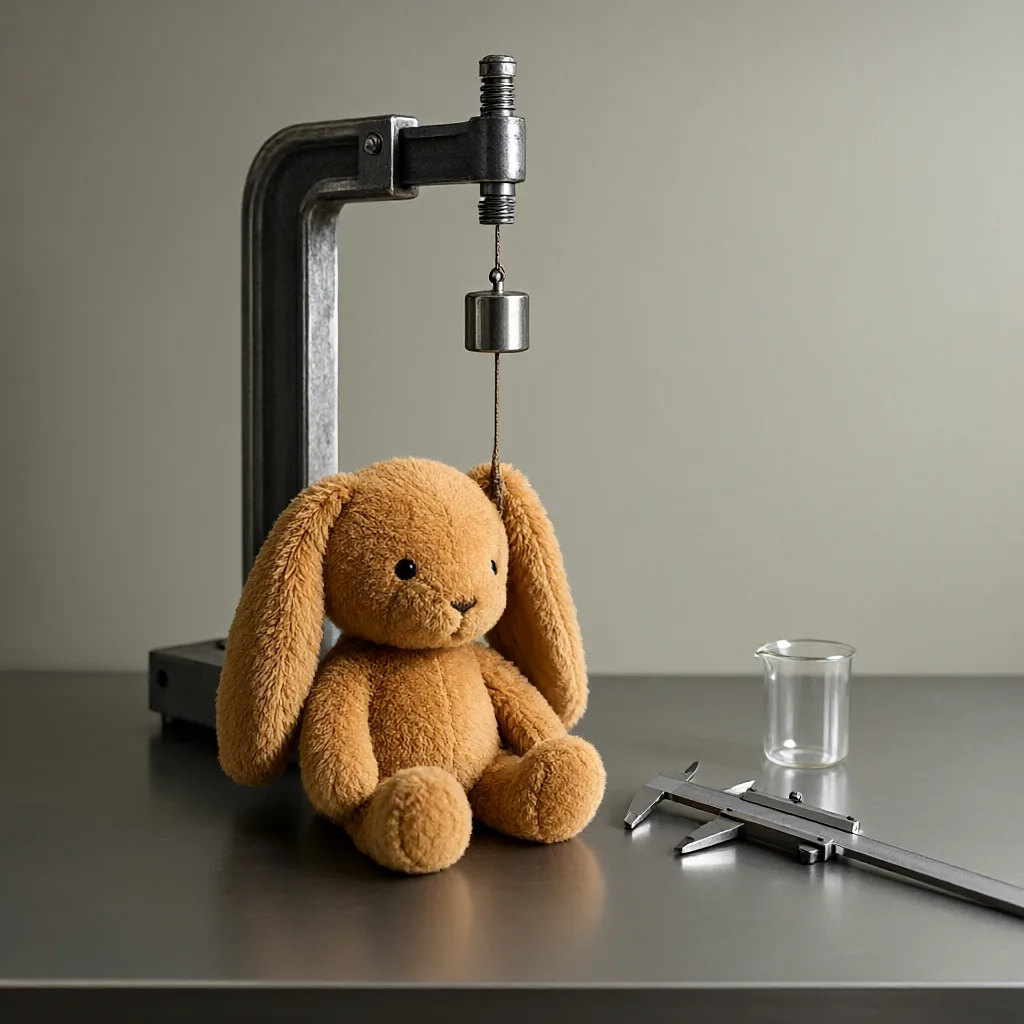
Every winter recall season starts the same way. A container of plush lands in a port in week 46, the importer's lab opens three cartons, and the seam that held a plastic ear in place in the golden sample gives up at four pounds instead of the required ten. Nothing else about the product changed. The fabric is the same, the colourway is the same, the price is the same. The thread tension on the last twenty thousand pieces is not.
This article is about the single cheapest failure point in AI plush sourcing that nobody puts in a purchase order line item, and the manufacturing controls that turn it from a lottery into a specification.
Note: the figures below are the exact loads written into the regulation, not estimates. If your supplier has to ask what the limit is, that is already a finding.
What the Federal regulation actually requires
Two paragraphs do most of the work for stuffed toys. The first is 16 CFR 1500.18(a)(3), which classifies as a banned hazardous substance any doll, stuffed animal or similar toy with internal or external components that have the potential to cause laceration or puncture wound injury. That is the hazard definition. The second is 16 CFR 1500.86(a)(2), the exemption that makes a plush toy sellable: the ban does not apply when those components are internal and the toy is constructed so that it will not break or deform to expose them either in normal use or when subjected to reasonably foreseeable damage or abuse.
Put plainly, a hard plastic voice module, a speaker housing, a battery holder or a magnetic clasp inside a plush ear is legal only on one condition: the fabric and the stitching must survive the abuse that a child can deliver. The regulation does not say how strong the seam must be. The test methods do.
For stuffed toys and beanbags specifically, 16 CFR 1500.51(f)(1)(ii) and 1500.52(f)(1)(ii) require that seams of a stuffed toy constructed of pliable materials be subjected to 10 pounds of force for a toy intended for children 18 months or less, and 15 pounds of force for over 18 but not over 36 months, applied in any direction, with a tolerance of plus or minus 0.5 pound. Paragraph 1500.53(f)(1)(ii) applies the same 15 pounds to the 36 to 96 month band. The test is not a gentle pull. The procedure in 1500.51(f)(3) applies the force within five seconds parallel to the major axis, holds it for ten further seconds, and then repeats the pull at 90 degrees.
There is a second abuse layer that most factory self-tests skip. Under 16 CFR 1500.51(c) a bite test applies 25 pounds of load within five seconds to any accessible portion whose external dimension is 1.25 inches or less and which a child could insert into the mouth at least 0.25 inch deep. Drop tests follow: 10 drops from 4.5 feet for the under-18-month band, four drops from 3 feet for the 18 to 36 month band. Every time a toy fails a mechanical abuse test, the detached piece is then measured; for toys intended for children under three, 16 CFR 1501.4 requires that no detached component fit entirely inside the small parts cylinder. The order in which these tests fail is itself a diagnostic: a torn seam points to thread and stitch control, a detached rigid part points to the component fixation spec, and a crack in a plastic housing points back to the mould and the resin.
Where the seam actually fails
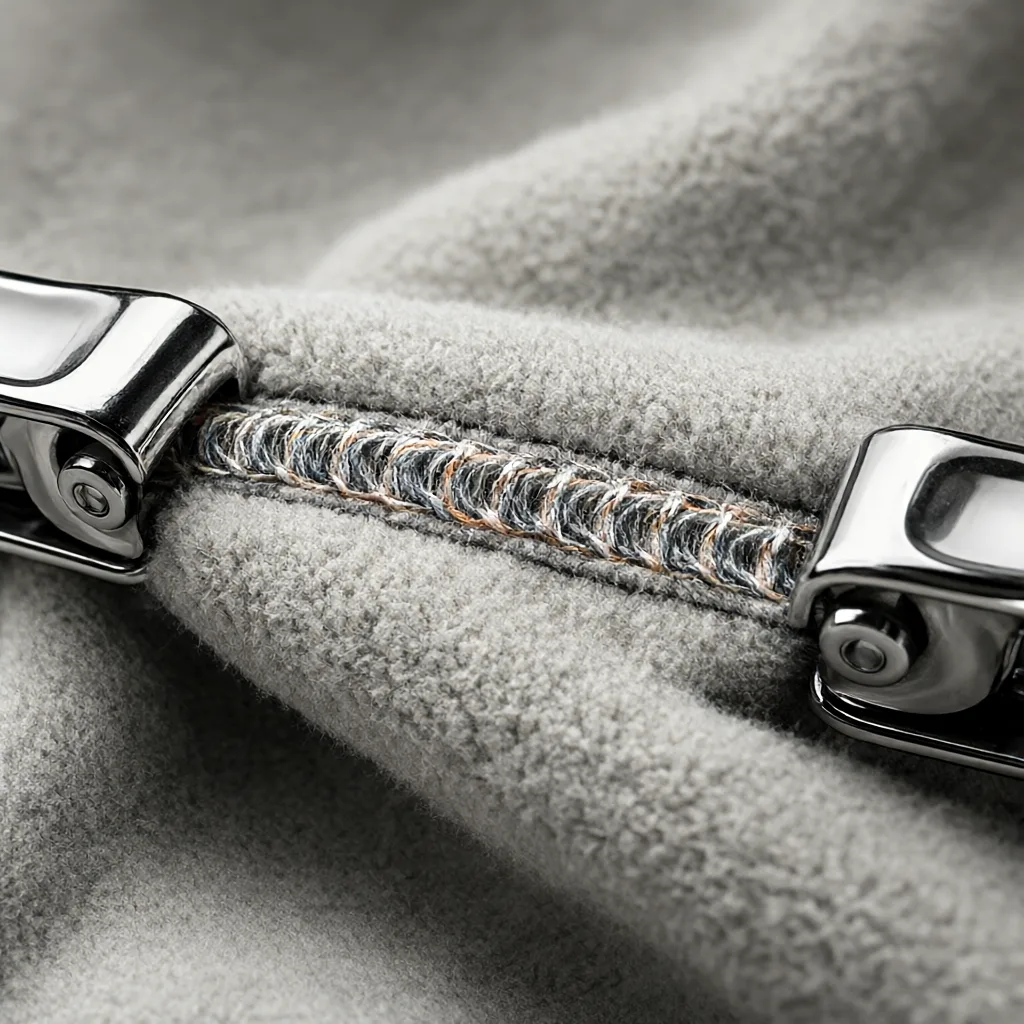
A plush seam is not one variable. It is at least six, and the factory controls them in different departments with different paper records.
- Stitch type and density. A locked overlock at 8 to 10 stitches per inch behaves very differently from a chain stitch of the same density, because the chain structure propagates a break across the whole seam.
- Thread. Tensile grade, tex number, and whether the needle thread and bobbin thread come from the same lot.
- Tension setting on each head. A multi-head sewing line drifts across a shift, and drift is invisible in the finished product.
- Fabric weight and stretch direction. Minky, velour and recycled sherpa all recover differently after the needle has passed through.
- Pattern seam allowance. A 6 mm allowance gives the operator something to bury the seam in. A 4 mm allowance gives the tester something to grab.
- The reinforcement of the specific load point. Ears, arms and looped antennae are where clamps attach. A double-stitched backseam does not help an ear that was attached with a single pass.
Change any one of these and the golden sample you signed in September is no longer the product in the November shipment. This is why a certified sample and a complaint are so often both true at the same time.
Why the certificate does not solve it
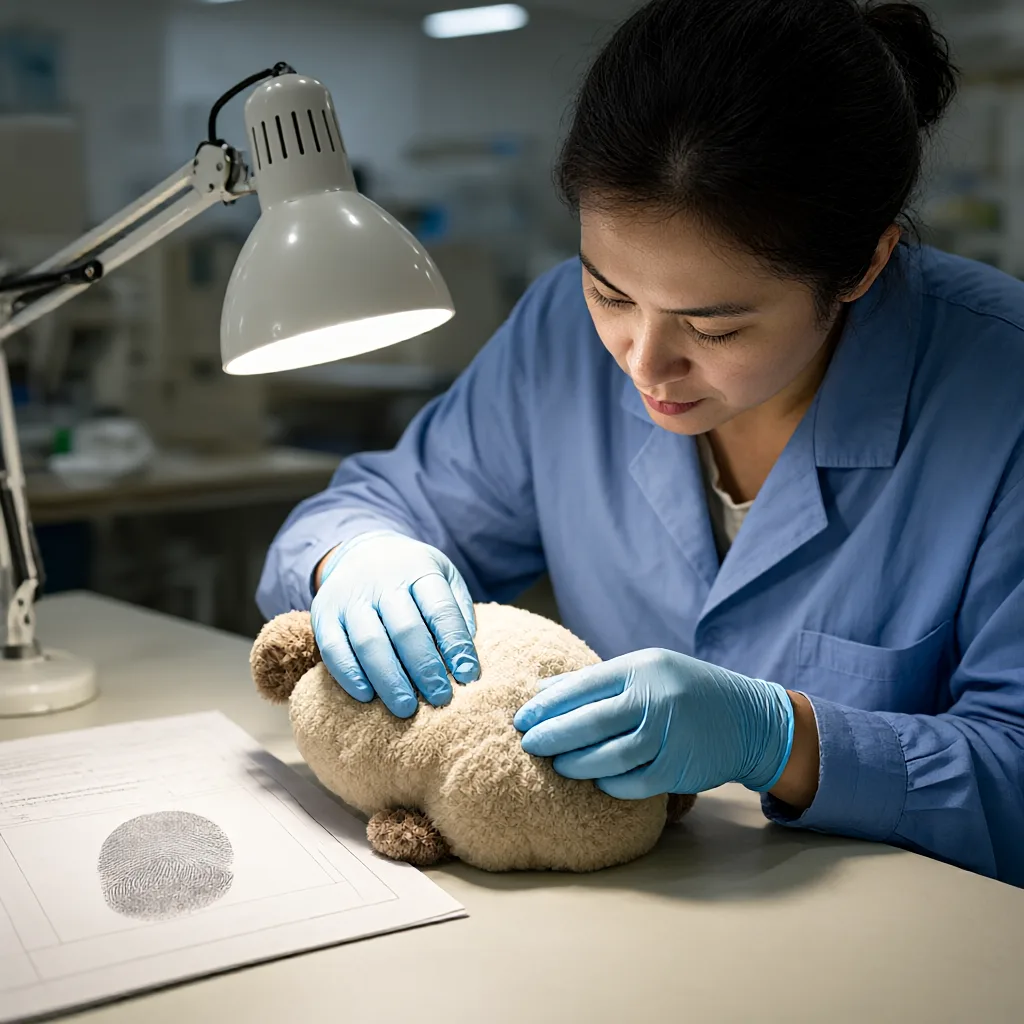
The Children's Product Certificate that accompanies a plush toy into the United States is a certificate about a test, not a guarantee about the shipment. Under 16 CFR 1110.7(a) the finished product certifier for an imported product is the importer, not the factory. Under 1110.11 the certificate must state each rule the product is certified against, identify the manufacturing date and place at least to month and address, and identify the third party conformity assessment body that did the testing. None of those seven data elements in 1110.11(a) asks whether the seam was re-verified on the production lot.
The practical consequence is a document trail that looks complete while the physical product drifts. In an internal review after a failure, the importer can produce a valid certificate, a valid test report, and a shipment that does not match either. The regulation knows this; that is why 16 CFR 1500.53 and its siblings are used as abuse tests, and why CPSC treats a failure to have a reasonable testing programme as a separate violation under the certificate rules.
Note: if your supplier offers only a 2019 test report covering a previous colourway, the certificate on file is describing a product that no longer exists in your catalogue.
The purchase order clauses that move the needle
Compliance in a plush programme is bought in three places: the drawing, the order, and the audit. The drawing says where the eye is; the order says how often the seam is checked; the audit says whether the answer is true.
Here is the four-part control set that a buyer can actually insist on without redrawing the product.
- Seam pull test on every production lot. The factory applies the regulated force (10 pounds for under 18 months, 15 pounds for the 18 to 36 month band) to every attachment point on a sample drawn from that lot, records the failure mode and holds the data with the lot number.
- A stitch dictionary on the technical pack. Stitch type, threads per inch, thread tex and needle size written per panel, so a re-order cannot drift silently.
- A pull-test witness point. A QA photo of the clamp attached to the finished toy, timestamped, filed with the shipment.
- A change control clause. Any change to thread supplier, seam allowance or fabric weight requires re-testing before shipment, even if the design is unchanged.
The third item matters more than buyers expect. A photo of a clamp on a finished ear is the single cheapest piece of evidence that a factory is testing rather than asserting.
Comparison: the four documents and what each one proves
Comparing what each document actually proves, rather than what the buyer assumes:
- Third party test report. Proves a laboratory result on the sampled units on the date stated. Does not prove the production run matches the sample. Revalidation is required after a material change.
- Children's Product Certificate under 16 CFR 1110.11. Proves the certifier attests to compliance across the rules listed. Does not prove lot-level conformity and does not replace the underlying test data.
- Factory in-house seam pull record by lot. Proves the specific shipment was mechanically checked at the regulated load. Does not prove the test was done independently.
- Pre-shipment inspection with destructive pull. Proves an independent party saw the seam fail or hold. Does not cover the whole container, only the inspected sample.
In practice the four are layered: the lab report sets the design baseline, the certificate carries the attestation, the lot record connects the design to the shipment, and the inspection verifies the first three are not fiction. Remove the lot record and the chain has a gap exactly where the product is most likely to differ.
What happens when it fails after landing
A plush toy that splits at the ear is reportable territory, not a quality complaint. Section 15(b) of the Consumer Product Safety Act, 15 U.S.C. 2064(b), requires a manufacturer or distributor that obtains information about a product that fails to comply with an applicable standard or regulation, or that contains a defect which could create a substantial product hazard, to report to the Commission immediately. An internal memo about ear detachments filed in April is the kind of document that turns a recall into an enforcement matter.
The commercial cost structure is also asymmetric. Engineering a fourth seam pass on an ear costs a few minutes of labour on every unit. A recall costs the reverse: reverse logistics, refund or replacement, customer communication, and the freight back to a destruction facility. The buyer who writes the seam clause pays once. The buyer who does not pays for the holiday season twice, once in the product and once in the test report that would have prevented it.
Note: importers who source plush as a brand owner should read the fastening requirements alongside the age grading rules, because the seam failure and the age grade change compound each other. A toy that moves from 0-3 to 3+ under the five rules in this age grading walkthrough changes which small parts test applies, but the seam load on an ear does not disappear; it simply stops being the only question the lab asks.
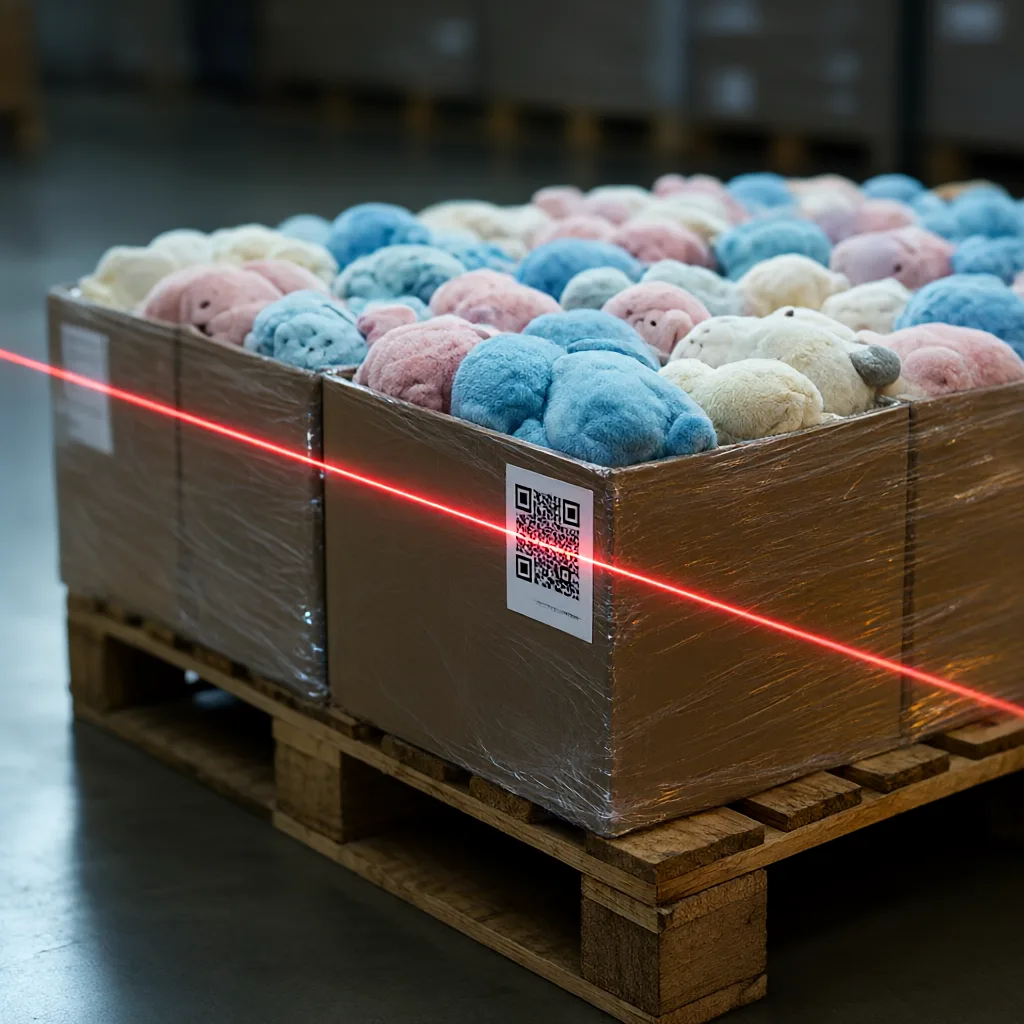
These rules predate the digital product passport and say nothing about it, but seam evidence is one of the things a passport record will have to be able to support. Regulation (EU) 2025/2509, which applies from 1 August 2030 and repeals the Toy Safety Directive, describes a product data set that includes conformity evidence and test references. A toy whose seam fails a lot pull test cannot supply clean evidence for that field. The practical move for buyers is to write seam lot data into the same record structure that will later feed the passport, so that the field is populated rather than reconstructed under deadline.
The 2027 calendar angle
For programmes that will be launched or re-ordered for the 2027 season, the test clock and the production clock are now out of step. Third party laboratories revalidate mechanical tests at the program level, and factories retool for the new fair cycle in January and February. A seam re-test booked after the Chinese New Year holiday arrives after the mould and fabric decisions are already locked, and the smaller sample windows that the Spielwarenmesse 2027 sample calendar describes close even earlier than the tooling deadline most buyers track.
The right order of operations for a re-order in the first quarter of 2027 is: measure the existing production seam, fix the stitch dictionary, run the lot-level pull tests on the standing stock, then book the third party mechanical re-test. Doing it in the other order produces a fresh certificate for a product that still fails the same way.
FAQ: seam strength questions buyers ask
Can a stronger thread alone fix a failing seam?
Almost never on its own. Thread strength sets the ceiling, but stitch type and allowance set whether the seam can hold that load. A machine-grade bonded thread pulled through a 4 mm allowance still tears at the fabric rather than the thread.
The factory says our seam test will damage samples. Is that true?
The regulated tests in 16 CFR 1500.51 and 1500.52 are destructive by design, and the item is not sold afterwards. Budget a defined number of units per lot per production run. A supplier that refuses a destructive sample is asking to be trusted without measurement.
Do stuffed toys exempt us from mechanical testing?
No. Under 16 CFR 1500.86(a)(2) the exemption is conditional on the components staying enclosed in normal use and reasonably foreseeable abuse. The 10 pound or 15 pound seam load in 16 CFR 1500.51(f) and 1500.52(f) exists precisely because the exemption is conditional, and a lab will apply it to a plush toy with a wired or plastic component on the first evaluation.
Does the same rule apply in the European Union?
The load values are not identical, and this is where suppliers get caught. A programme certified only against the US seam load should not be assumed to satisfy EN 71-1, which sets its own mechanical requirements and its own instrumented test methods. Sourcing teams running both channels should ask the lab to issue a single report that maps the US test and the EN test separately against the same technical file. Buyers who want that file traced end to end can follow the EU and US traceability checklist.
A one-page seam control sheet
For teams that need the whole thing on a page, the minimum viable control set is this.
- Attachment map. Every ear, arm, tail, loop and appliqued patch listed with the seam type used.
- Load table. The regulated force per age band printed on the technical pack, with the test paragraph cited beside it.
- Per-lot pull record. Sample size fixed, results signed by the QA lead, lot number linked to the packing list.
- Change log. Thread supplier, stitch density, fabric weight and allowance tracked as controlled fields.
- Holding trigger. Any lot whose sample fails the load is held at the factory before dispatch, not sorted at the destination port.
None of these items costs more than a few minutes per lot. All of them are easier to add in November, before the next re-order cycle, than after a lab has told you the ear comes off.
Sources
- 16 CFR Part 1500, subpart B, section 1500.18, banned toys and other banned articles: https://www.ecfr.gov/current/title-16/chapter-II/subchapter-C/part-1500
- 16 CFR section 1500.86, exemptions from classification as a banned toy: https://www.ecfr.gov/current/title-16/chapter-II/subchapter-C/part-1500
- 16 CFR sections 1500.50 to 1500.53, test methods for simulating use and abuse: https://www.ecfr.gov/current/title-16/chapter-II/subchapter-C/part-1500/subpart-B/section-1500.50-53
- 16 CFR Part 1501, method for identifying toys intended for children under 3 that present choking hazards: https://www.ecfr.gov/current/title-16/chapter-II/subchapter-C/part-1501
- 16 CFR Part 1110, certificates of compliance: https://www.ecfr.gov/current/title-16/chapter-II/subchapter-B/part-1110
- CPSC, Recall Guidance for business: https://www.cpsc.gov/Business--Manufacturing/Recall-Guidance
- CPSC, Third Party Testing and Certification: https://www.cpsc.gov/Business--Manufacturing/Testing-Certification
- Regulation (EU) 2025/2509 on toy safety, digital product passport data set: https://eur-lex.europa.eu/eli/reg/2025/2509/oj
Comments
No comments yet — be the first to share your thoughts.