2026-10-19
Japan Already Proved It: The $2.15B Elderly Companion AI Pet Market Is Now Arriving in Europe and the US
October 2026 · Market Opportunity Analysis for B2B Buyers
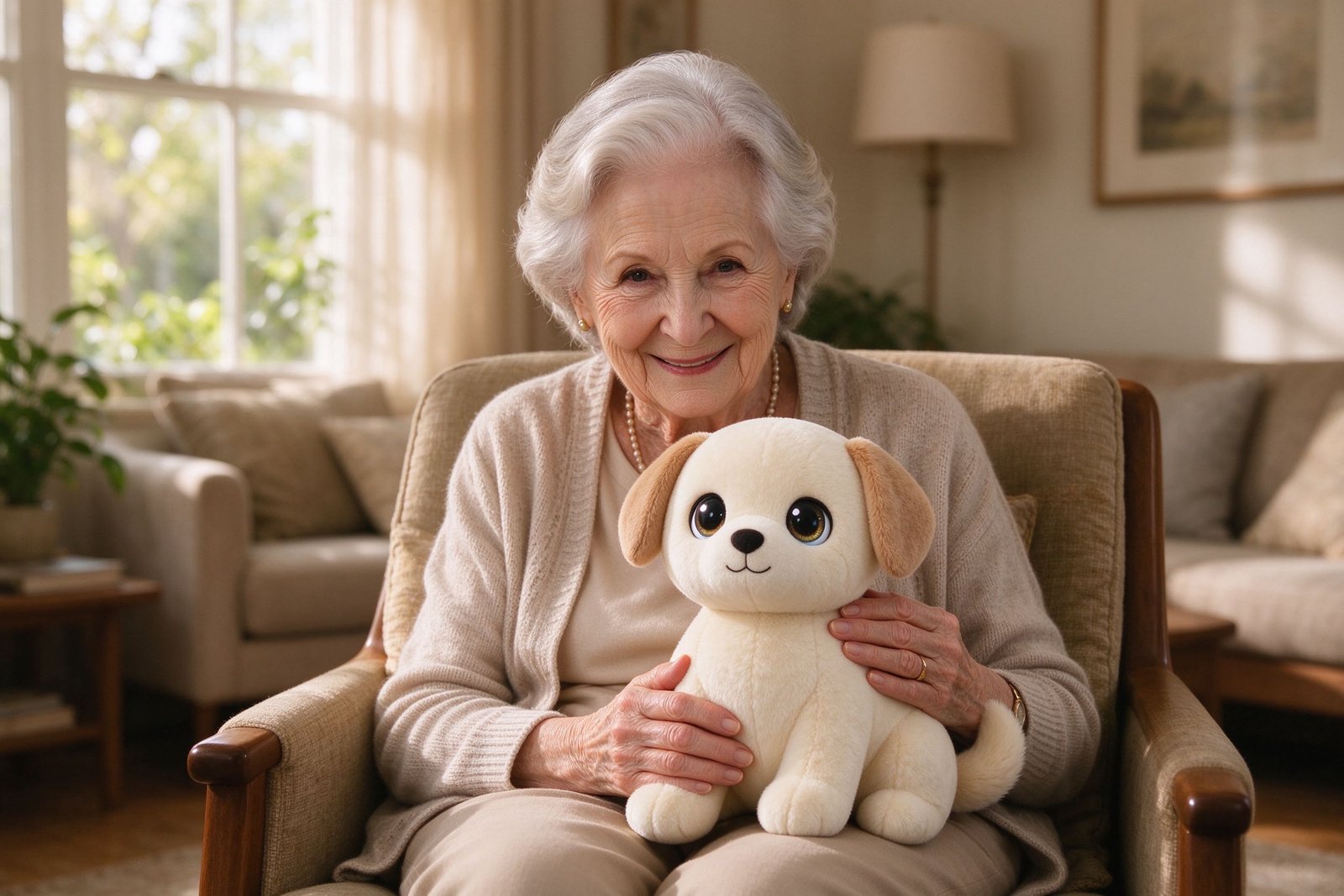
A $2,900 robot with a monthly fee sold 18,000 units in one country. Nobody is replicating it in Europe. Yet.
In December 2025, Groove X announced more than 18,000 LOVOTs living in Japanese homes and care facilities. The robot costs roughly $2,900 in hardware plus a monthly care-plan fee — and over 90% of owners are still living with theirs three years later.
Japan has 40 years of head start on this. Europe and the US are just starting, and the numbers that matter to importers are already public:
- Robotic pets market: $2.15B in 2025 → $6.26B by 2032 (16.5% CAGR) — North America is the largest region (PW Consulting Health Care).
- Elder care assistive robots: $3.4B in 2025 → $9.8B by 2033 (14.2% CAGR) (Grand View Research).
- Europe's companion robot market grew 28% in 2025, to ≈€285M — about 45,000 units (IDC Worldwide Service Robotics).
- AI companion robots for the elderly specifically: $277M in 2025 → $4.9B by 2032 (52% CAGR) (StatsMarketResearch).
Note on the numbers: analyst definitions vary — "robotic pets", "elder care robots" and "companion robots for the aged" overlap but are not identical. We quote each figure with its source and scope so you can pick the baseline that matches your category.
Why Japan Is the Proof, Not the Exception
Japan's numbers are not a robotics fairytale — they are a demographic necessity that Europe and the US are 10-15 years away from copying:
- By 2040, Japan's dementia population grows 51% versus 2020, while the working-age care labor pool shrinks 41% (Groove X).
- LOVOT's 90%+ three-year retention is the strongest engagement stat in the entire toy industry — the average plush toy is discarded within months.
- Sony's AIBO (relaunched 2018) is used by Sony Lifecare in care facilities; residents who used to stay in their rooms started joining group meals after AIBO arrived.
- PARO, the therapeutic robot seal, became the first robot pet classified as a Class II medical device by the US FDA in 2009, and has been studied in nursing homes in Japan, Denmark, the US and the UK.
The pattern is consistent: emotional attachment, not functionality, drives retention. That is why a $2,900 robot works — and why a $79 plush companion with the same software can scale 30x faster in Western retail.
What's Already Working in Europe and the US
| Player / Program | Model | What It Proves | |---|---|---| | ElliQ (Intuition Robotics) | Government-subsidized distribution via New York and California state agencies; NHS-funded trials in the UK; Germany's AOK insurer programs | State-funded procurement is a real channel — not a myth | | ASUS companion robot (2026) | Consumer hardware announcement | Large CE brands are entering — shelf competition coming | | PARO | FDA Class II medical device; dementia care studies in 4+ countries | Clinical evidence unlocks institutional buyers | | IDC Europe data | 45,000 companion units sold in Europe in 2025 (+28% YoY) | The retail channel is already moving without the US |
The Price Bands That Actually Work for Western Retail
Japan's premium model ($2,900 hardware + subscription) works there because of a homogeneous market and 30 years of robot culture. For EU/US importers, the volume opportunity sits lower:
| Band | Hardware | Monthly | Channel | Volume Reality | |---|---|---|---|---| | Premium | $500–$2,900 | $9.90–$29 | Care facilities, DTC seniors | 10k–100k units/yr globally | | Volume sweet spot | $49–$99 | $0–$6.90 | Retail chains, pharmacies, senior catalogs | Millions of units/yr | | Gift impulse | $19–$39 | $0 | Drugstore, supermarket seasonal | Highest volume, lowest retention |
The $49–$99 band is where AI plush OEM/ODM manufacturing (what Niokyar does) meets the demand curve: it clears the "real robot" price barrier, fits standard retail margins, and still leaves room for a companion app that monetizes without scaring a 75-year-old's family.
What OEMs Must Spec Differently for Seniors vs Kids
Designing an elderly companion is not a kids' toy with grey hair. Four differences matter to buyers:
- Buttons, not screens. A 75-year-old with tremors cannot pinch a capacitive slider. Physical buttons ≥ 15mm, high-contrast labels, and voice as the primary input.
- Volume and audio tuning for hearing loss. Seniors' audio needs +6–9 dB at 2–4 kHz versus children's toys. A $0.30 speaker upgrade changes perceived quality completely.
- Falls and night monitoring are a liability line, not a feature. Fall detection on a $79 plush is a promise you must not make without FDA/CE-MDR thinking — sell "companionship + reminders", not "medical device".
- Battery safety is stricter. A device that stays on the bedside 24/7 needs overcharge protection, low-heat Li-Po, and a battery cycle life of 800+ — same cells, better BMS, +$0.50 BOM.
The Takeaway Number
Japan proved emotional retention beats functionality. Europe and the US are 10 years behind Japan's curve — and the $49–$99 retail band is the entry point that doesn't exist yet.
CTA
Send us your target price band, channel (retail vs care facility) and MOQ and we'll send back a spec sheet built for seniors: button size, speaker curve, battery cycle target, and the CE/FDA boundary checklist. No sales call, just the drawing.
Email: sales@niokyar.com · Web: niokyar.com · Phone: +86 178 5975 6851
Two questions for the comments:
- Buyers: Are you testing elderly companion products for 2027, or waiting for the US big-brand wave to validate it first?
- Engineers: What's the worst failure mode you've seen in a "senior" product that was actually a kids' toy with a grey skin?
Niokyar is a B2B OEM/ODM factory for AI plush toys and early-childhood companion software, serving importers, distributors, retail chains and educational institutions in Europe and North America. From hardware, AI voice and content to CE, EN71, CPSIA, FCC, RoHS, REACH, GDPR and COPPA compliance, we ship your brand ready for shelf — before the Q4 peak.
Comments
No comments yet — be the first to share your thoughts.