2026-11-14
Costume Fabric Flammability: The 3.5 Second Test Nobody Runs
November 2026 · Fabric Costumes, Clothing Flammability Tests and the Plastic Hardware Nobody Tests for B2B Toy Buyers
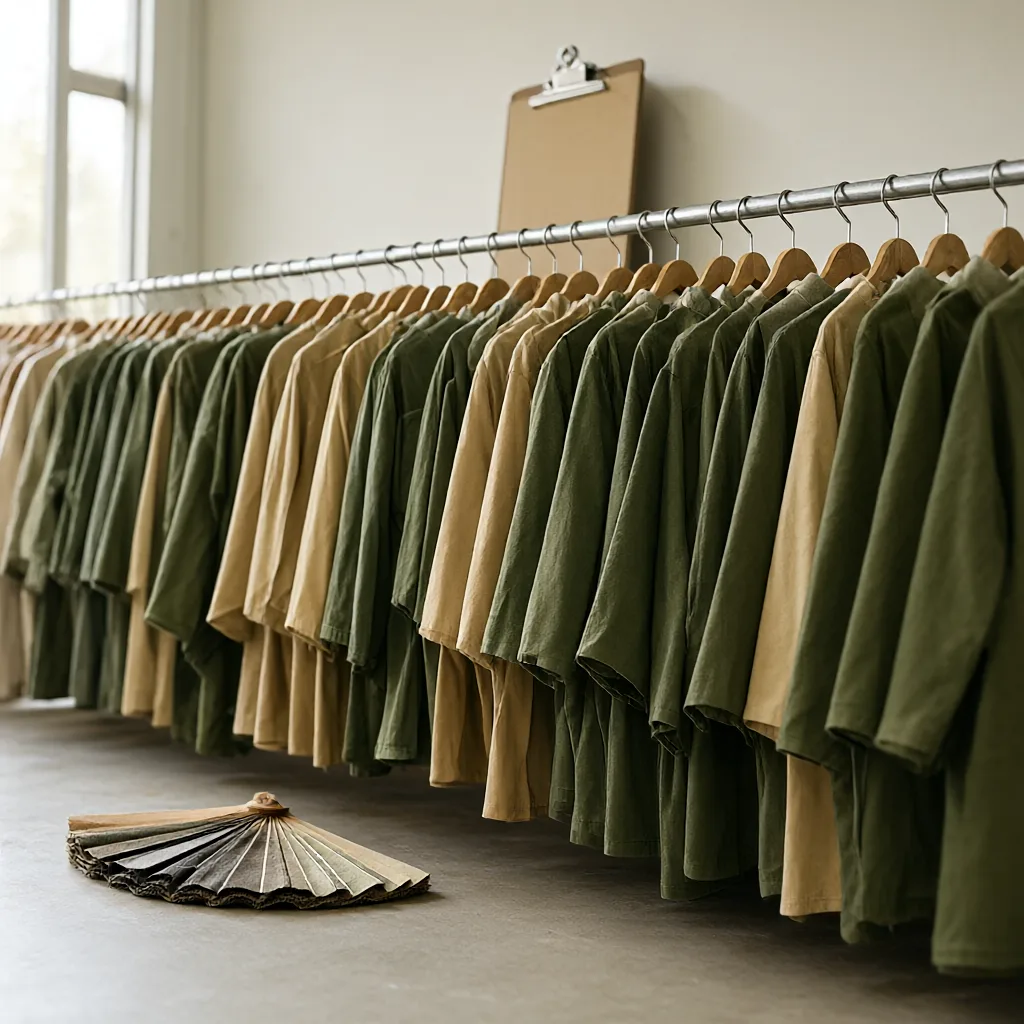
A fabric costume is the only toy where the largest component on the bill of materials is not tested as a toy. The polyester bodice, the satin cape, the tulle skirt and the felt crown are textiles, and in the United States they are judged under a different rule, at a different machine, with a different pass mark, by a different office inside the same agency. The plastic buckle on the belt is judged under the toy rules. If your laboratory report covers one and not the other, you hold a certificate that is correct about half the toy.
This article is for importers, brand owners, IP licensors and channel partners who buy dress-up sets, role-play outfits, plush-cape accessories and Halloween or carnival ranges from Chinese and South East Asian factories. It covers the fall-winter sourcing window that closes now, the specific sections of 16 CFR Part 1610 that decide whether a costume fabric passes, the record-keeping duty that turns a missing test report into a false guaranty, and the cost arithmetic of fixing a fabric after the cartons are printed.
Why November is the month costumes get signed
Dress-up sells in two peaks. The larger one is Halloween, and the smaller, more European one is carnival and Fasching in late winter, which pulls orders from the same production slots in December and January. Both peaks are fed by purchase orders signed in the third quarter, and both peaks produce the same fall-back behaviour: a retailer who sold out of one character buys a substitute style in November for the February window, and buys it fast.
That buying behaviour decides the compliance question. A fast substitute buy reuses an existing fabric stock, an existing sewing line and an existing trim, and it is common for the substitute to come from a different fabric mill than the original style, because the original mill is booked. The fabric is visually identical, the composition is declared identical on paper, and the test report attached to the technical file is the one from the original mill in spring. Nothing in the shipment tells a customs officer or a retailer's compliance team that the underlying fabric lot changed.
The same window is also when the 2027 rule changes become visible on a calendar. Any costume style that needs a tooling or sealing change in order to comply with the battery removability rules of Regulation (EU) 2023/1542 has to be tooled in December 2026 to be produced before the Chinese New Year shutdown that falls around 17 February 2027. A light-up costume, an illuminated wand, a voice box inside a plush cape and a flashing crown all carry a portable battery, and all of them sit in that window. The clause wording that covers batteries in a supply agreement, alongside eight other compliance clauses, is collected in the AI toy supply agreement clause guide.
The US rule most costume buyers skim past
The Flammable Fabrics Act, at 15 U.S.C. 1191 and following, is enforced by the Consumer Product Safety Commission for clothing textiles through 16 CFR Part 1610, the Standard for the Flammability of Clothing Textiles. Section 1610.1(e) of that part is the sentence a costume buyer should read twice. It states that the requirements of the part apply to textile fabric or related material in a form or state ready for use in an article of wearing apparel, including garments and costumes finished for consumer use.
Costumes are named in the regulation. A fairy dress sold in a toy department is still clothing when the question is how fast it burns.
Section 1610.32 then sets the general requirement: no article of wearing apparel or fabric subject to the Act may be marketed or handled if, when tested under the procedure in 16 CFR Part 1609, it is so highly flammable as to be dangerous when worn by individuals. Section 1610.3 describes the method. Each specimen is mounted in a frame at an angle of 45 degrees, brushed if it has a raised-fibre surface, a standardised flame is applied to the surface near the lower end of the specimen for one second, and the time for the flame to travel 127 mm, or five inches, up the fabric is recorded. Whether the base of a raised-surface fabric ignites or fuses is also noted.
Section 1610.4 turns that measurement into three classes. For plain surface fabric, a burn time of 3.5 seconds or more is Class 1 and is acceptable. For raised surface fabric, a burn time longer than 7.0 seconds is Class 1, and a rapid surface flash of 0.0 to 7.0 seconds is also acceptable provided the flame does not ignite or fuse the base fabric. A raised surface fabric with a burn time of 4.0 to 7.0 seconds inclusive and base burn is Class 2, intermediate, and may still be used for clothing. Class 3, rapid and intense burning, is not acceptable, and it is the class that section 1610.40 ties directly to the prohibitions on manufacture, importation and introduction into commerce in sections 3 and 4 of the Act.
Three practical consequences follow for a costume programme.
- The cape is usually a raised surface problem, not the bodice. Velour, faux fur trim, flocked tulle and brushed fleece are raised-fibre surfaces, and they are judged on a different line of the table than the plain woven or knitted bodice. A costume whose bodice passes as Class 1 can still fail because of its trim.
- Only exposed parts are tested, and the definition of exposed is generous. Section 1610.31(g) defines uncovered or exposed parts, and it counts the outer surface of an undergarment as exposed, and it lists linings with exposed areas, sweatshirts with an exposed raised fibre surface inside that could be worn napped side out, unlined hoods and rolled cuffs as examples. A reversible cape is therefore two products for test purposes, because both faces can be worn out.
- Coatings are a separate route. Section 1610.33(a)(2) allows coated fabrics, other than those with a nitro-cellulose coating, to be tested under 16 CFR Part 1611, the Standard for the Flammability of Vinyl Plastic Film, and they are compliant if their rate of burning does not exceed that specified in 1611.3. A shiny PVC-look belt, a plastic-coated cape or a metallic-look panel may therefore be tested on the film route rather than the textile route. Section 1610.34(b) adds the multi-layer complication: where an outer plastic film or plastic-coated layer separates readily from the layers below it, the outer layer is tested under Part 1611, and where it adheres, either part 1610 or part 1611 may be used, unless the conditioning procedures would damage or alter the film or coating, in which case Part 1611 governs.
EU versus US: the same costume, two different verdicts
The EU does not have a uniform clothing flammability standard equivalent to Part 1610. The costume question in Europe is routed through the Toy Safety Directive 2009/48/EC for dress-up sold as a toy and through General Product Safety Regulation (EU) 2023/988 for anything that is clothing rather than a toy, with EN 71-2 covering flammability of toy materials and EN 14878 covering burning behaviour of children's nightwear. A garment sold as a costume to a European retailer is frequently both.
This is the comparison a buyer should carry into the supplier meeting. It is written point by point rather than as a table so it stays readable on a phone.
- Instrument. US: 16 CFR Part 1610 for clothing textiles, enforced under the Flammable Fabrics Act with the statutory duties in 15 U.S.C. 1191 and following. EU: Directive 2009/48/EC with EN 71-2 for toys, Regulation (EU) 2023/988 for consumer products generally, EN 14878 for children's nightwear.
- Test method. US: 45 degree specimen frame, one second flame application, 127 mm timing, plain and raised surface assessed on separate lines of 16 CFR 1610.4. EU: EN 71-2 uses its own specimen preparation and its own flame application times and does not report a burn time in the same form, so its output cannot be converted into a US class.
- Pass criterion. US: a numeric class from 1610.4, with Class 3 prohibited for plain surface fabric below 3.5 seconds and raised surface fabric below 4.0 seconds with base burn. EU: conformity to the essential safety requirements of the Directive demonstrated through the harmonised standard, which is a technical file judgement rather than a single class number.
- Which parts are tested. US: uncovered or exposed parts per 1610.31(g) and 1610.34(a). EU: the parts and materials a child can come into contact with, assessed as part of the toy's hazard analysis and its age group.
- Coated and laminated panels. US: explicit route in 1610.33(a)(2) and 1610.34(b) to 16 CFR Part 1611. EU: the coated material is assessed as part of EN 71-2 material classes.
- Paperwork. US: the importer or domestic manufacturer certifies under 16 CFR Part 1110, and the fabric supplier issues a guaranty under section 8 of the Act which must be supported by reasonable and representative tests under 16 CFR 1610.37. EU: an EU declaration of conformity and a technical file kept for ten years under Article 21 of the Directive.
- Retention. US: three years for the test records supporting a guaranty, per 16 CFR 1610.38(d). EU: ten years for the technical documentation and the declaration of conformity.
- Enforcement consequence of missing paper. US: 16 CFR 1610.38(e) deems a person who neglects or refuses to maintain the records to have furnished a false guaranty. EU: non-conformity with the technical file, with market surveillance action at the member state level.
The point of the comparison is not that one regime is harder. It is that a single EN 71-2 report cannot answer the US question, and a Part 1610 report cannot answer the EU question, so a costume shipped to both markets needs two pieces of paper covering two different definitions of the same garment.
The clause the fabric supplier will not volunteer
Guaranties are the cheapest compliance asset in the costume business and the easiest to lose. Section 1610.37(b)(1) of the regulation sets out the statutory basis: section 8(a) of the Act, at 15 U.S.C. 1197(a), provides that no person shall be subject to criminal prosecution under section 7 for a violation of section 3 if that person establishes a guaranty received in good faith to the effect that the product, fabric or related material complies with the applicable standard. The same paragraph warns that a guaranty does not provide the holder any defence to an administrative order to cease and desist, nor to a civil action for injunction or seizure under section 6 of the Act.
Read the last sentence again, because it is the one that matters commercially. A guaranty protects against criminal prosecution. It does not protect against the seizure of your container.
Section 1610.37(c)(2) defines what a program of reasonable and representative tests is, and the definition is unusually modest: at least one test with results demonstrating conformance with the standard for the product, fabric or related material. Tests performed before the effective date of the section count, and tests performed by firms outside the United States count, and the number and frequency of tests is left to the discretion of the firm issuing the initial guaranty. For a fabric, the program may consist of tests of the particular fabric or of a fabric of the same class, where class means a category of fabrics with general constructional or finished characteristics, sometimes in association with a particular fibre, covered by a trade description.
That discretion is where fast substitute buys go wrong. A class test on a polyester plain weave is defensible. A class test on a fabric bought from a second mill in a different construction, with a different yarn count or a different finish, is much harder to defend, and section 1610.38(a)(1) requires the record to show the style or range number, fibre composition, construction and finish type of each fabric covered. Section 1610.38(b) requires class-based guaranties to keep the identification of the class test, the fibre composition, construction and finish type, and a swatch of each class guaranteed.
Section 1610.38(d) then sets the clock at three years from the date the tests were performed, or from the date the guaranties were furnished where the record is a guaranty received from someone else. Section 1610.38(e) is the sting: neglect or refusal to keep those records is treated as furnishing a false guaranty under section 8(b) of the Act.
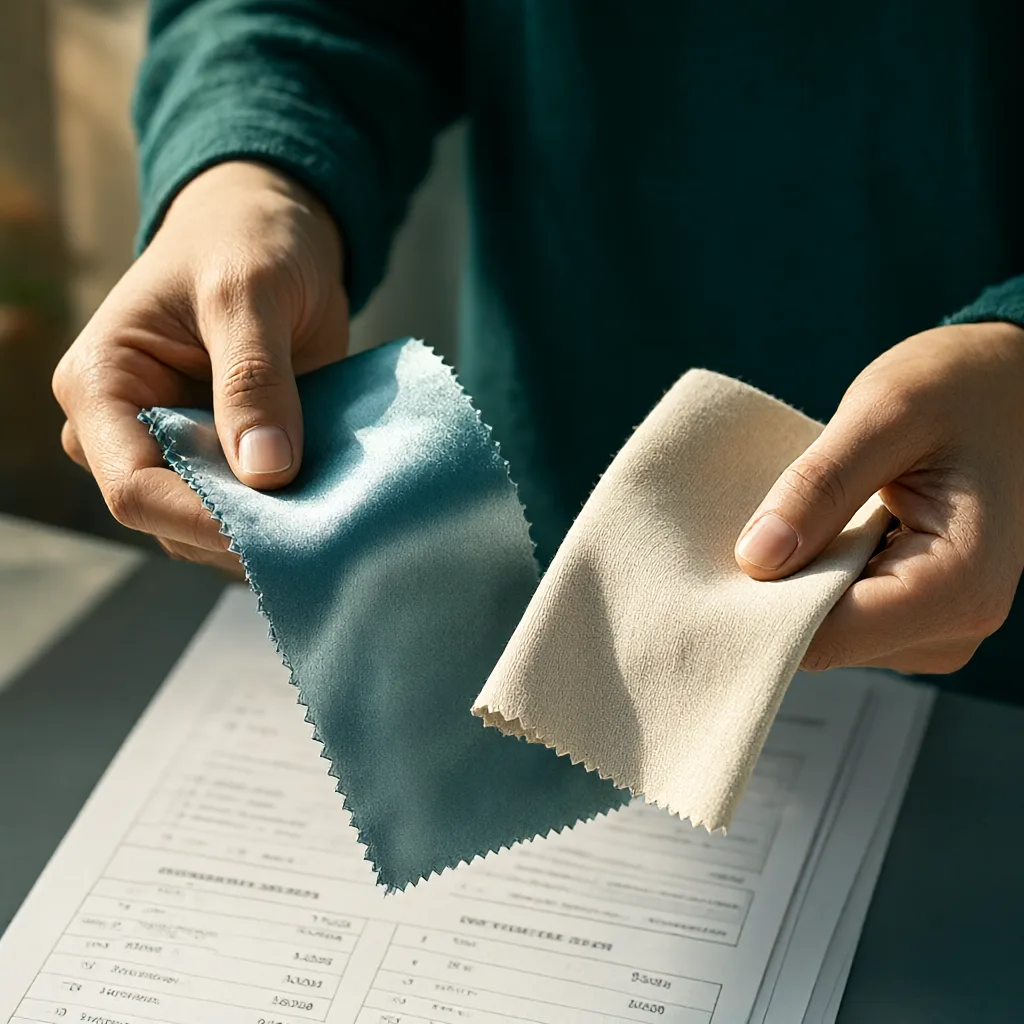
For a buyer, the practical translation is that the swatch file matters as much as the test report. A costume programme that keeps a signed guaranty, the mill's test report, and a physical labelled swatch for each fabric construction for three years has a defensible file. A programme that keeps a PDF from a mill it no longer buys from does not.
The plastic parts: where the toy rules re-enter
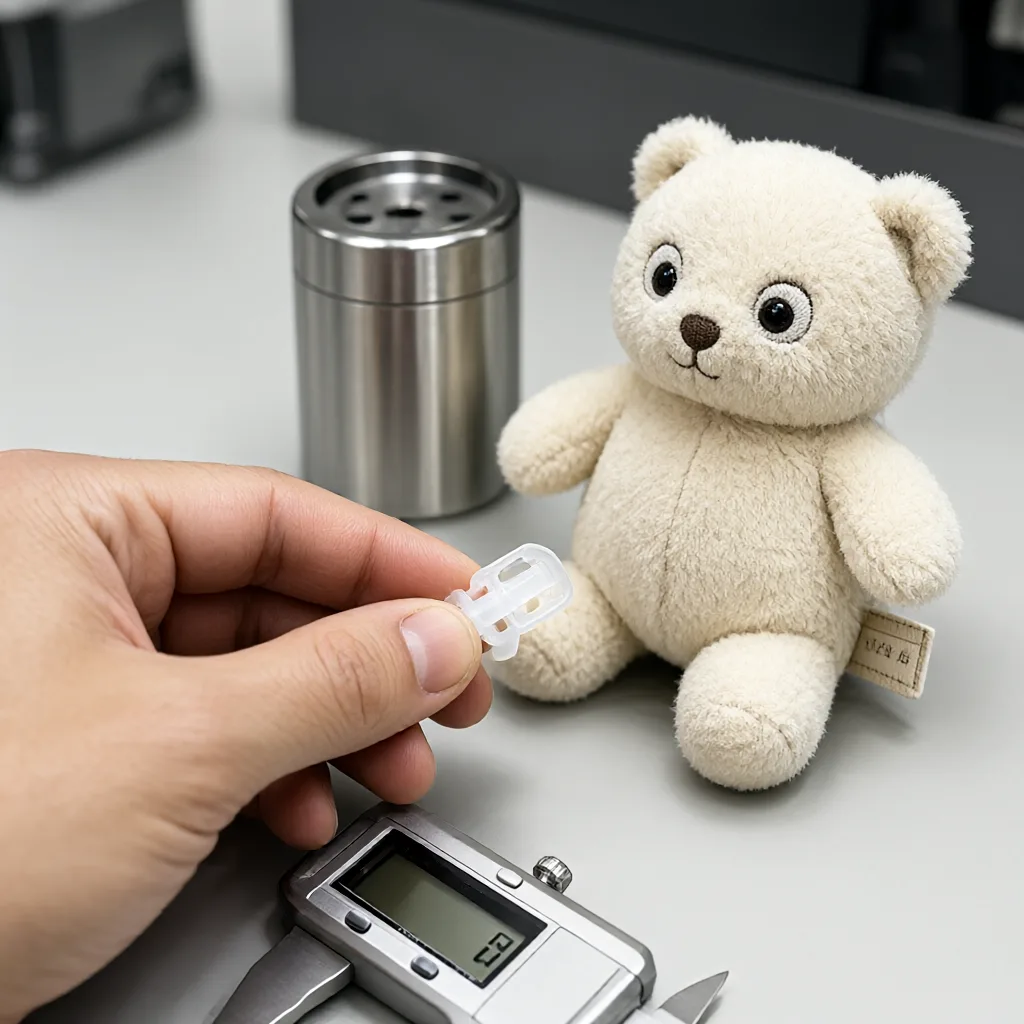
A costume is not a textile all the way down. Belt buckles, crown tiaras, wand toppers, shoe clips, plastic shoe covers, snap fasteners, light-up buttons and clip-on wings are rigid components, and they are assessed as parts of a children's product. In the United States, a component that detaches and fits entirely inside the small parts cylinder is a failure for articles intended for children under three, under the ban in 16 CFR 1500.18(a)(9) and the test in 16 CFR Part 1501. Section 1501.4(b) sets the procedure: place the article, without compressing it, into the cylinder, and if it fits entirely inside in any orientation it fails; if it does not fit, subject it to the use and abuse tests of 16 CFR 1500.51 and 1500.52, excluding the bite tests of 1500.51(c) and 1500.52(c), and any detached components or pieces that then fit entirely inside the cylinder are also a failure. Section 1501.4(b)(2) expressly excludes paper, fabric, yarn, fuzz, elastic and string from that size assessment, which is why a costume's textile is judged by burning behaviour and its buckle is judged by the cylinder.
Two exemptions in Part 1501 touch this article directly and are easy to misread. Section 1501.3(d) exempts children's clothing and accessories, such as shoelace holders and buttons, from the small parts regulation. Section 1501.3(h) exempts fingerpaints, watercolours and other paint sets. Neither exemption covers the toy-like accessory sold with the costume: a plastic crown wand, a clip-on fairy wing set, a plastic tiara in the same polybag. Age grading therefore splits the SKU. A costume sized for a three-year-old with no rigid removable parts is a clothing product for the cylinder rule. The same costume sold with a rigid plastic wand is a toy for that rule, and the wand has to pass the cylinder and the use and abuse tests on its own.
Cast a European eye over the same SKU and the evaluation moves to EN 71-1 for mechanical and physical properties, with its own small parts cylinder and its own torque and tension values, and to EN 71-2 for flammability. A component that survives the US use and abuse protocol can still be judged detachable in EN 71-1, because the applied forces and the number of cycles differ. Covering the age gate properly is its own exercise and is set out in the age grading and small parts warning label guide on this site.
The cost of getting the fabric wrong
The cost structure of a costume failure is lopsided, and buyers should price it before the order, not after. A fabric substitution discovered at the lab is cheap if it happens before bulk cutting, because the fix is a different mill lot. Discovered after cutting, the fabric is already a work-in-progress and the recovery route is rework, replacement or disposal. Discovered after the container is on water, the article cannot simply be resold or donated, because the export of noncomplying goods has its own notification rule under 16 CFR Part 1019, with a 30-day notice obligation and an express prohibition on exporting goods that have been in US commerce.
The other cost is documentation, and it is the one that fails at the retailer's vendor compliance portal rather than at the border. Retail vendor teams now ask for the Children's Product Certificate data fields under 16 CFR 1110.11 and for the underlying test report, and a costume that produces a Part 1610 report where the request was for ASTM F963-23 testing for the plastic accessory, or the reverse, is a shipment on hold while the file is rebuilt.
The cheapest insurance is a fabric control sheet per construction, kept with the mill name, the construction and finish description required by 1610.38(a)(1), the class-compatible test report, and the physical swatch required by 1610.38(b). That sheet costs a few hours of a merchandiser's time and it is the only document that survives a mill change.
A November checklist the supplier can answer in one email
The list below is written as questions, because the answers, not the questions, are what a buyer can audit.
- Which fabrics on this style are raised surface, and which of those are exposed on the outer face and any reversible face.
- Is any panel coated, laminated or film-faced, and if so is it tested under 16 CFR Part 1611 rather than Part 1610.
- Which mill produced each fabric construction in this shipment, and is that the mill on the test report.
- Does the file hold a signed guaranty from that mill, or is the only guaranty from an earlier lot.
- Are the physical swatches for each guaranteed class held on file, and where are they kept.
- Which rigid components come off the costume during use and abuse testing, and does each one fail or pass the 16 CFR 1501.4 cylinder.
- Does the polybag contain a rigid accessory that turns the SKU into a toy for small parts purposes.
- Is the age grade on the hangtag consistent with the plastic parts analysis, not just the fabric analysis.
- For light-up styles, what is the battery model, and does the housing meet the removability expectation of Article 11 of Regulation (EU) 2023/1542 before the 2027 date.
- For EU-bound styles, which member state languages are on the instructions and on the warning text.
A buyer who gets ten answers, with mill names and report numbers, has a programme. A buyer who gets a single PDF and a statement that the factory has passed all tests does not, and the difference only becomes visible in the month the container is held.
Where this sits beside the rest of the file
Costumes are rarely the whole order. They sit next to plush, voice-enabled companions and learning tablets in the same purchase order, and the compliance file has to hold them all. The importer's certificate obligations are the same across the range, and the data fields are collected in one annex in the certificate requirements guide on this site.
The flame test also connects to two other decisions discussed on this site. The first is age grading, because a costume for a two-year-old who also gets a wand has a plastic-part problem that a costume for a five-year-old does not. The second is the report a third-party laboratory returns, because EN 71-2 output and Part 1610 output are not interchangeable, and a lab that writes both will quote both as separate line items.
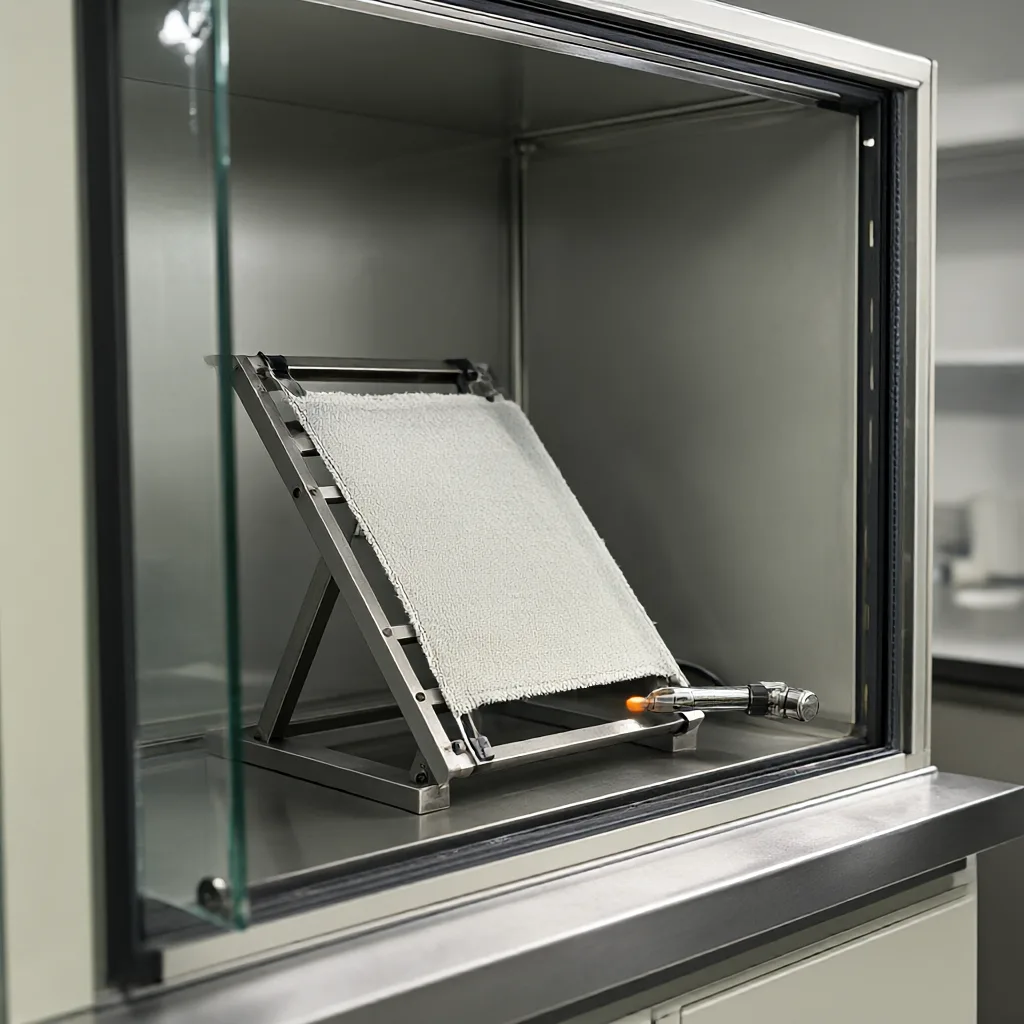
The 45-degree frame, the one-second flame and the 127 mm mark have not changed since the standard was last printed, and the smallest number in the regulation is the one worth carrying into the negotiation: three years of records, or a false guaranty. A costume that burns slowly is a design outcome. A costume whose slowdown cannot be proved is a legal exposure, and only one of the two can be fixed after the cartons are printed.
Sources
- eCFR, 16 CFR Part 1610, Standard for the Flammability of Clothing Textiles, section 1610.1 Purpose, scope and applicability, including 1610.1(e) on costumes finished for consumer use. https://www.ecfr.gov/current/title-16/chapter-II/subchapter-B/part-1610/section-1610.1
- eCFR, 16 CFR 1610.3, Summary of test method, 45 degree specimen frame, one second flame application and 127 mm timing. https://www.ecfr.gov/current/title-16/chapter-II/subchapter-B/part-1610/section-1610.3
- eCFR, 16 CFR 1610.4, Requirements for classifying textiles, Class 1, Class 2 and Class 3 burn time criteria. https://www.ecfr.gov/current/title-16/chapter-II/subchapter-B/part-1610/section-1610.4
- eCFR, 16 CFR 1610.31 and 1610.33, definitions of uncovered or exposed parts and the testing route for coated fabrics including 1610.33(a)(2). https://www.ecfr.gov/current/title-16/chapter-II/subchapter-B/part-1610
- eCFR, 16 CFR 1610.34, Only uncovered or exposed parts of wearing apparel to be tested, including the multi-layer and film provisions in 1610.34(b). https://www.ecfr.gov/current/title-16/chapter-II/subchapter-B/part-1610/section-1610.34
- eCFR, 16 CFR 1610.37, Reasonable and representative tests to support guaranties, and 15 U.S.C. 1197(a) as quoted in 1610.37(b)(1). https://www.ecfr.gov/current/title-16/chapter-II/subchapter-B/part-1610/section-1610.37
- eCFR, 16 CFR 1610.38, Maintenance of records by those furnishing guaranties, three-year retention and the false guaranty consequence in 1610.38(e). https://www.ecfr.gov/current/title-16/chapter-II/subchapter-B/part-1610/section-1610.38
- eCFR, 16 CFR 1610.40, Use of alternate apparatus, procedures or criteria for tests for guaranty purposes, and the prohibition of rapid and intense burning under sections 3 and 4 of the Act. https://www.ecfr.gov/current/title-16/chapter-II/subchapter-B/part-1610/section-1610.40
- eCFR, 16 CFR Part 1611, Standard for the Flammability of Vinyl Plastic Film, including 1611.3 burn rate. https://www.ecfr.gov/current/title-16/chapter-II/subchapter-B/part-1611
- eCFR, 16 CFR Part 1501, Method for Identifying Toys and Other Articles Intended for Use by Children Under 3 Years of Age Which Present Choking, Aspiration or Ingestion Hazards, sections 1501.2, 1501.3 exemptions, 1501.4 test procedure and 1501.5. https://www.ecfr.gov/current/title-16/chapter-II/subchapter-B/part-1501
- eCFR, 16 CFR 1500.18(a)(9), banned hazardous substances, small parts. https://www.ecfr.gov/current/title-16/chapter-II/subchapter-B/part-1500/section-1500.18
- eCFR, 16 CFR 1500.51 and 1500.52, use and abuse tests for children under 36 months and for children 36 to 96 months, including the excluded bite tests. https://www.ecfr.gov/current/title-16/chapter-II/subchapter-B/part-1500
- eCFR, 16 CFR Part 1609, Text of the Flammable Fabrics Act and rules and regulations, test procedure incorporated by reference from 1610.3. https://www.ecfr.gov/current/title-16/chapter-II/subchapter-B/part-1609
- eCFR, 16 CFR Part 1019, Export of noncomplying, misbranded or banned products, 30-day notification and goods in commerce. https://www.ecfr.gov/current/title-16/chapter-II/subchapter-B/part-1019
- eCFR, 16 CFR Part 1110, Requirements pertaining to certificates of compliance, including 1110.11 certificate content. https://www.ecfr.gov/current/title-16/chapter-II/subchapter-B/part-1110
- EUR-Lex, Directive 2009/48/EC on the safety of toys, essential safety requirements, conformity assessment and Article 21 retention of technical documentation. https://eur-lex.europa.eu/eli/dir/2009/48/oj
- EUR-Lex, Regulation (EU) 2023/988 on general product safety, applicable to consumer products outside the toy scope. https://eur-lex.europa.eu/eli/reg/2023/988/oj
- EUR-Lex, Regulation (EU) 2023/1542 concerning batteries and waste batteries, Article 11 on removability and replaceability of portable batteries. https://eur-lex.europa.eu/eli/reg/2023/1542/oj
Comments
No comments yet — be the first to share your thoughts.