2026-11-24
Dock Receipt, Not Lab Report: Five Clocks That Hold Your Container
November 2026 · A receiving-dock and entry-document audit for importers, brand owners, IP licensors and channel buyers bringing AI plush, companion robots and educational toys into the United States and the EU ahead of the 2027 season

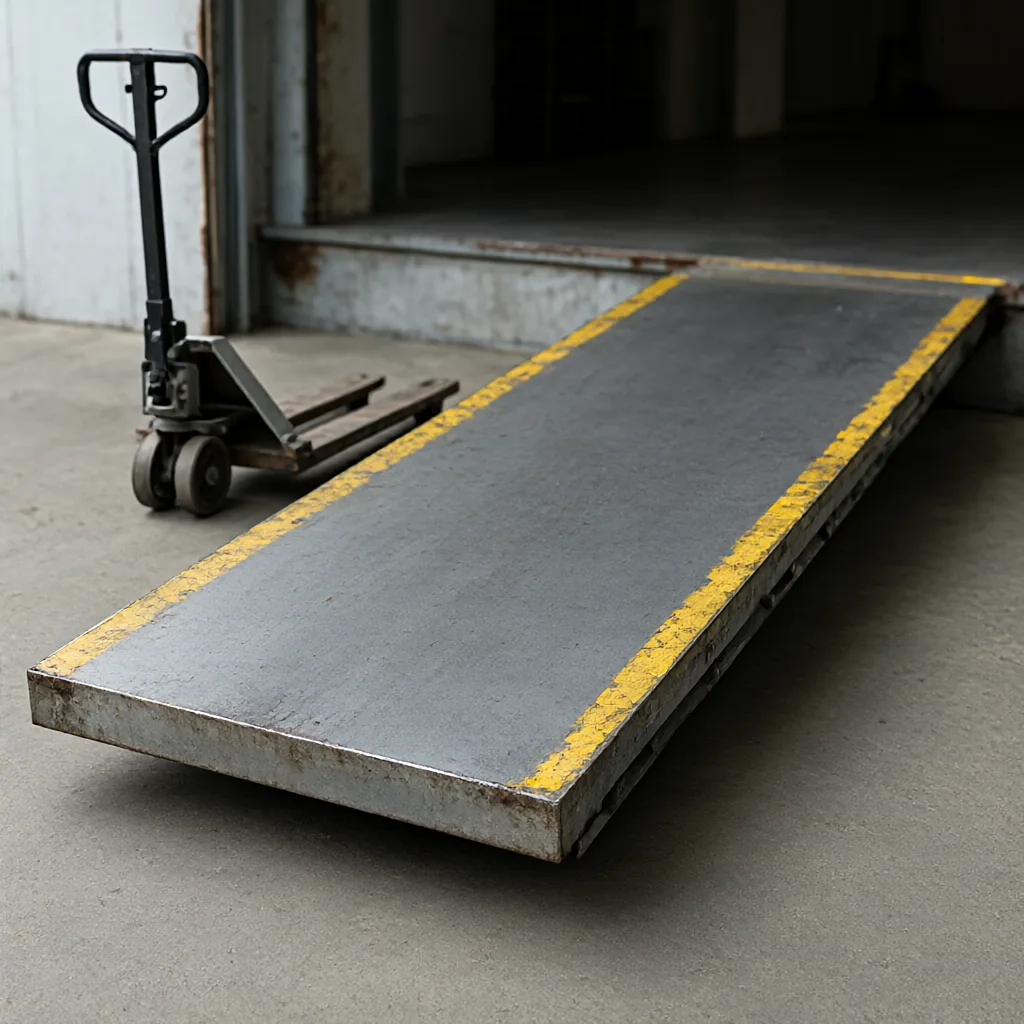
A container of plush toys can clear customs in a day, or it can sit on a chassis in a port yard for three weeks, and the difference is almost never the goods. It is a document that was created too late, or a certificate that existed as a PDF on somebody's laptop in Shenzhen instead of a URL that a customs officer could open at the moment the shipment became available for inspection.
The regulation that decides this is short, and it is public. 16 CFR 1110.13(a)(1) says an electronic children's product certificate satisfies the requirement to "accompany" a shipment if it is identified by a unique identifier and can be accessed via a web URL, and if that URL and identifier were created in advance and are available to the Commission or to customs authorities as soon as the product or shipment is available for inspection. Read that sentence again with a dock in mind: created in advance. Not created when the buyer asks for it in March. Not created after the container is already held.
Note: the rule does not require a paper certificate, and it does not require the certificate to travel in the carton. It requires the certificate to be reachable at the exact moment an officer wants to see it. That is a software requirement wearing a logistics costume, and most small and mid-size buyers who source AI plush have never treated it as one.
This article is for the people who sign the purchase order and then wait for the truck: importers, brand owners, IP licensors approving 2027 lines, and channel buyers auditing a supplier before Nuremberg. It covers the four clocks that start when the ship berths, the paperwork that has to exist before vessel arrival rather than after, what an entry summary deadline actually does to your cash, the certificate-as-URL mechanic in detail, how the same question is answered in the EU under the Toy Safety Directive regime, and the receiving-dock checklist that catches all of it. Nothing here is legal advice; every rule cited is linked at the end.
The four clocks that start at the berth
Almost every delay a buyer experiences at the dock traces to one of four deadlines. They are short, they are different lengths, and they are easy to confuse because they all start around the same event.
- Time for filing entry: 19 CFR 142.2(a) gives the importer 15 calendar days after landing from a vessel, aircraft or vehicle, or after arrival at the port of destination for merchandise moved in bond, to enter the merchandise. Fifteen days sounds generous until you remember that it is a deadline to file, not a buffer you are entitled to use.
- Deposit of estimated duties: 19 CFR 141.101 sets when the money moves. If merchandise is released under entry documentation before the entry summary is filed, the deposit of estimated duties is made at the time the entry summary is filed, unless one of the listed exceptions applies. In practice the money and the summary travel together.
- Entry summary: 19 CFR 142.12 requires the entry summary to be filed within 10 working days after the time of entry, and 142.13 lets CBP require it at the time of entry before release for importers who have repeatedly failed to file timely. The second half of that sentence is the part buyers underestimate: a bad history with one importer of record turns a courtesy into a precondition.
- Release of merchandise: the entry documentation in 19 CFR 142.3 is what secures release. CBP Form 3461 or its electronic equivalent, evidence of the right to make entry under 19 CFR 141.11, and a commercial invoice, with defined exceptions where a pro forma invoice or other acceptable documentation may stand in.
The practical shape of this: entry documentation buys you release, the entry summary settles the account, and the duty deposit rides along with whichever of the two is acting as the trigger. If your broker is waiting on a factory to send a corrected invoice before filing, you are burning the 142.2 clock without any of it being the broker's fault.
What has to exist before the vessel arrives
The single highest-leverage change a buyer can make is to move document production earlier than arrival. 19 CFR 142.2(b)(1) explicitly allows the entry documentation required by 142.3(a) to be submitted before the merchandise arrives within the limits of the port where entry is to be made, with the time of entry then governed by 19 CFR 141.68(a). 19 CFR 142.2(b)(2) allows the entry summary, where it will serve as both entry and entry summary under 142.3(b), to be submitted for preliminary review under 141.63(a) and 142.12(a)(2).
What does that mean for a toy order? It means the following should be finished and sitting with the broker before the vessel berths, not after:
- Commercial invoice, matching the packing list and the actual container contents, in the currency and units the purchase order used.
- Evidence of the right to make entry under 19 CFR 141.11, meaning the bill of lading or the carrier release that establishes who may enter the goods.
- The entry summary data, so that the broker can file the summary acting as both entry and summary if that is the agreed method.
- The children's product certificate, reachable rather than merely drafted, per the mechanic in 16 CFR 1110.13.
- Any test reports the certificate relies on, already loaded and reachable at the same address, because 16 CFR 1110.15 keeps legal responsibility for accuracy, completeness and timely availability with the entity required by CPSA section 14(a) to issue the certificate. That entity is the importer or domestic manufacturer, not the factory and not the lab.
Note: "created in advance" in 1110.13 is the operative phrase for the whole article. A certificate that is accurate but created on demand, after inspection has been requested, does not satisfy the availability requirement as written, because the URL and identifier were not available as soon as the shipment was available for inspection.
The certificate-as-URL mechanic, in detail
16 CFR 1110.11 defines what the certificate must contain. It is worth reading as a checklist rather than a paragraph, because every line is a place where a factory-issued draft tends to be wrong.
- Identification of the product covered by the certificate.
- Citation to each CPSC product safety regulation or statutory requirement the product is certified to, and the rule requires each applicable consumer product safety rule to be identified separately. "Complies with CPSC regulations" is not a citation.
- Identification of the importer or domestic manufacturer certifying compliance, including the importer's contact information.
Then 1110.13 adds the availability layer, and 1110.13(b) adds something buyers skip entirely: the electronic certificate must have a means to verify the date of its creation or last modification. If your certificate platform shows a PDF with no version timestamp, that is a gap against 1110.13(b), and it is the kind of gap that reads badly when an officer is deciding whether to release or to examine.
Here is the comparison that matters for a dual-market order, written as a direct item-by-item contrast:
Requirement to accompany a shipment: US practice under 16 CFR 1110.13(a)(1) accepts an electronic certificate reachable by a unique identifier plus a URL, with the URL and identifier created in advance and available to CBP as soon as the shipment is available for inspection. EU practice under the Toy Safety Directive regime expects the technical documentation and the EC Declaration of Conformity to be held and made available to market surveillance authorities, with the declaration accompanying the product in the sense the applicable national rules require, and the coming digital product passport work moves that availability expectation toward a machine-readable record.
Who is legally on the hook for the certificate: US, the importer or domestic manufacturer who issues it, per CPSA section 14(a) as implemented by 16 CFR 1110.15, regardless of who operates the platform storing it. EU, the manufacturer placing the toy on the market, with the importer carrying a verification duty for the products it places.
What a customs or surveillance officer actually asks for: US, the certificate and the underlying test reports, reachable at the moment of inspection. EU, the technical file and the declaration, produced on request.
Where the cost sits: US, the electronic availability requirement is close to free if the platform exists and can be expensive and slow if it does not, because retrofitting a URL and identifier after inspection begins cannot satisfy the "created in advance" wording. EU, the documentation is a fixed cost of doing business that scales with the number of SKUs and the number of languages.
The strategic read for a buyer is that the US requirement rewards infrastructure and punishes improvisation, which is the opposite of how most sourcing teams plan. They plan documents as a deliverable that arrives with the shipment. The rule treats documents as a service that must be live before the shipment can be inspected.
Important: do not let a supplier tell you the certificate is "on the way". Under 1110.13 the question is not whether a certificate exists, it is whether a specific URL and a specific unique identifier were live and available at the relevant moment. A certificate that arrives by email the next morning fails the requirement as written, even if its content is flawless.
What a held container actually costs

A container that is not released does not simply wait. It accrues, and the accrual is what turns a document problem into a margin problem.
The visible layers are demurrage, which is charged by the ocean carrier for containers staying at the terminal beyond free time, and detention, which is charged for equipment held outside the terminal. The less visible layer is the line stop: your factory's production slot, your retail delivery window and your advertising calendar were all planned against an arrival date that no longer holds. For a plush order that was timed to hit a Q1 channel reset, a two-week hold can push it past the reset entirely, and the goods then sell into a weaker window at a worse price.
There is a third layer that buyers rarely cost out. Examination at the port, once triggered, is a physical event with a scheduling queue. If the trigger was a certificate availability failure, the fix is not to argue at the dock; it is to produce the certificate in the required reachable form, and then wait for the examination slot. The cost of the wait is not the exam fee, it is the days.
This is why the 2027 planning calendar matters now. Spielwarenmesse runs 2 to 6 February 2027 in Nuremberg. A buyer who samples in early February and places production orders on the back of it is working backward from a retail reset, and the reverse-scheduled arrival date is the one that must be protected by document readiness, not by hopeful scheduling. The article on the sample and lab queue for that show covers the factory side of that calendar; this one covers the port side.
The receiving-dock checklist
Print this. It is nine lines, and every line maps to a rule above.
- Entry documentation drafted and with the broker before vessel arrival, per the pre-arrival option in 19 CFR 142.2(b)(1).
- Commercial invoice reconciled line by line against the packing list, and against the purchase order's currency and unit of measure.
- Evidence of the right to make entry confirmed under 19 CFR 141.11, with the bill of lading and any carrier release in the broker's hands.
- Entry summary data prepared so the summary can file within the 10 working days after the time of entry required by 19 CFR 142.12, or at the time of entry where 142.13 applies.
- Duty deposit instruction confirmed against 19 CFR 141.101, with the funding in place for the date the summary files.
- Children's product certificate live at a URL with a unique identifier, created before arrival, per 16 CFR 1110.13(a)(1).
- Certificate content checked against 16 CFR 1110.11, with each applicable rule cited separately and the importer of record named with contact details.
- Creation and last-modification date verifiable on the certificate, per 16 CFR 1110.13(b).
- Underlying test reports reachable at the same address, with the legal responsibility understood to sit with the importer under CPSA section 14(a) and 16 CFR 1110.15.
For a dual-market order that ships to both the US and the EU, add a tenth line: confirm that the EU technical file and declaration exist in the form the destination member state requires, because the availability mechanic on the European side is a different instrument with a different custodian, even where the underlying test data is the same. Buyers who run one lab report for both markets are not wrong, but they are only halfway if the documentation wrappers are not built for both.
The three questions to ask before you wire the deposit

If a buyer takes one thing from this, it should be a short interrogation of the supplier and the broker before the production deposit leaves.
First, ask the supplier for the certificate URL and the unique identifier, not the certificate. If the answer is a PDF attachment, you have just found a 1110.13 exposure, and it is better to find it in November than in the week the vessel berths. The article on the five-minute lab-scope check covers the report side of the same audit; this one covers whether the certificate built on top of it is actually reachable.
Second, ask the broker three dates in writing: the date entry documentation will be filed, the date the entry summary will be filed, and the date the duty deposit will move. Those three dates map to 19 CFR 142.2, 142.12 and 141.101, and a broker who cannot give them is a broker who has not yet seen the invoice. If the invoice itself is the thing that keeps changing, the discipline described in our customs valuation and assists breakdown is the upstream fix.
Third, ask who is named as the certifying entity on the certificate. If it is not your entity or your designated importer of record, the certificate may be accurate and still not be yours, and the legal responsibility under 16 CFR 1110.15 attaches to the entity the statute names, not to the factory that wrote the file.
Where this fits in the 2027 order calendar
The dovetail is straightforward. A buyer who is preparing for Nuremberg in early February 2027 is, at the same time, finalizing the producing order that follows the show. The show is the sample event; the port is the cash event. Every day saved on the documentation side between January and March is a day of free time and a day of retail window preserved, and it costs nothing but the discipline of asking for a URL instead of a file.
The buyers who get hurt in 2027 will mostly not be hurt by a compliance failure in the ordinary sense. Their goods will be legal. They will be held because the proof of legality was not reachable when a customs officer looked. That is a fixable problem, and the fix belongs in the purchase order terms, in the supplier onboarding pack, and in the nine-line dock checklist above.
Sources
- 19 CFR 142.2, Time for filing entry, including the 15 calendar day rule and the pre-arrival entry options. https://www.ecfr.gov/current/title-19/chapter-I/part-142/section-142.2
- 19 CFR 142.3, Entry documentation required, listing CBP Form 3461 or electronic equivalent, evidence of the right to make entry and the commercial invoice. https://www.ecfr.gov/current/title-19/chapter-I/part-142/section-142.3
- 19 CFR 142.12, Entry summary documentation, including the 10 working day filing requirement after the time of entry. https://www.ecfr.gov/current/title-19/chapter-I/part-142/section-142.12
- 19 CFR 142.13, When entry summary must be filed at time of entry. https://www.ecfr.gov/current/title-19/chapter-I/part-142/section-142.13
- 19 CFR 141.101, Time of deposit of estimated duties. https://www.ecfr.gov/current/title-19/chapter-I/part-141/section-141.101
- 19 CFR 141.11, Evidence of right to make entry. https://www.ecfr.gov/current/title-19/chapter-I/part-141/section-141.11
- 19 CFR 141.68, Time of entry. https://www.ecfr.gov/current/title-19/chapter-I/part-141/section-141.68
- 16 CFR 1110.11, Content of certificate. https://www.ecfr.gov/current/title-16/chapter-II/subchapter-C/part-1110/section-1110.11
- 16 CFR 1110.13, Availability of electronic certificate. https://www.ecfr.gov/current/title-16/chapter-II/subchapter-C/part-1110/section-1110.13
- 16 CFR 1110.15, Legal responsibility for certificate information. https://www.ecfr.gov/current/title-16/chapter-II/subchapter-C/part-1110/section-1110.15
- Consumer Product Safety Act section 14(a), 15 U.S.C. 2063(a), the statutory certificate requirement implemented by 16 CFR part 1110. https://uscode.house.gov/view.xhtml?req=granuleid:USC-prelim-title15-section2063&num=0&edition=prelim
Disclosure: the regulatory citations above are quoted or paraphrased from the current electronic editions of the Code of Federal Regulations and the United States Code. Nothing in this article is legal advice, and duty rates, tariff treatment and port practice should be confirmed with your licensed customs broker and counsel for the specific entry at issue.
Comments
No comments yet — be the first to share your thoughts.