2026-10-28
AI Learning Tablet vs AI Companion Robot: Which SKU Should You Import in 2027?
Every year around this time, importers and brand owners sit down with the same spreadsheet question: do we add an AI learning tablet to the 2027 range, or do we ride the AI companion robot wave? Both categories sell to the same family. Both are powered by the same cloud voice stack. Both are quoted by the same factories in Shenzhen and Dongguan. And yet they behave like completely different businesses once the container lands.
This guide breaks the decision down the way a buyer actually has to make it: capital exposure, certification cost, return rate risk, content liability, and the calendar window that decides whether you have stock for Q4 2027 at all. There is no universal winner here. There is a right answer for your channel, your cash position and your appetite for after-sales support.
Why buyers are stuck between these two SKUs in 2027
Three things changed between the 2025 and 2027 buying cycles.
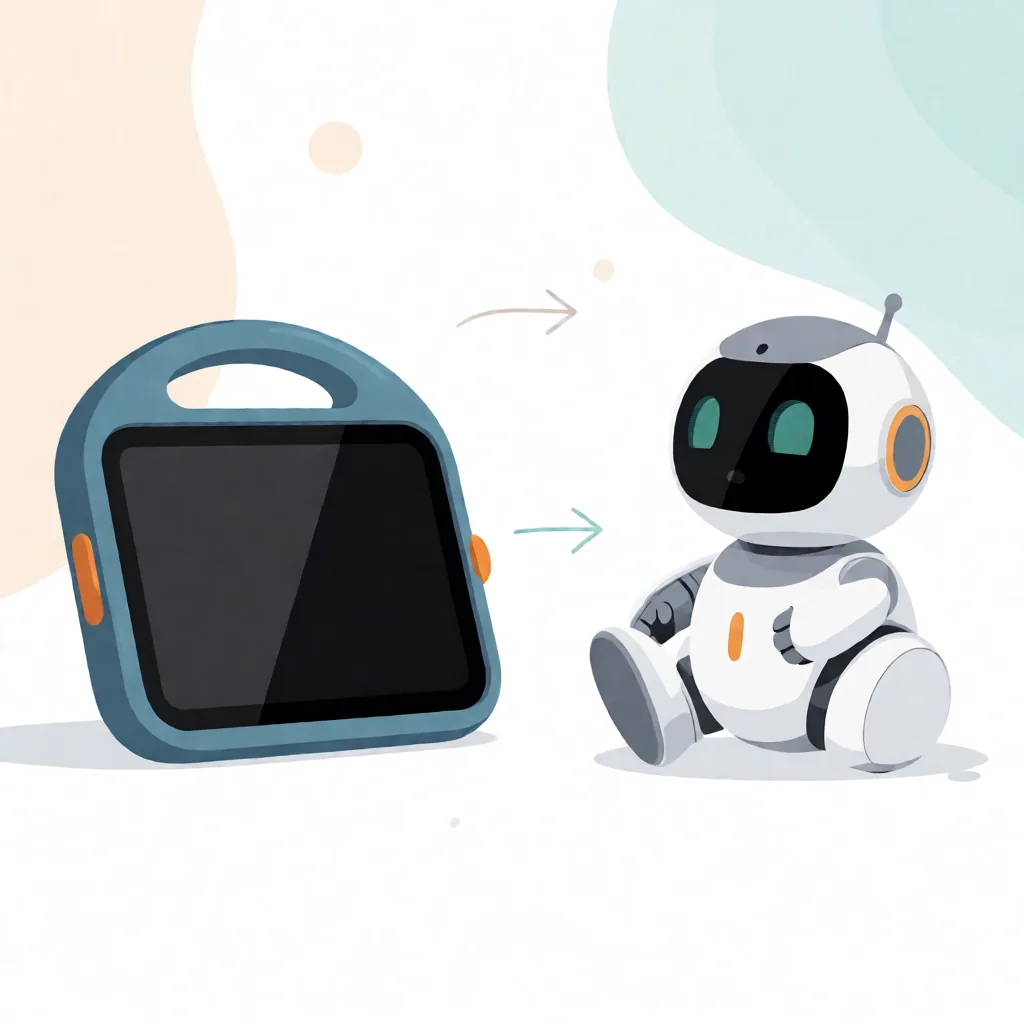
First, the AI tag stopped being a differentiator and became a default. Distributors who paid a premium in 2025 for a toy that could talk now get the same capability from a dozen factories, which means the conversation has moved from "does it have AI" to "which form factor sells through". Second, the two form factors matured at different speeds. Learning tablets converged on a well-understood Android-based hardware platform, while companion robots are still splintering into plush bodies, desktop robots and charm-sized wearables, each with its own tooling cost and quality profile. Third, retail buyers started asking for both from the same supplier list, which puts the comparison directly in your inbox.
The trap is treating the comparison as a product question. It is not. It is a capital and liability question dressed up as a product question.
The one paragraph answer
If you sell through Amazon, Walmart or a major marketplace and you want the lowest return rate and the calmest compliance file, the AI learning tablet is the safer 2027 bet, provided you can defend the content pipeline. If you sell through social commerce, specialty toy, gift or pop-up channels and you want higher margin per unit with faster trend response, the AI companion robot wins, provided you can absorb fabric quality risk and a longer tail of after-sales questions. If you have room for only one new SKU and a limited budget for tools and certification, start with the tablet for a broad range and the robot for a personality-led range.
Side by side: the six numbers that decide the order
Below is the comparison most buyers never run properly. Each row is a real cost or risk line that shows up in the P and L or in the account health dashboard, not a marketing claim.
- Typical tooling exposure — AI learning tablet: Low. Standard enclosures, mostly off-the-shelf moulds with a custom bumper or frame. AI companion robot: High. Custom face shells and plush bodies mean new moulds and new pattern sets.
- Certification scope — AI learning tablet: Electronics plus toy safety. EMC and radio work is the main cost. AI companion robot: Toy safety plus plush and fabric testing, plus electronics. More test reports, more samples.
- Return rate drivers — AI learning tablet: Screen damage, battery life complaints, content boredom. AI companion robot: Fabric wear, hair and dirt pickup, motors and hinge failure, "it is not smart enough".
- Content liability — AI learning tablet: High. Every word on the screen is your responsibility. AI companion robot: Medium to high. Voice replies and persona drift are your responsibility.
- After-sales volume — AI learning tablet: Low touch. Firmware and content updates fix most issues. AI companion robot: High touch. Physical wear, cleaning questions, replacement skins, emotional attachment complaints.
- Reorder cadence — AI learning tablet: One wave per school year plus one for holiday. AI companion robot: Continuous, trend-sensitive, gift-driven spikes.
Where the real money sits: capital exposure and tooling
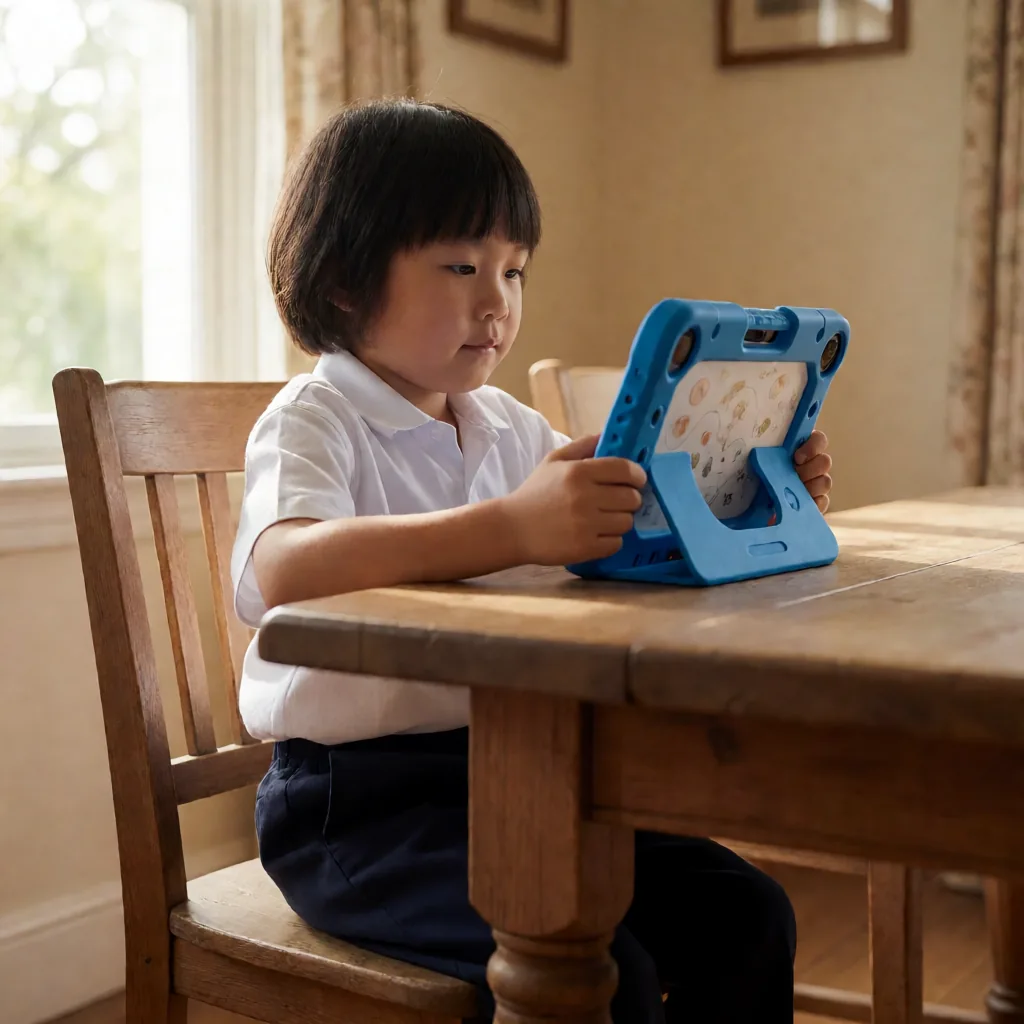
The learning tablet category has one enormous advantage for a first-time importer: the hardware platform is boring. Screen suppliers, battery suppliers and enclosure factories have been servicing this category for years, so a buyer can walk in with a reference design, request a private label frame and bumper, and get to a saleable unit without paying for a full industrial design programme.
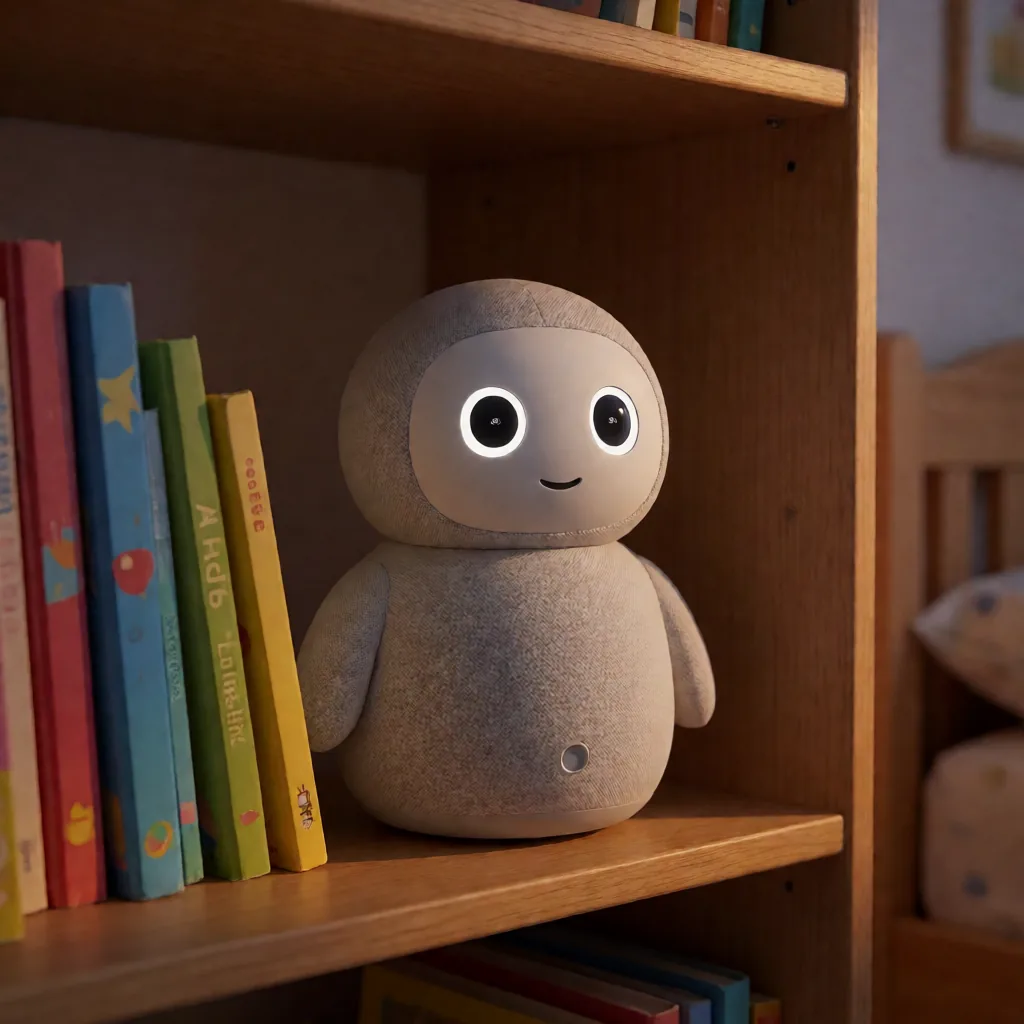
The companion robot is the opposite. Its value is its face and its body. That body usually involves plush sewing patterns, an internal skeleton or hinge set, and a face plate with tolerances tight enough that a two-millimetre shift changes the expression. Every one of those steps is a tooling line item, and none of them can be recycled into your next SKU if the robot flops.
That does not make the robot a bad buy. It makes it a buy you should only make when you already have a read on your audience. If you are launching an unproven category for a new customer base, the tablet lets you test the market for the cost of a bumper and a generic shell.
Before you commit either way, get tooling cost separated from product cost in the quotation. Our breakdown of the hardware and subscription economics behind a low-cost AI toy shows where tooling cost has to be amortised, and the same logic applies to a tablet bumper and a robot face plate.
Certification: the same rules, very different paperwork
Both products land in the United States under a toys framework. The mandatory toy safety standard is 16 CFR 1250, which incorporates ASTM F963-23, so a physical toy for children is tested against the same core standard whether it is plastic, fabric or a hybrid. In the European Union, both fall under the Toy Safety Directive and, once the new Toy Safety Regulation applies, the same risk-based documentation expectation.
The difference is volume of evidence, not the rulebook. A tablet test programme is dominated by electrical safety, electromagnetic compatibility and radio spectrum work, plus the screen and battery-specific items your lab will flag. A companion robot adds plush and textile testing, colourfastness, small parts for young ages, seams and stuffing integrity, plus the same electrical and radio work if it has a motor, a speaker and a wireless module.
There is a customs dimension that catches first-time importers too. Most authorities will treat a dedicated children's learning tablet as a toy, while a general-purpose tablet may be classified as an automatic data processing machine. The two classifications have very different duty profiles and reveal different compliance obligations. Ask your broker to rule on classification before you place the order, not after the container sails. The documentation reality of a European launch is covered in our guide to German TÜV and GS certification for imported AI plush, and the same sample-heavy logic applies to both SKUs.
Content liability: the line that actually kills SKUs
This is where buyers underestimate the work. A talking toy is a content distribution business that happens to ship in a box.
On the tablet side, the content surface is enormous. Lesson libraries, voice prompts, story packs, parental dashboards and the occasional user-generated request all pass through your product, and under the US Children's Online Privacy Protection Rule, a product directed to children under 13 is subject to specific collection and consent obligations. Every feedback loop you build into a learning tablet, including audio capture for pronunciation scoring, needs a coherent answer for what is collected, where it is stored and how it is deleted.
On the robot side, the surface is narrower but stickier. A companion robot is judged on persona. When the reply sounds off, the customer does not say the content is weak, they say the toy is broken or creepy, and that review is far more damaging than a lesson-length complaint.
Either way, the practical move is the same: make a hardware path that keeps working when the model or the network does not. Offline command sets, a documented fallback behaviour and a plain hardware mute are not optional extras in 2027, they are the difference between a return and a repeat purchase. Our guide to MEMS microphone specification and testing covers the voice input side and is one of the acceptance items to specify, and our voice data privacy and parental control checklist is the document we hand to buyers before a PO is signed.
Returns and after-sales: the hidden margin gap
Marketplace return rates punish electronics with screens and fabrics alike, but they punish them for different reasons.
Tablet returns cluster in the first 30 days. The screen gets dropped, the battery does not last a car journey, or the child prefers a different device. These are repairable and, crucially, resellable as refurbished or returned-to-stock after a firmware reset.
Robot returns arrive later and cost more. The fabric pills or stains, the motor gets noisy after three months, one ear stops moving, or the child loses interest and the parent feels the price was wasted. A fabric-bodied unit that has been hugged for a month cannot go back on the shelf. That asymmetry is why the robot needs a more generous buffer in its landed cost, even when its retail price is higher.
If you are building cross-border after-sales capacity, the timing constraints in our post on FBA cutoffs and late port arrivals apply directly to both SKUs.
Channel fit: where each SKU actually sells
The tablet is a parent product. It sells where parents shop with intent: marketplace search, back-to-school promotions, educational gift guides. Its best argument is a curriculum, a screen that can be trusted, and a parent dashboard. It also ages out predictably, which makes it easy to plan a two-year product lifecycle.
The robot is an impulse and gift product. It sells where a face does the selling: short video, shelf theatre, unboxing, gifting. Its best argument is personality. It has no obvious age-out, which is good for retention and bad for forecasting, because demand follows whatever the child or the algorithm is excited about this quarter.
Two reference products already in our range show the form-factor split in practice: the AI programmable robot dog with voice command sits at the robot end of the range, and the bilingual AI smart plush doll shows how a soft body can carry a voice module. That difference matters for your 2027 assortment. A distributor running a broad toy range usually needs at least one tablet because buyers expect the category to be covered. A specialty or gift buyer benefits more from two or three robot personalities than from one more tablet.
Manufacturing reality: what a one-stop factory changes
Most buyers assume the two products come from different factory types: a screen electronics factory for the tablet and a plush factory for the robot. In practice, the hybrid products that sell best in this category are neither pure electronics nor pure plush, which is why sourcing them separately usually produces a compromise. A plush body with a weak internal chassis, or a plastic shell with no softness, is the typical result.
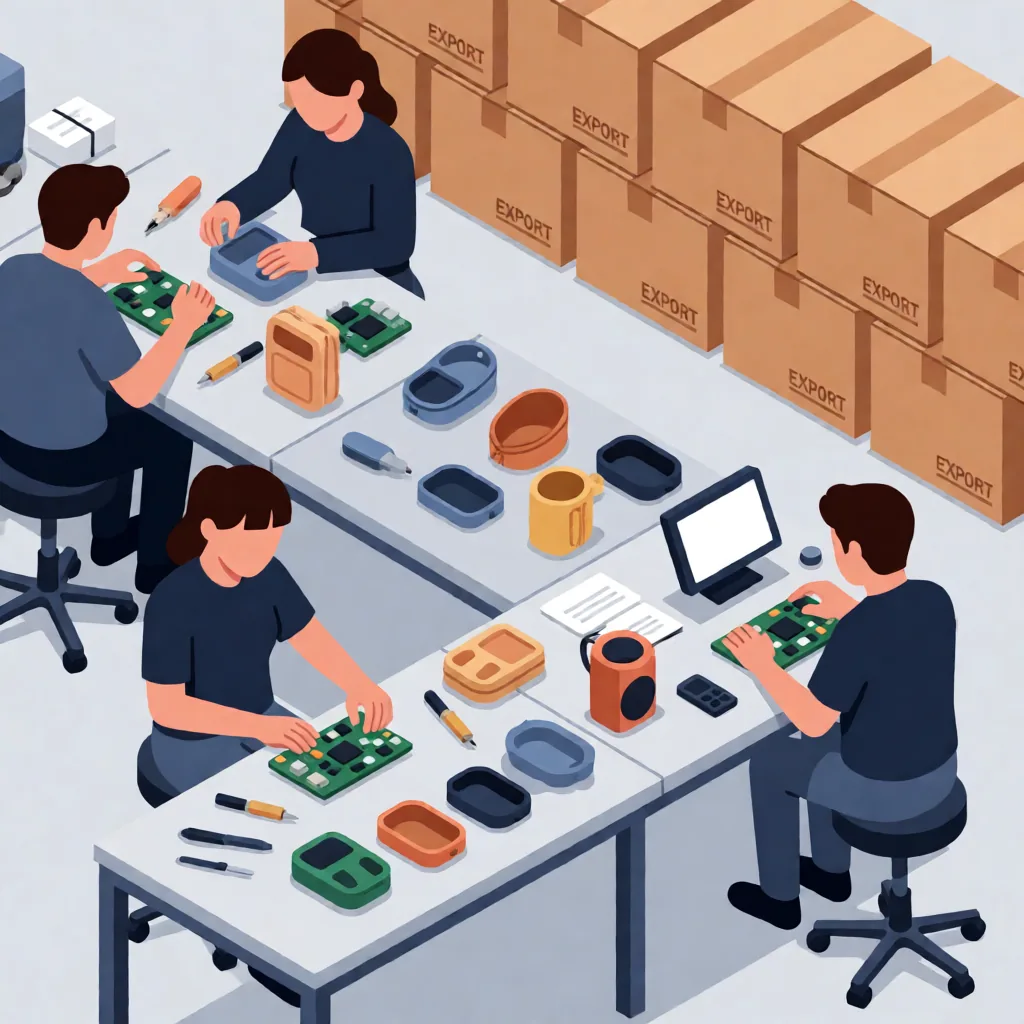
Buyers who also source soft toys separately should look at how a low MOQ AI plush programme actually works at 300 units on the plush side of the same supply chain, because that order size is usually the right way to pilot the robot option before committing to tooling. Working with one partner across both SKUs gives you three concrete advantages: shared firmware and cloud infrastructure, a single quality control standard across two product types, and one compliance file instead of two. It also means a small pilot order can be produced without a full production line commitment, which matters when you are testing a new category. Our guide to product innovation and usage scenarios walks through how to brief a factory on a hybrid product without over-specifying the design.
The 2027 calendar that decides which one you can still get
The decision is not only about what to buy. It is about when you can still buy it.
The core toy trade window starts earlier than most buyers expect. Spielwarenmesse in Nuremberg runs 2 to 6 February 2027, and it is where a large share of European and international range decisions are taken for the following season. If you want to show a robot or a tablet there, your tooling must be committed months before that date, because a factory cannot produce display-quality samples from a rough brief in a few weeks. Toy Fair New York follows on 20 to 23 February 2027, which is the other major range-setting moment.
Working backwards from a Q4 2027 shelf date, the practical sequence looks like this:
I. Concept and quotation, separated into tooling cost and unit cost: now through November 2026 I. Sample round one, with firmware and content plan, plus lab booking: December 2026 I. Trade show display samples and buyer meetings: February 2027 I. PO confirmation and tooling release, with certification samples submitted: March to April 2027 I. Pilot production and final compliance file review: May or June 2027 I. Mass production, inspection and shipping: July to September 2027, with contingency for port congestion The tablet has one extra constraint in this calendar: the content must be finished before the goods are shipped, because a learning tablet with an empty library is a return waiting to happen. The robot has one extra constraint of its own: fabric sampling and persona voicing take longer than most buyers plan for. Both constraints are easier to absorb in a January start than a June start. Our post on FBA cutoffs and late port arrivals is worth reading before you fix a ship date.
Decision framework: four questions, five minutes
Question one. Which channel pays your bills? If more than half of your volume is marketplace search, lead with the tablet. If more than half is social, specialty or gift, lead with the robot.
Question two. How much can you lose on tooling if this SKU fails? If a failed launch would hurt, take the tablet first. If a failed launch is survivable and speed matters, take the robot.
Question three. Who owns the content on your team? If you have curriculum, education or content partners lined up, the tablet is viable. If you have marketing partners instead, the robot is viable.
Question four. How fast do you want the second order? The tablet reorders on a fixed cycle. The robot reorders when it sells through, which can be faster or slower than planned.
A rough rule of thumb from the factory floor: a distributor with a broad toy range should cover both form factors before buying depth in either. Depth without coverage is how importers end up with 40 feet of a SKU their market did not want.
How to brief this decision to a supplier
Most quotation delays come from a vague brief, not a slow factory. Send a short pack with these items and you will usually get usable numbers in a week:
- Target market and channel, with the price band you need at retail and the margin you need at wholesale
- Target age band, which determines the small parts rule, the screen size and the plush pattern complexity
- Whether the product must work offline, and what it should do when the network is gone
- Your MOQ reality, including whether a pilot order is acceptable before a full run
- Which certifications you need and who pays for the samples
- Packaging language and artwork status, since manual and translation work sits on the critical path
- Your latest acceptable shipping date, working backwards from shelf date
Buyers who need an outside reference before signing off a broad toy range should also read the Toy Association guidance on safety and trade, and check the current trade show calendar at Spielwarenmesse before fixing a launch date. For buyers bringing a new range into the United States, the reference anchors used in this article are the mandatory toy safety standard at 16 CFR 1250 and the children's privacy rule at 16 CFR 312.
Frequently asked questions
Which product has the higher gross margin? The robot usually has the higher percentage margin and the higher variance. The tablet usually has a lower percentage margin with far more predictable sell-through. Model both at your own landed cost, not at a distributor listing price.
Can one factory actually build both? Yes, if the factory has both electronics and soft goods capability. Ask for a video walkthrough of both lines and for a sample of a hybrid product they have already shipped, not just photographs.
Which one is harder to certify? The rabbit hole is different. The tablet is harder on radio and electromagnetic work, the robot is harder on fabric, seams and mechanical durability. Neither is harder than the other overall, but the robot needs more physical samples.
Which one is safer for a first order? The tablet, because the platform is standardised and the tooling exposure is lower. Reduce risk further by ordering a small pilot run before committing to a full container.
What is the minimum order that makes sense? It depends on your channel, but many small brands now start with a few hundred units to test a listing before committing. If your supplier quotes five thousand as a hard floor, ask specifically what changes at a lower quantity, because the answer is usually about tooling amortisation rather than the unit itself.
Do both need a parent app? Neither strictly needs one, but both benefit from a simple parent-facing page or app for controls, firmware updates and content management. Keep it optional so the device still works out of the box.
Next step
If you already know your channel and your price band, the fastest way to turn this comparison into a real decision is to send your target spec to a supplier who can quote both form factors side by side, including tooling, certification and pilot quantity. That single comparison sheet usually ends the debate faster than any amount of reading, because it shows which option your business can actually afford this year.
You can start the conversation through our OEM and ODM inquiry page and ask for a two-column quotation: one for a kids learning tablet and one for a companion robot, both at pilot quantity, both with certification scope itemised. Bring your 2027 shelf date and we will work backwards from it with you.
Comments
No comments yet — be the first to share your thoughts.